3 Weeks Overlanding Africa: An HONEST African Overland Tours Review

Planning a trip to Africa and feeling overwhelmed by all the tour options? You’re not alone. When I first started researching my own 3-week Africa itinerary, I fell down a rabbit hole of operators, route choices, and must-see lists that left me even more confused than before I started searching.
I knew I wanted something adventurous, solo travel–friendly, and logistically straightforward, but still authentic (& budget-friendly-ish).
That’s when I discovered African Overland Tours, a platform that curates some of the most trusted overland tours in Africa from reputable operators. It turned out to be exactly what I needed.
In this post, I’m sharing my honest African Overland Tours review based on my personal experience doing a 3-week overland Africa tour through Southern Africa in 2025.
I’ll walk you through what overlanding really involves (it’s not for everyone), why I booked through AOT, and what tour is replacing mine in 2026 (so you can still have an epic adventure even though my specific route is no longer running).
Whether you’re considering your first African group tour or trying to decide if overlanding is the right fit, this guide is designed to help you make the best decision for you because I’ll be sharing the good, the bad and the ugly!

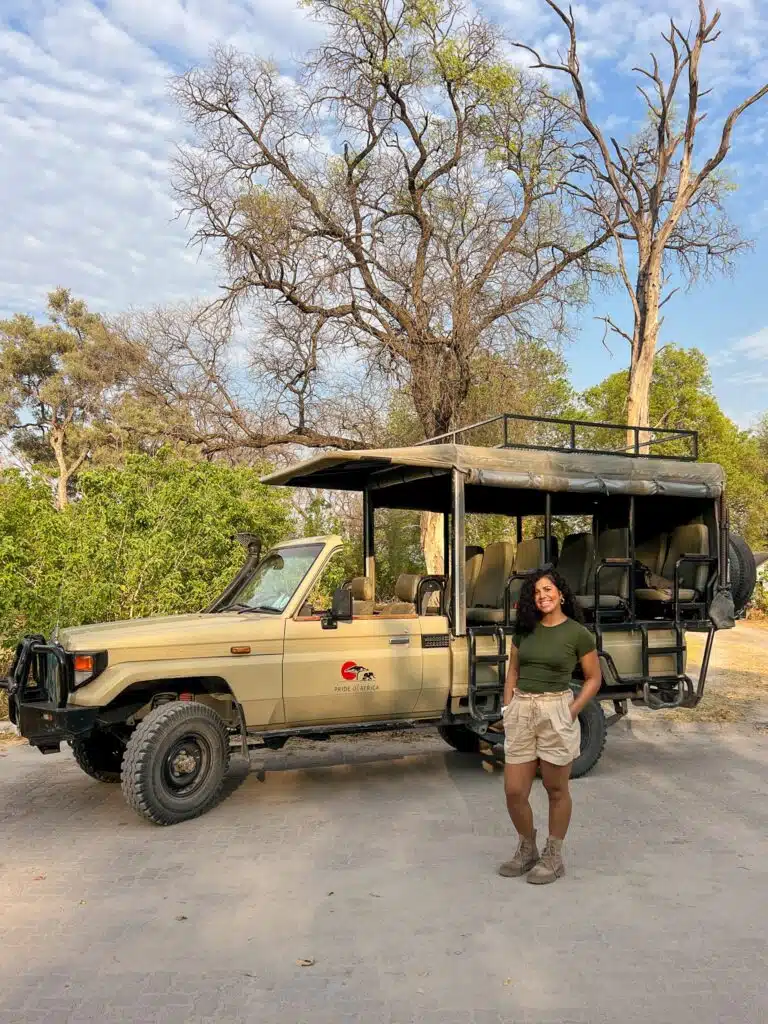
Disclaimer: This post contains affiliate links and is sponsored by African Overland Tours (but all views are my own). If you decide to make a verified purchase through the links in this post, I will earn a small commission. This will be at no extra cost to you. Thank you.
Who Is African Overland Tours?
It’s important to know that African Overland Tours is not itself a tour provider, but instead a third-party platform that curates and books trips run by the best and most trusted overland companies on the continent, including brands like Nomads, G Adventures and Drifters.
Instead of running tours themselves, they partner with these reputable operators, which gives you access to a wide range of options, all in one place (which honestly saves you hours when you are going through the research process, trust me).
Instead of manually having to compare multiple tour companies (with a million tabs open in my browser), I could take a look at various itineraries, dates, and trip styles on the platform, which made planning my 3-week Africa itinerary 10x easier.
Once I had picked the exact tour I wanted to do, they also took care of the whole booking process, including confirming my place with the local operator, sending a pre-departure checklist, and providing all the instructions for arrival (all I had to do was book my flights, get the right travel insurance and show up in Johannesburg).
✈️Ready to research your African Overland Adventure? Check out the African Overland Tours website to find the most suitable tour.
Why I Chose African Overland Tours
As I mentioned earlier, when I started planning my 3-week overland trip through Africa, I didn’t know where to begin, and the process felt like a minefield.
There are honestly dozens of tour companies out there, each of which offers different routes, standards, and group dynamics.
I was travelling to Africa solo, so I wanted something that meant I could meet people on the trip, and I also wanted something that felt a little more authentic (I was definitely not after a super luxury safari, nor did I have the budget for that).
When I found African Overland Tours, I breathed a little sigh of relief.
Everything was laid out clearly and simply, and each tour had a detailed page showing the day-by-day breakdown, what was included, and what to expect in terms of accommodation and pace, and of course, the exact “solo supplement” amount I would have to pay as a solo traveller on the group tour.
What sealed the deal for me was knowing that African Overland Tours only works with vetted tour operators that have a strong reputation, great itineraries and good customer experience.
I ultimately chose a 3-week overland tour with Nomads that took me through South Africa, Botswana and Zimbabwe.
Unfortunately, the tour I picked will not be running for 2026; however, you can take a look at this very similar one, which has the added extra of Namibia (another of my favourite countries, which I was lucky enough to visit back in 2024).
🦒Keen to explore South Africa, Namibia, Botswana and Zimbabwe? This tour would be perfect for you!
What To Expect on An African Overlanding Tour
If you’ve never done an overland tour before, it can be quite hard to picture what it’s like in the day-to-day of it all, and to be honest.
I could write a whole article on what to expect on an overland tour (and I most certainly will when I have the time).
For me, these kinds of tours are the most magical, life-changing trips (this is the second overland tour I have done, following a trip to Namibia last year that left me craving more).
But I can appreciate that this kind of travel style is not for everyone, so it’s important to know what you’re getting yourself into.
Where You Sleep on an African Overland Tour: Camping & Lodges Explained
One point I want to stress is that overlanding is not luxury travel; it’s very much a “get involved” adventure kind of trip.
Depending on the type of trip you choose, you could either be staying in basic to mid-range lodges, or if you’re like me and really want to go back to basics, you might be camping.
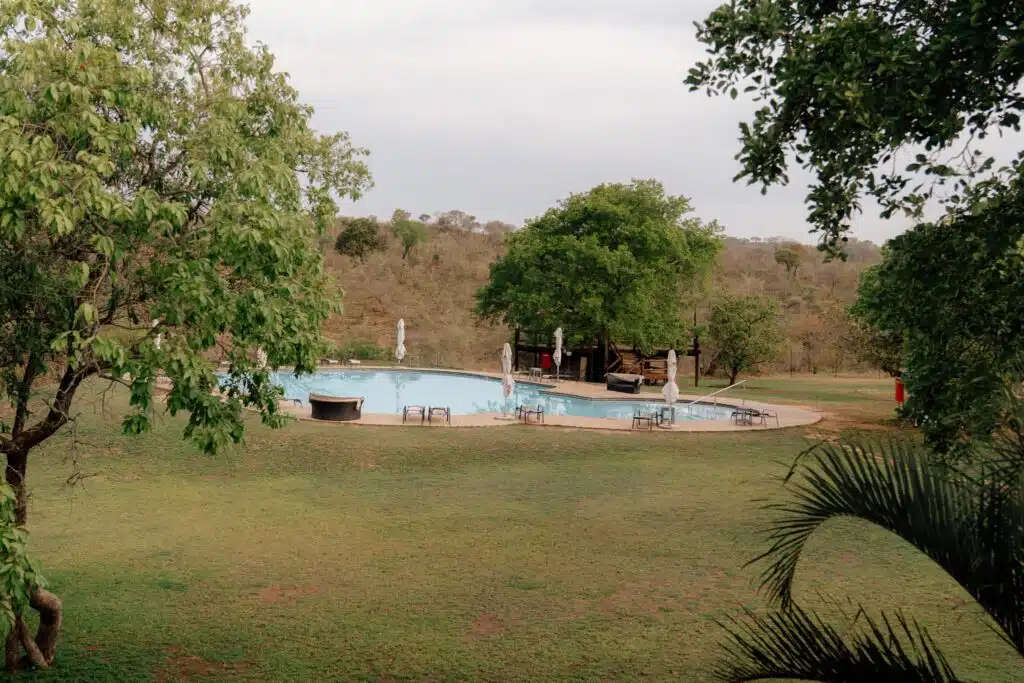
Whilst I chose a camping tour, there were some times when I did stay in a room, and I have to say the quality of the lodges was very high. They all had great facilities, and most of them even came with pools!
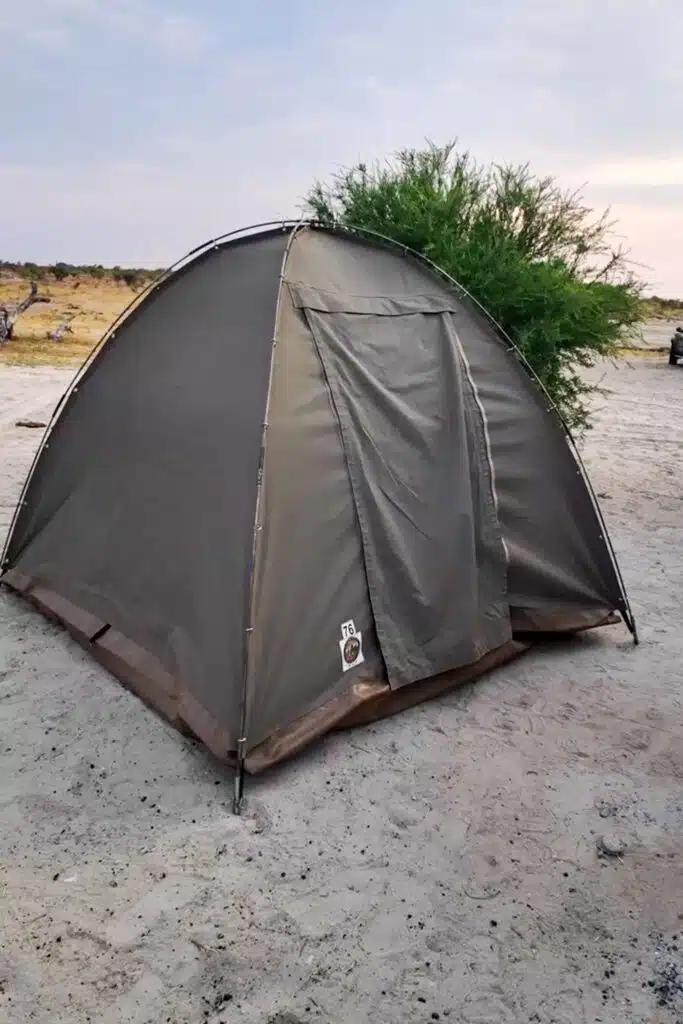
If you are camping, that means unpacking and repacking your tent almost every night/day, and using shared shower and toilet facilities.
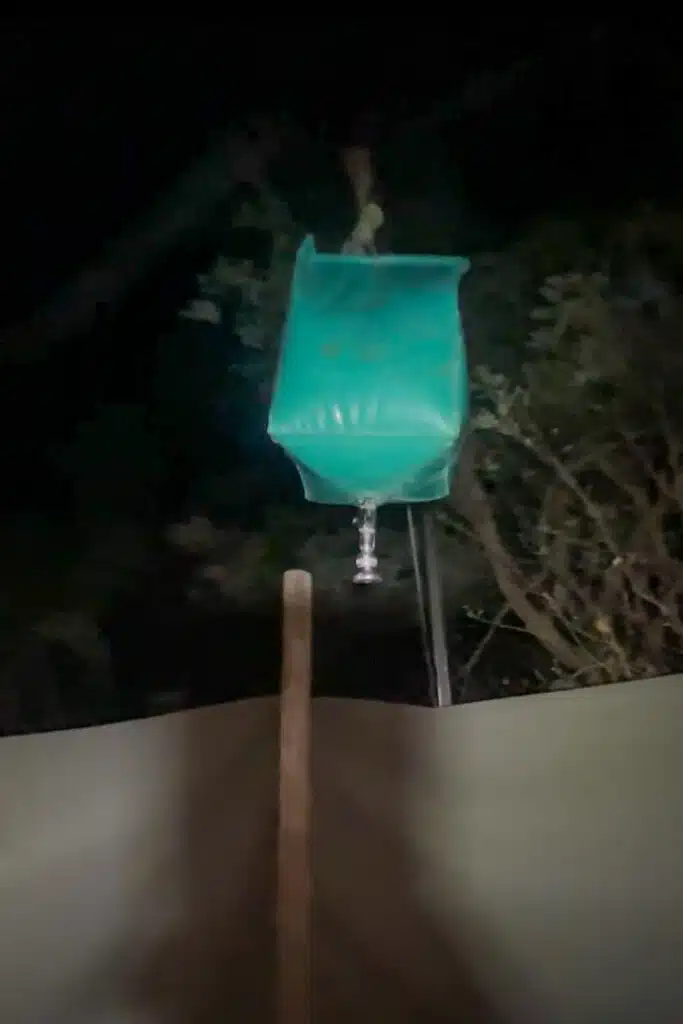
Some nights you’ll have access to hot showers and flushing toilets, and other nights, you might be bush camping with a long drop loo and a shower “in a bag” (if you plan on visiting the Okavango Delta in Botswana, this is what you can probably expect).
You can also expect to be camping in wild camps a lot of the time, with no fences between yourself and the wildlife.
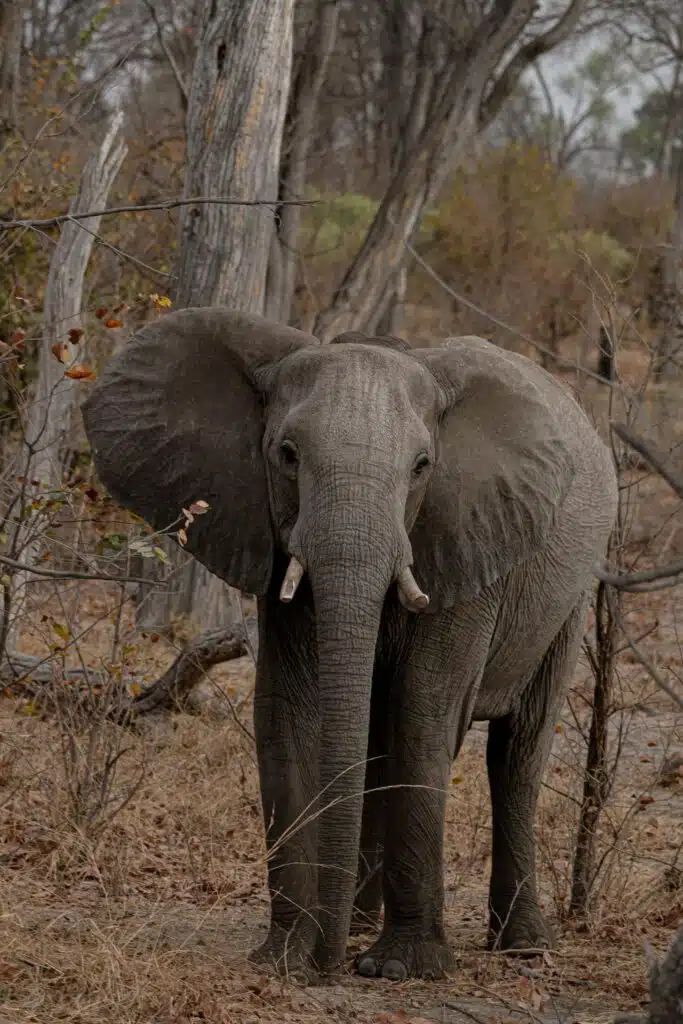
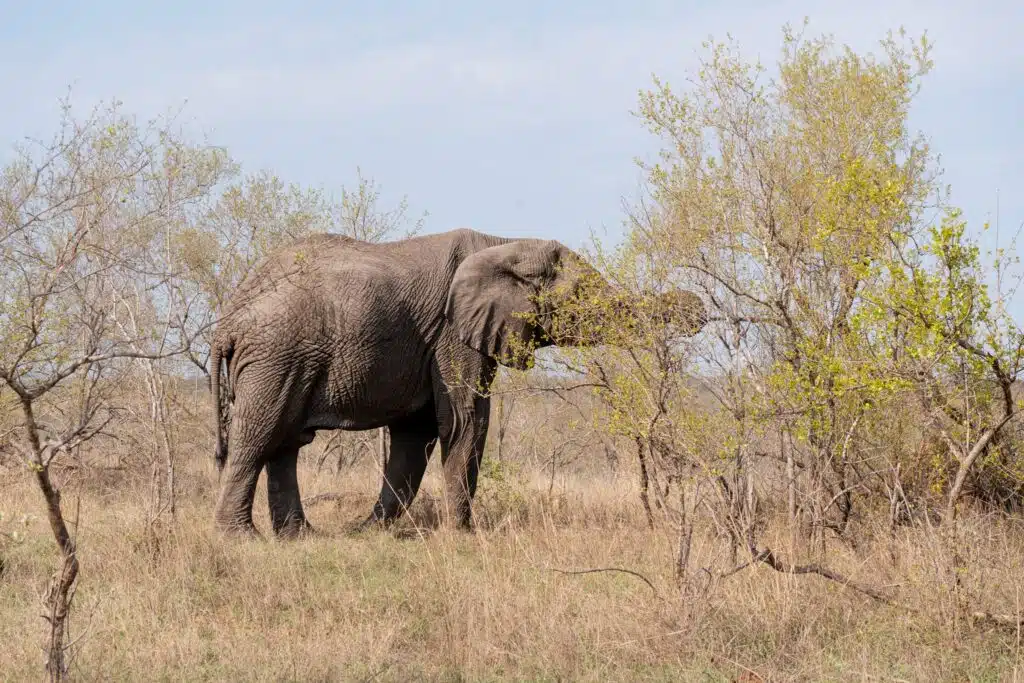
There were times when I woke up to fresh elephant poop outside my tent, and when we could hear lions roaring from camp.
This absolutely made my experience 10x better, but I can absolutely understand why you might not be comfortable with that.
💼Need insurance for your African Overland Adventure? I booked with World Nomads, which came recommended to me by African Overland Tours, and I can definitely agree that they provide affordable, comprehensive cover.
Inside the Day-to-Day Experience of Overlanding Africa
When it comes to the actual itinerary, the days are quite full. You can expect to wake up around 5 am most days to either get out on a safari, or make the very long drive to the next stop/or country (some days can be up to 10 hours of driving).
You’ll also almost always arrive at your next accommodation in the early evening.
For the most part, you’ll only be staying in places for 1-2 nights, which means you don’t always have a lot of time to enjoy the accommodation, but let’s face it, we’re booking these tours for the wildlife, so it’s not a huge issue.
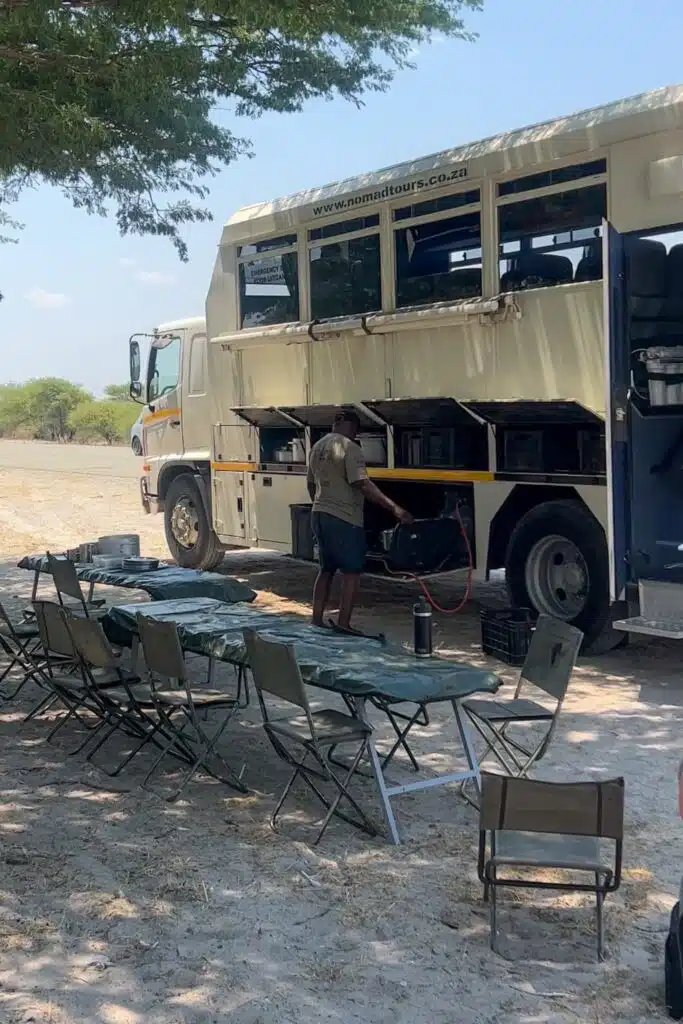
On long drive days, it’s normal that you don’t pass another town or city for miles and miles. This can often mean having lunch from the truck kitchen on the side of the road.
But don’t worry, we’re not talking sandwiches here; your guide will whip up a full-blown meal.
The most memorable meal for me had to be the delicious roadside Spaghetti Bolognese we got treated to on a long drive in Botswana.
Not passing another town or city for miles and miles also means having no access to an actual toilet.
This means that you’ll often have to go for a pee in a bush, which locals refer to as “bushy bushy”. Make sure to come prepared with hand sanitiser and tissues.
The roads in this part of the continent are also not in the best condition, so drives actually take longer than they would if the roads were paved, and because of all the corrugations, you’ll be flying off your seat a lot of the time (this is particularly noticeable in Zimbabwe).
This is what the locals have very aptly named as the “African Massage”.
What to Expect from Group Dynamics on an Overland Tour in Africa
On an overlanding tour, you’ll also become part of a temporary travel family of up to 20 people (sometimes more, sometimes less).
The group dynamic will vary based on the tour company you are with and where you are going. Some tours will have an 18-40 age limit, and others will not have a limit.
On my tour, I had everyone from 24 to 81 years old, and we were roughly a group of 13 people.
That said, no matter what the age, everyone on your truck is in it together, from pitching tents to helping cook dinner and, more importantly, helping to clean up.
It’s very communal, which means you need to be flexible, patient with some people and okay with giving up some of your personal space.
BUT it also means you share unforgettable moments with people from all over the world.
I absolutely loved the communal, back-to-basics aspect of it all, as it really gave me a chance to reconnect with nature, which I think is what we all need in this fast-paced modern world.
All in all, for me, this was the PERFECT way to cover a huge amount of ground as a solo female traveller in Africa.
I got to see so much more than I ever could have done on my own, and most importantly, I felt safe as I didnt have to worry about navigating public transport, unknown areas and border crossings all by myself.
✈️Hopefully, I haven’t put you off with my honesty about some of the not-so-glamorous parts of overlanding in Africa. If you’re still keen to go on a trip, you can check out the African Overland Tours website to find the most bucket-list worthy tour for you!
My Southern Africa Overland Trip (2025 Edition)
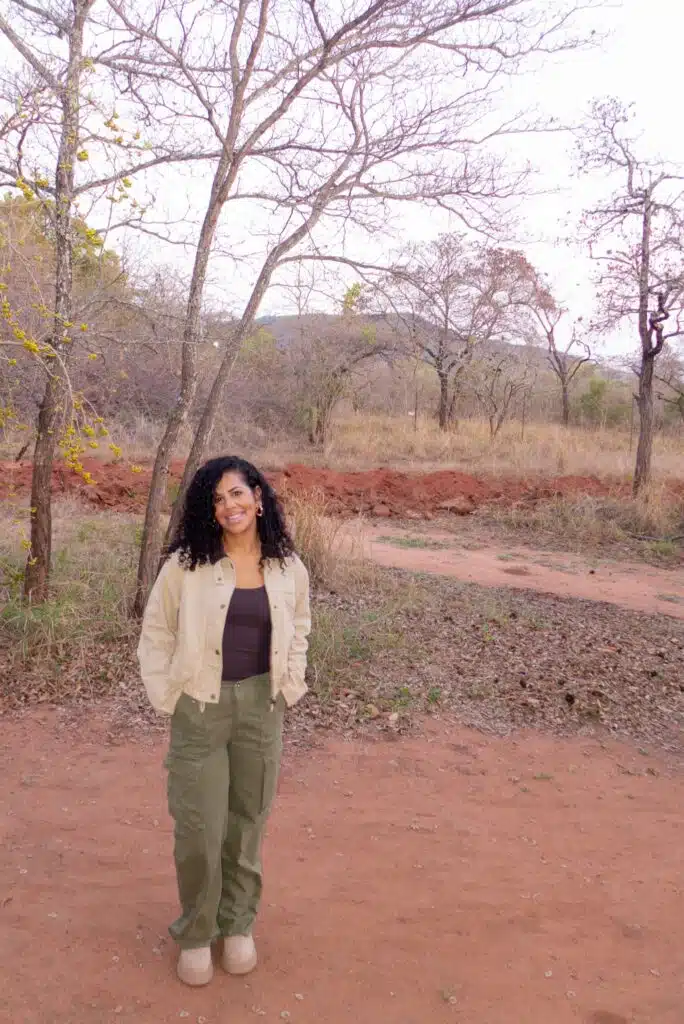
I joined a 3-week overland tour through Southern Africa, which included South Africa, Botswana and Zimbabwe, and honestly, it was one of the most unforgettable travel experiences I’ve ever had.
I’m currently already planning my next overlanding adventure to the continent.
Unfortunately, the tour I picked will not be running for 2026; however, I will explain exactly what it was like so you can get an idea, and if you are interested in doing something similar, you a take a look at this tour, which has the added extra of Namibia.
🔗 Need Access to Data While Overlanding in Africa? I used this eSIM during my 3-week Africa trip, and it worked well across multiple countries. If you want to know more about prices and coverage, you can do so here.
Day 1: Johannesburg to Kruger National Park
We hit the road early, leaving Johannesburg behind and driving east through the Mpumalanga province toward Kruger.
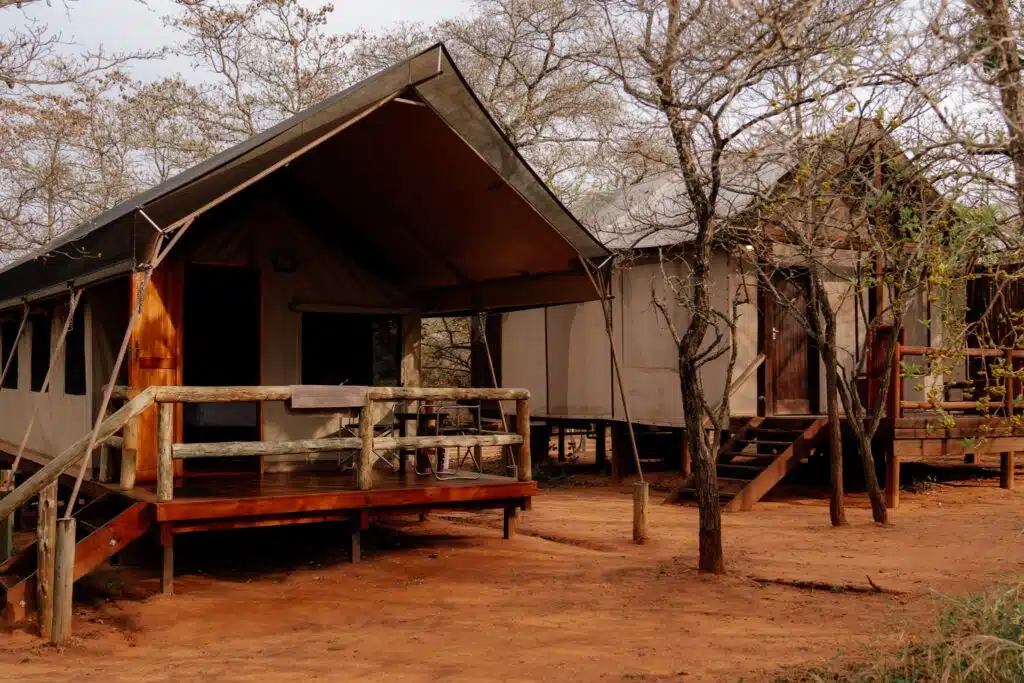
It was only a 4-5 hour drive, and when we arrived, that’s when I had my first pinch-me moment because we checked into the beautiful Nkambeni Safari Camp, where we were treated to some beautiful glamping tents.
Day 2: Full-Day Safari in Kruger National Park
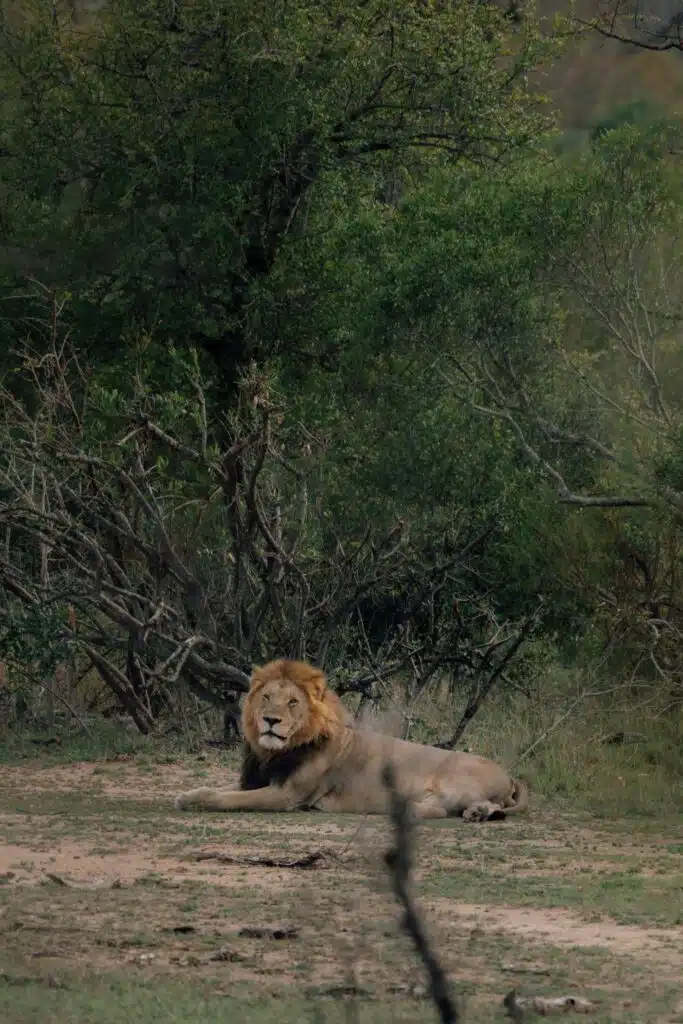
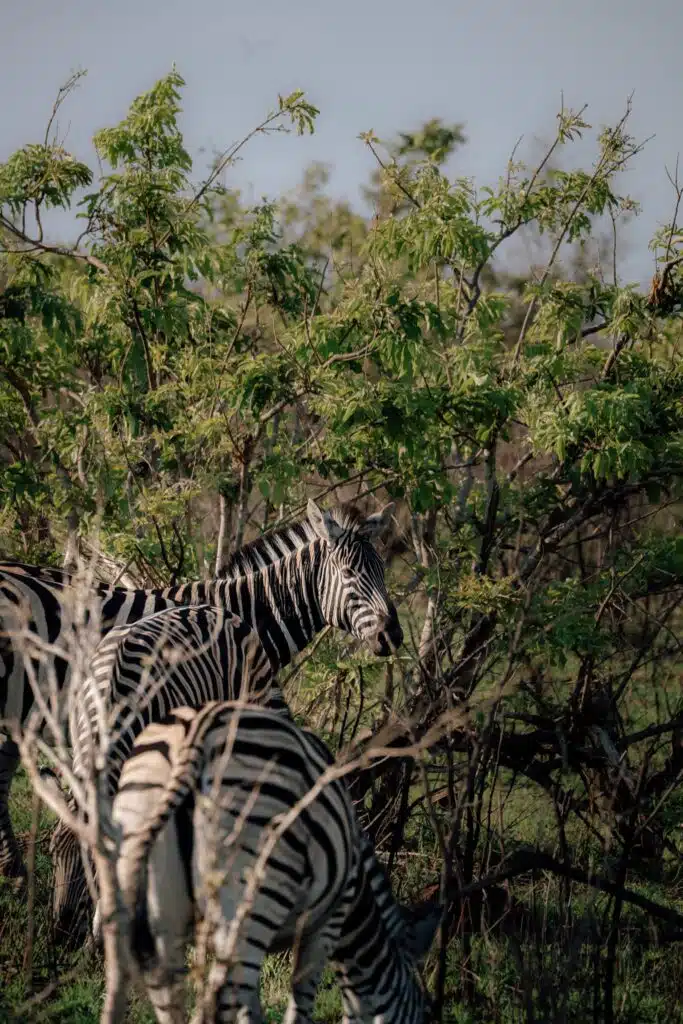
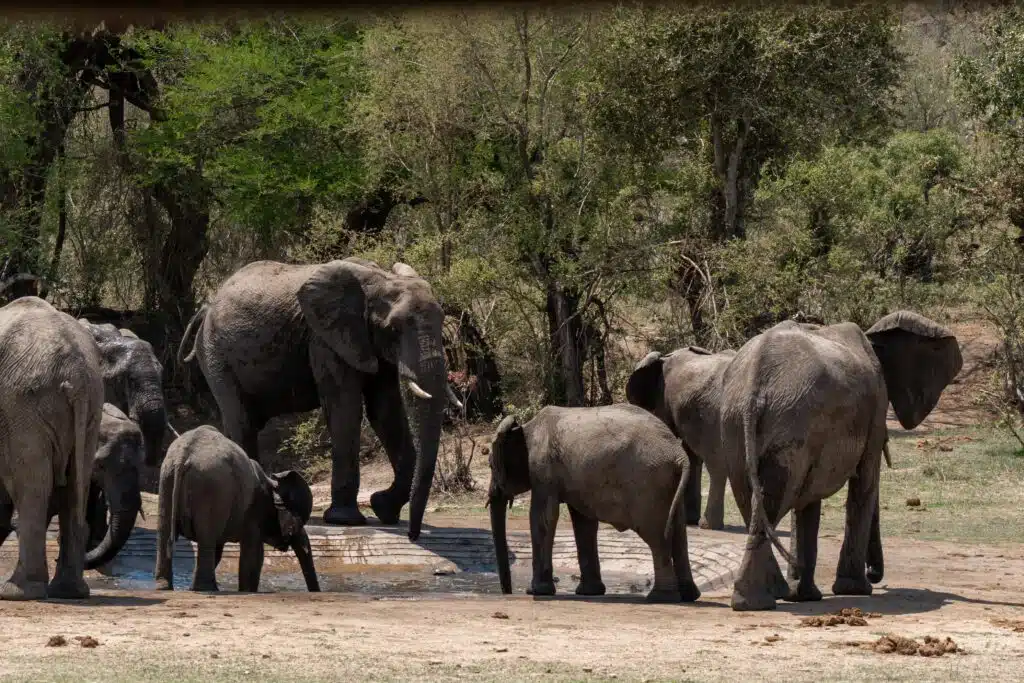
This was our first full day of wildlife viewing, and it set the bar high. We spent the day in open 4×4 vehicles searching for the Big Five, where we got to see everything but a Leopard and a Cheetah. Kruger definitely set the bar high.

Day 3: Panorama Route
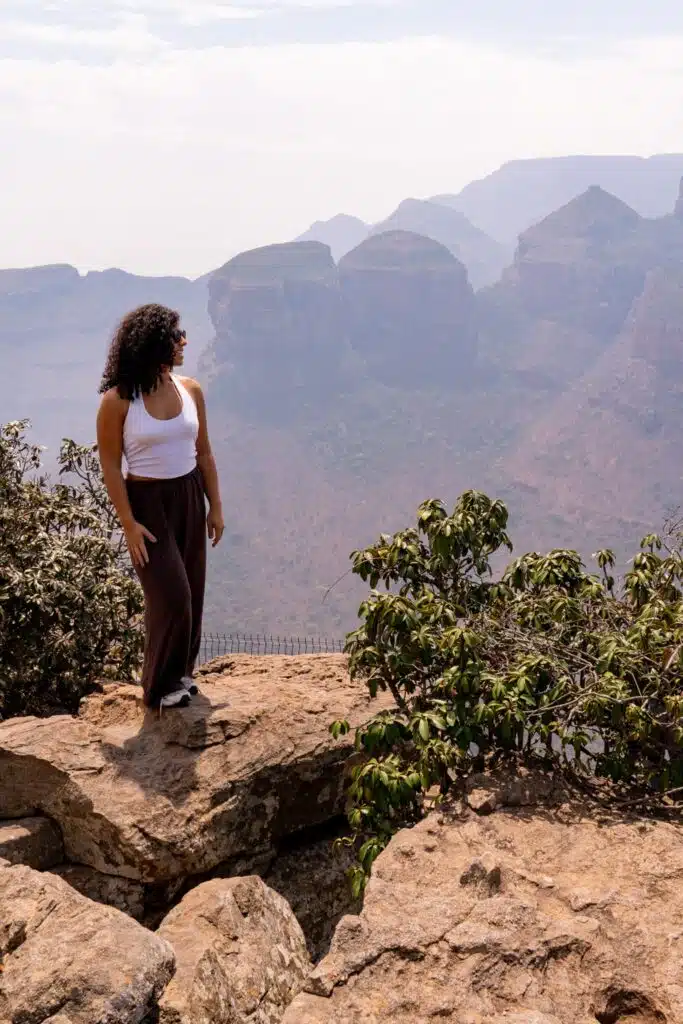
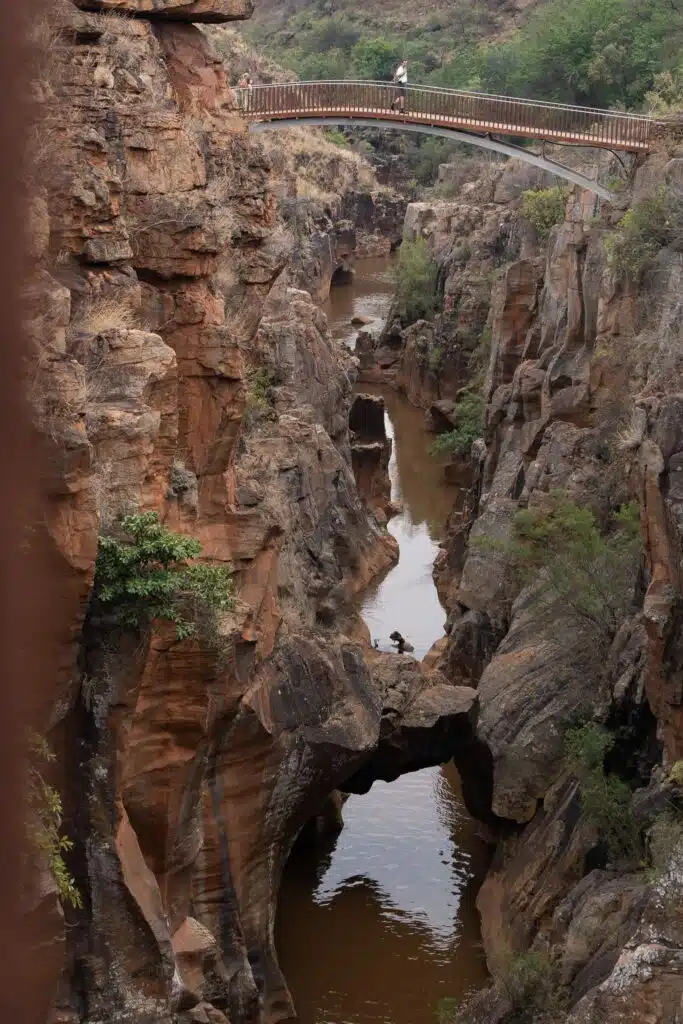
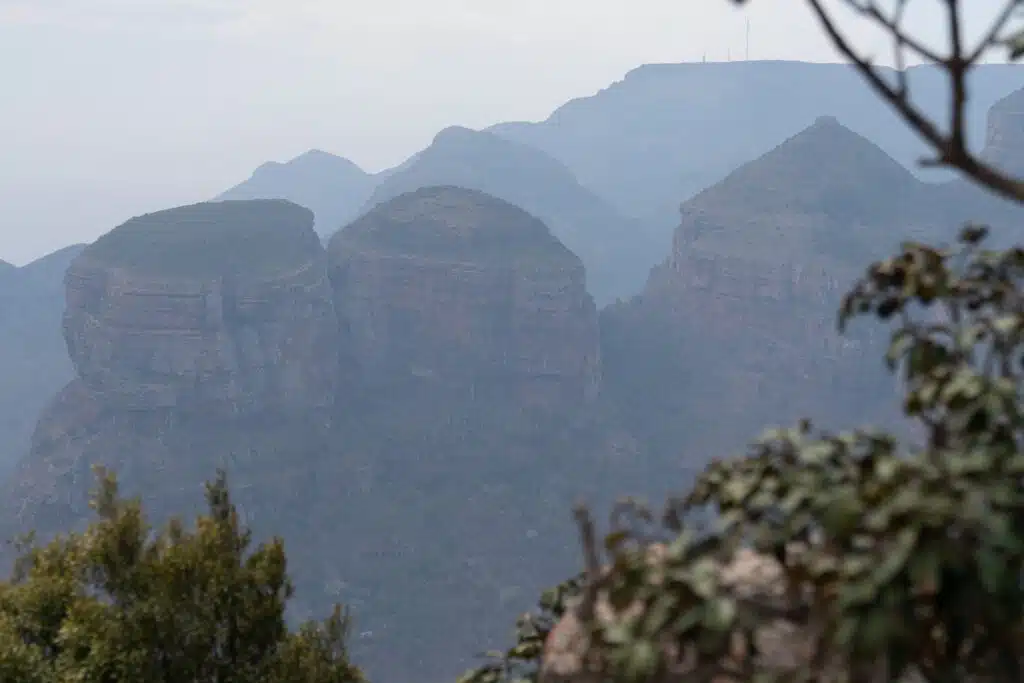
This day was a break from the animals, and we got to enjoy some gorgeous landscapes. The highlights of the day included God’s Window, Bourke’s Luck Potholes, and the Three Rondavels, all of which were absolutely stunning.
Day 4: Return to Johannesburg
We wrapped up our Kruger leg with a morning game drive and headed back to Johannesburg.
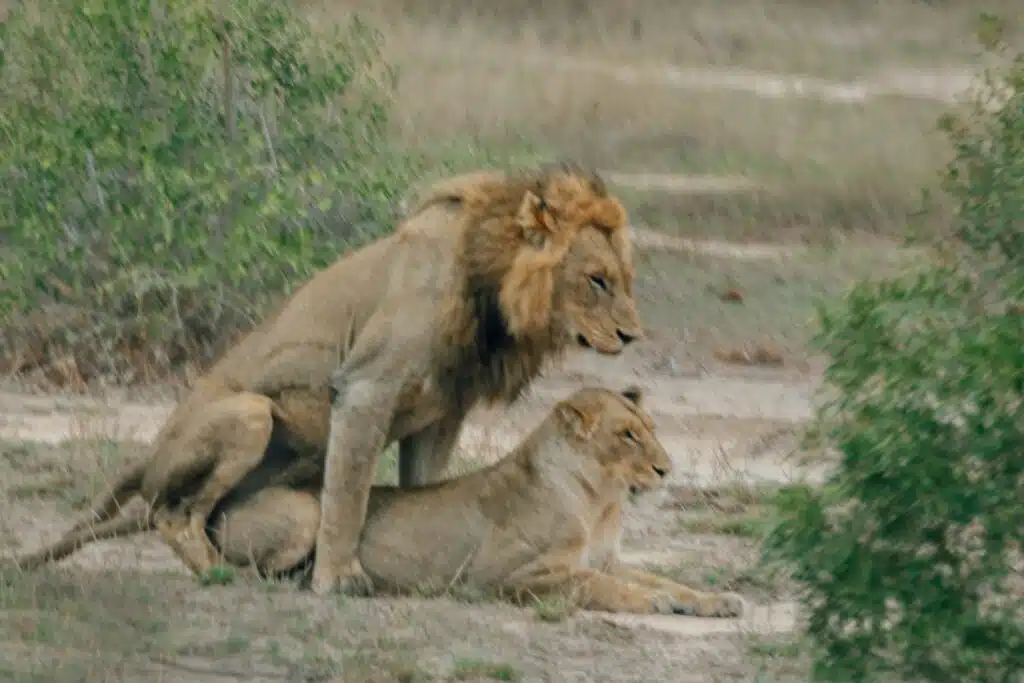
This game drive was when I realised how popular the Kruger National Park was.
Everyone got wind that there was a Lion couple mating in the park, and when we arrived at the spot, the queue to view these animals was absolutely ridiculous and only got bigger behind us.
I felt this moment kind of took away from the magical experience we had on day 1, but depending on the park, you kind of have to expect this might be the case on a safari when there is a big cat sighting.
As much as I loved the animal sightings at Kruger National Park, it wasn’t my favourite national park on the trip, so if I’m being honest, I probably wouldn’t go back there again in a hurry.
Day 5: Johannesburg to Palapye, Botswana
After crossing the border into Botswana, we stopped for the night in Palapye. This was mostly a travel day, but it marked the beginning of the real overland stretch.
Day 6: Palapye to Maun
We drove deeper into Botswana, passing by the Orapa Diamond Mine and the edges of the Makgadikgadi Pans. We arrived in Maun by late afternoon, which was our base before heading into the Delta.
Day 7: Into the Okavango Delta (Khwai Conservation Area)
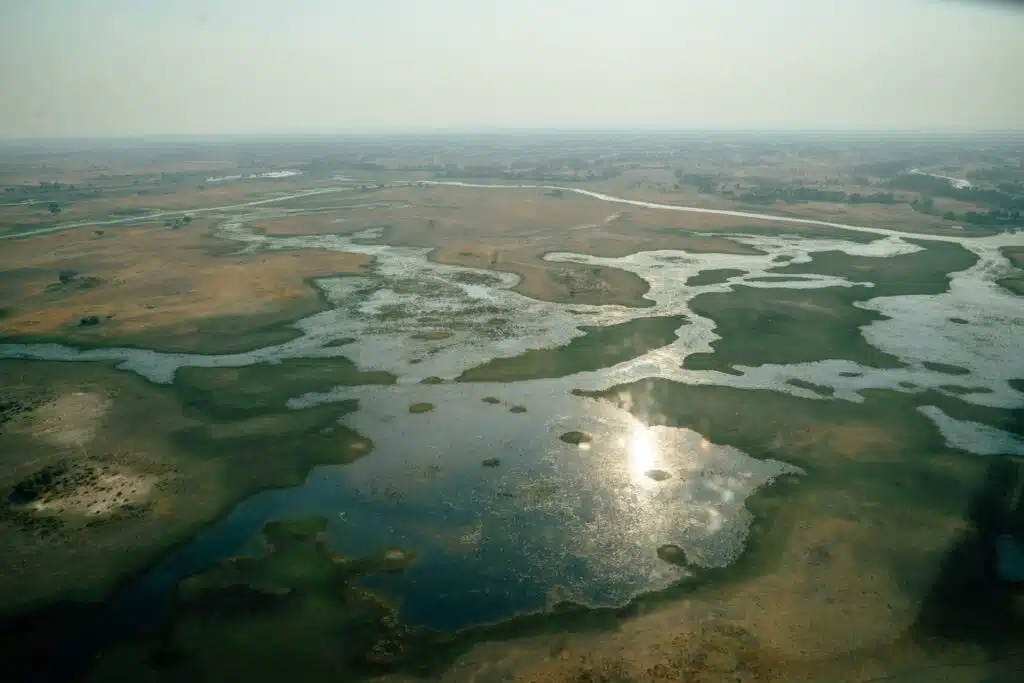
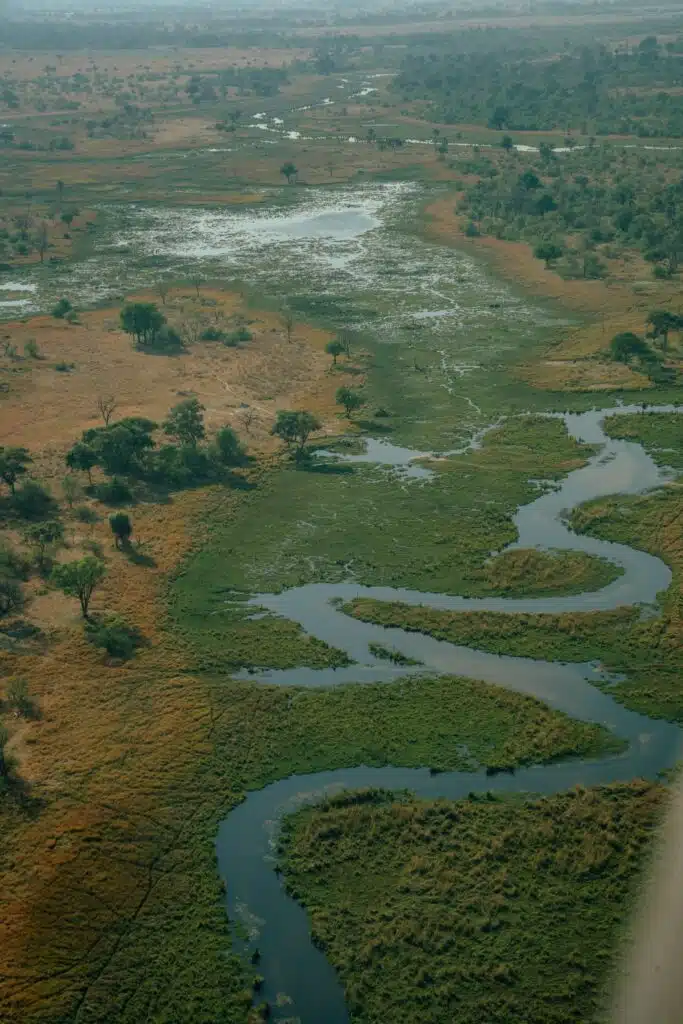
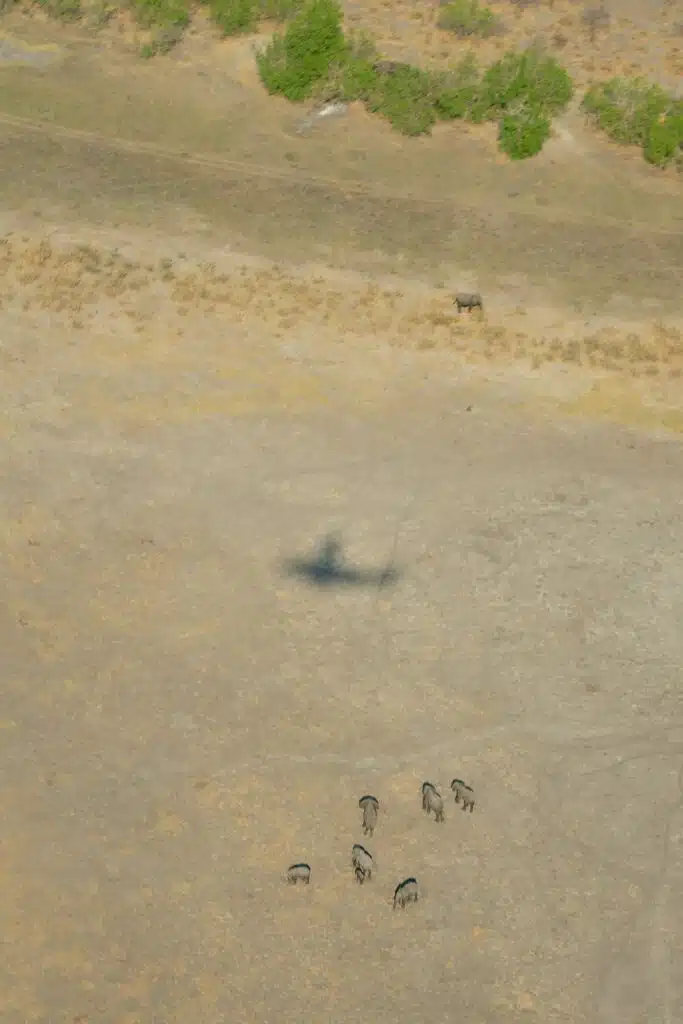
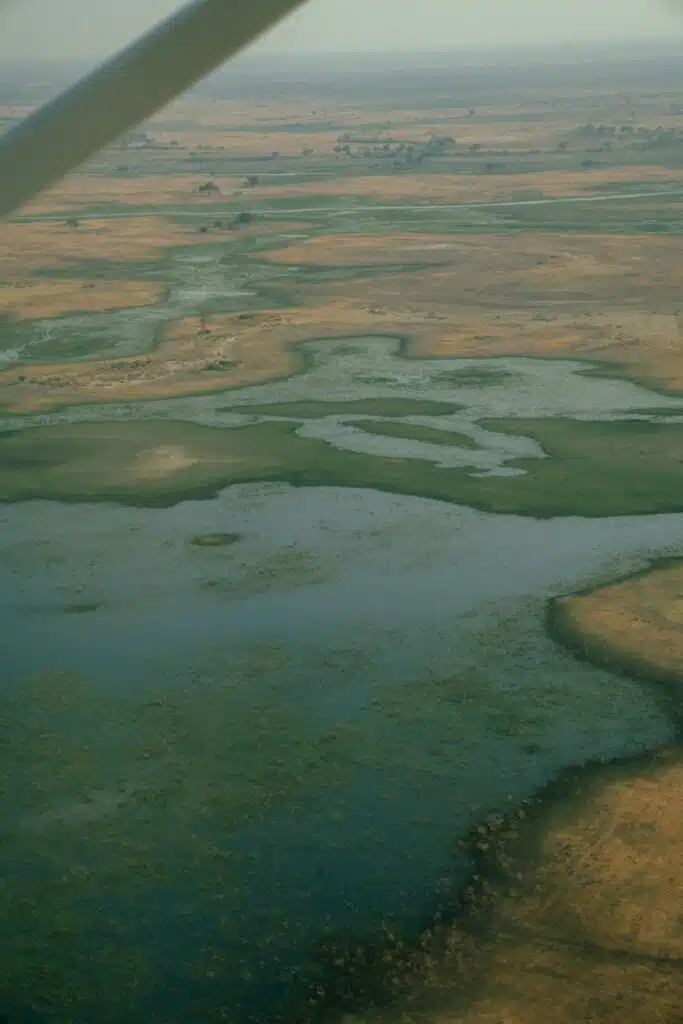
On the morning of this day, we all got the option to do a scenic flight over the Okavango Delta, which I decided to do.
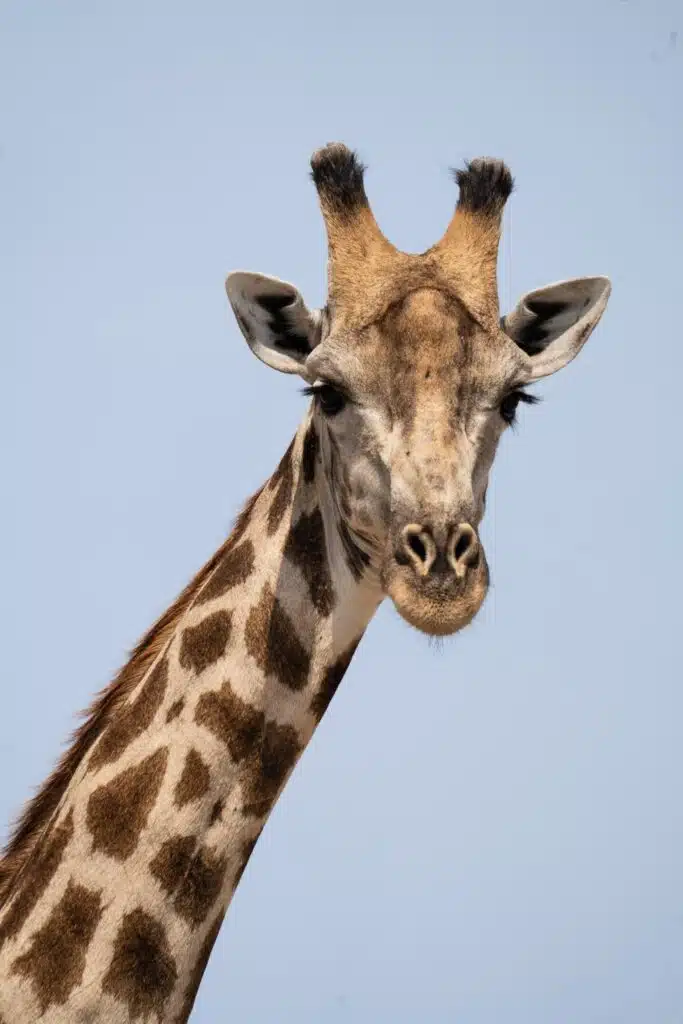
I’m not a fan of small planes, but I decided to face my fear, and I’m so glad I did. The views over the delta were stunning, and we got to see giraffes, elephants and buffalo all from the sky.
You can book ahead when you book your overland tour, or if you prefer to wait until you’re there, you can book last-minute too. Flights are between $100-$120.
In the late morning, we left our big bags and the truck behind and had to transfer into smaller safari vehicles with our smaller day bags for two nights of rustic fly-camping in the Okavango Delta.
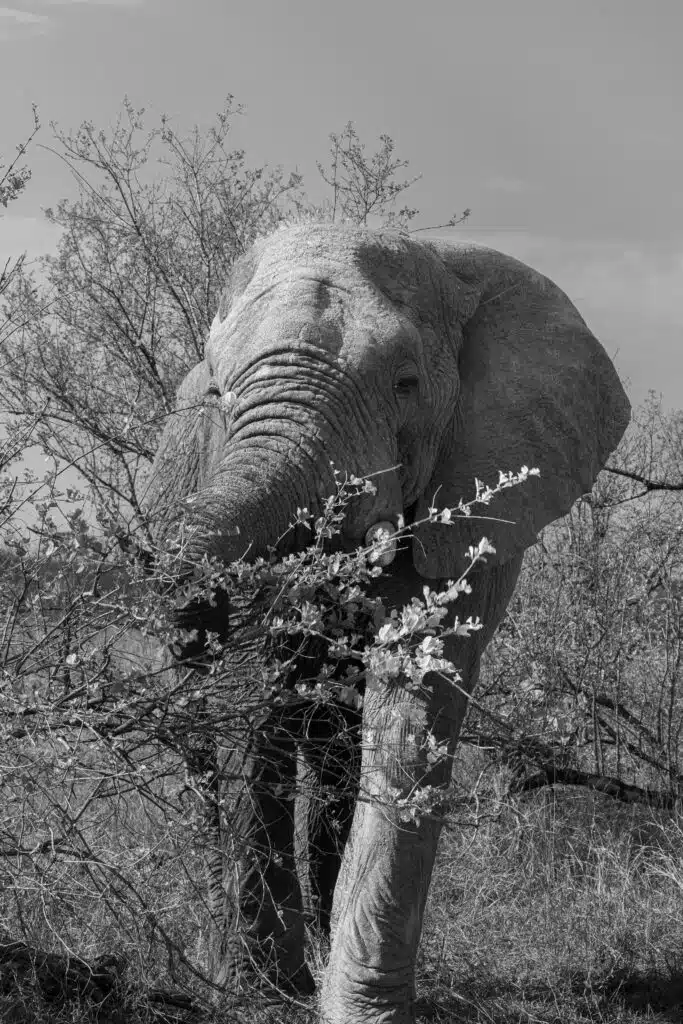
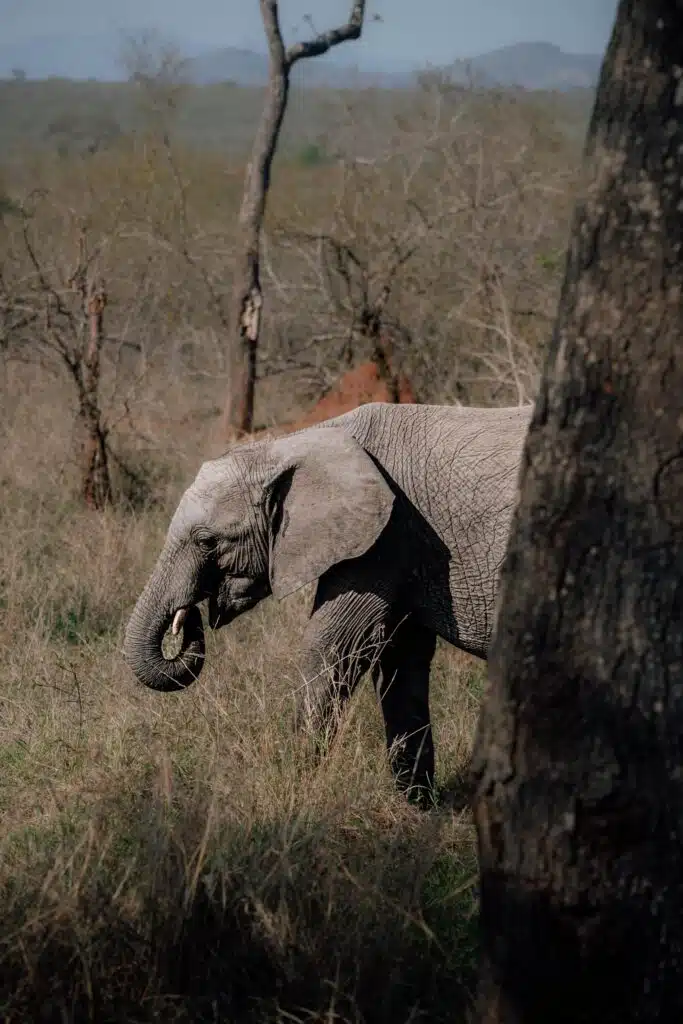
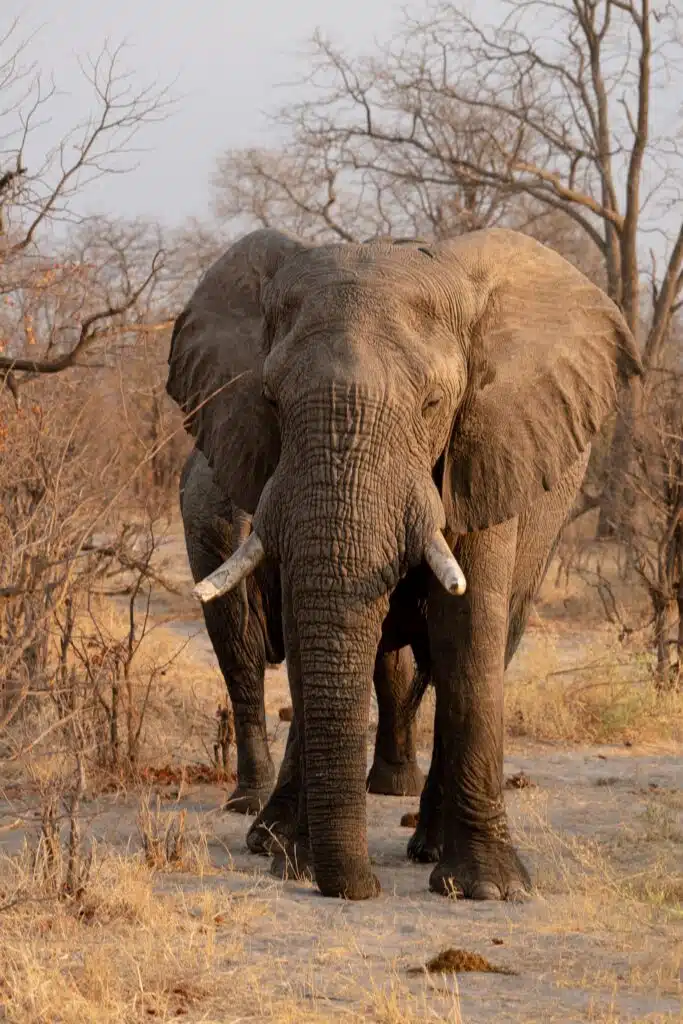
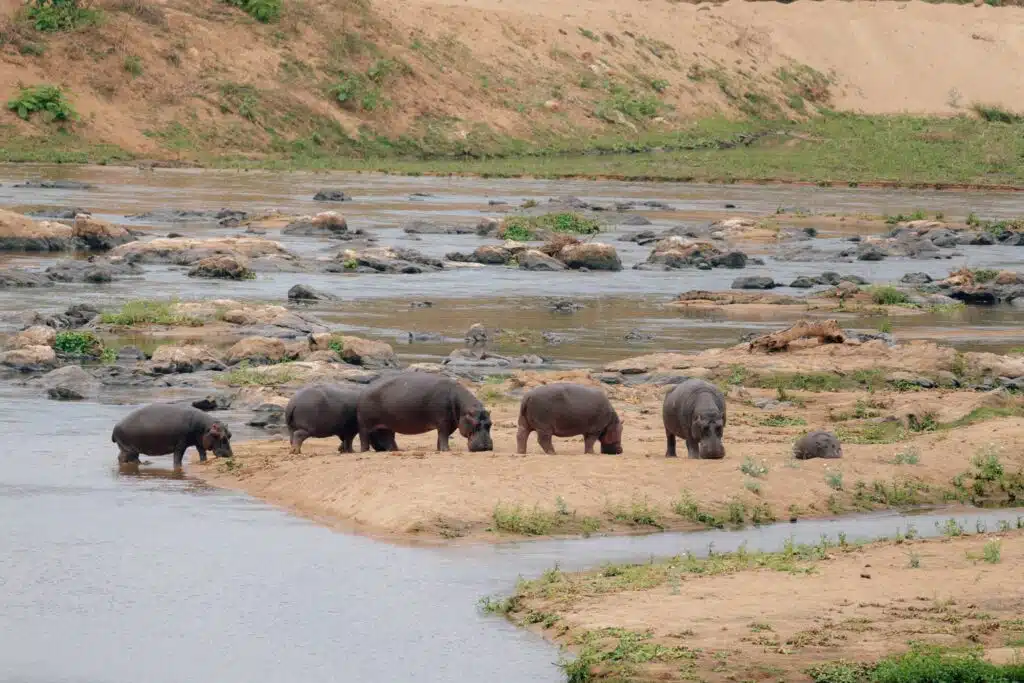
The drive into the Delta was long and bumpy, but it was sooooo worth it. On the route, we got to see giraffes and elephants on the way, and even had a very close encounter with an elephant when we stopped on the road for lunch.
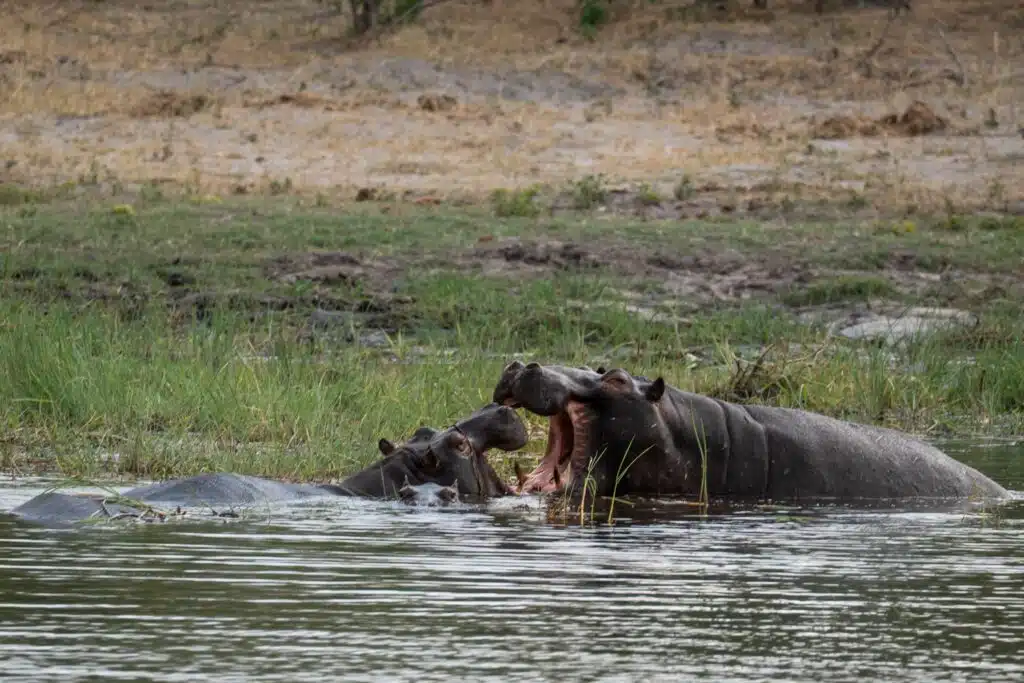
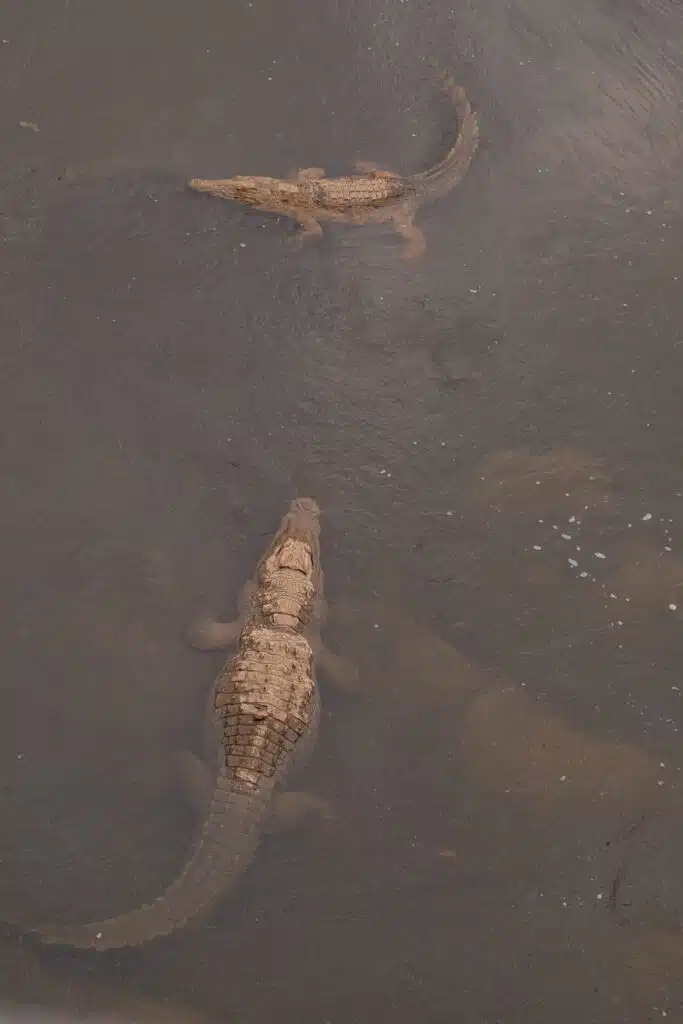
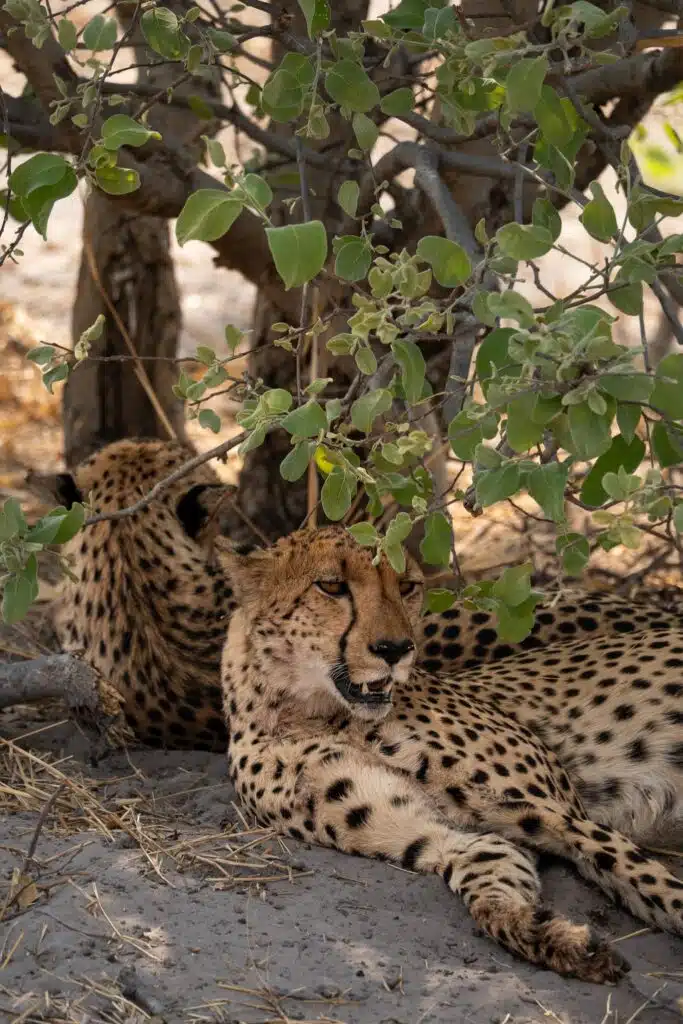
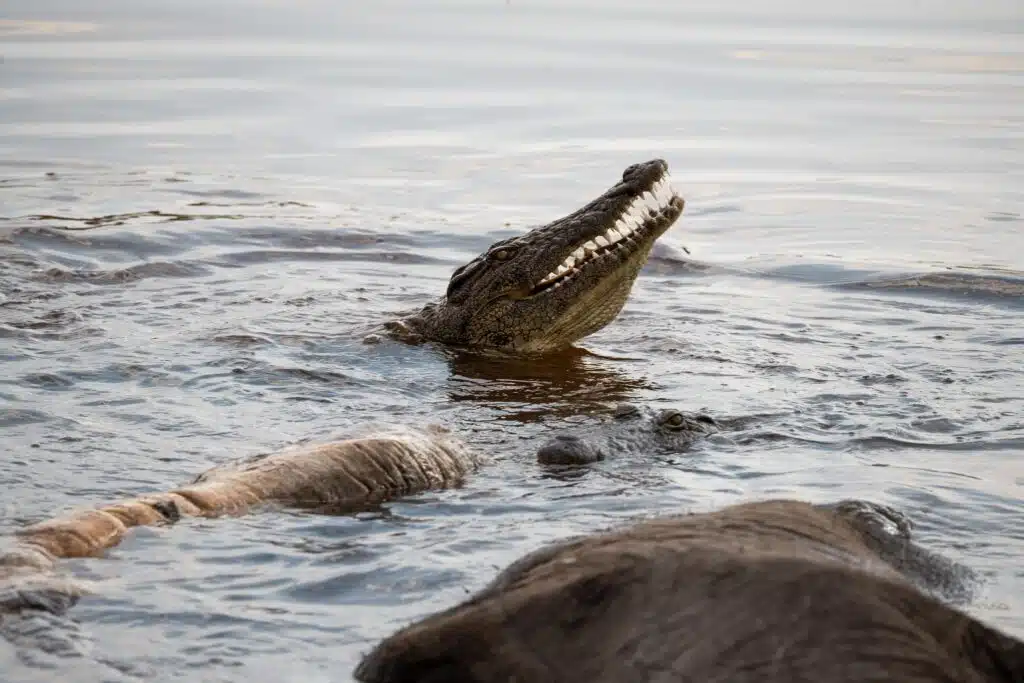
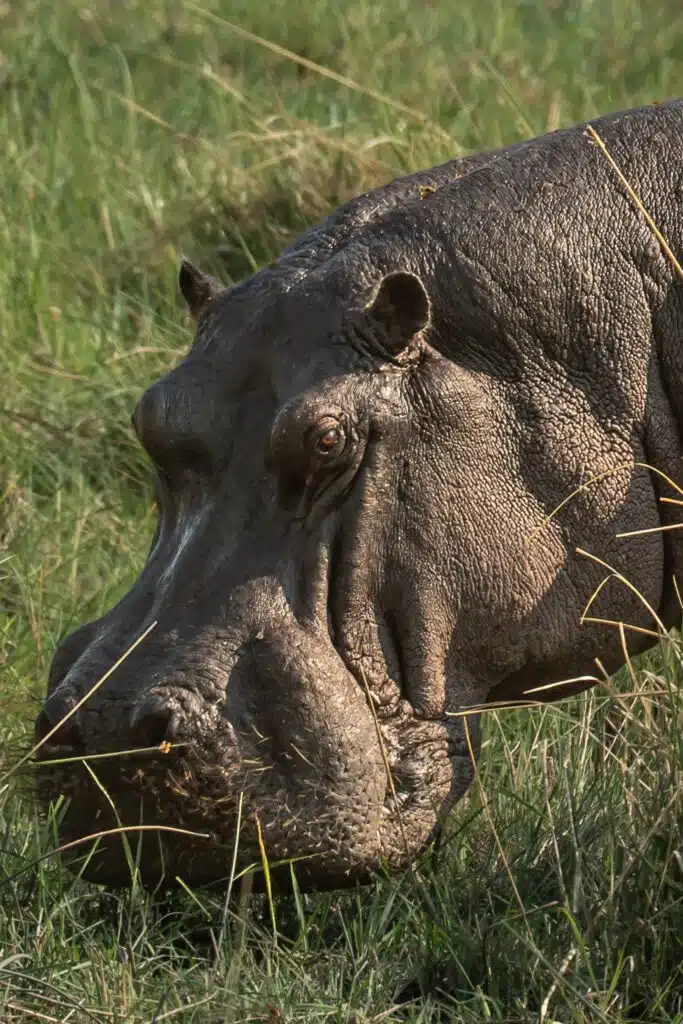
Then, on our way to the campsite, we got to see hippos, crocodiles feasting on a dead elephant and even 2 cheetahs that were in the area. This was such a pleasant experience, as there were hardly any other safari vehicles around.
We arrived at our fly camp, checked into our tents, went to the communal tent for dinner, and this is when we could hear Lions roaring from camp (our guide assured us that a lion’s roar can be heard up to 10 km away).
I made a whole TikTok video about this fly camp experience, so if you’re keen to know more about what to expect, be sure to check it out.

Day 8: Full-Day Safari in Moremi Game Reserve
This day had to be the most memorable day of the trip. We spent the whole day in the Moremi Game Reserve area in search of wildlife.
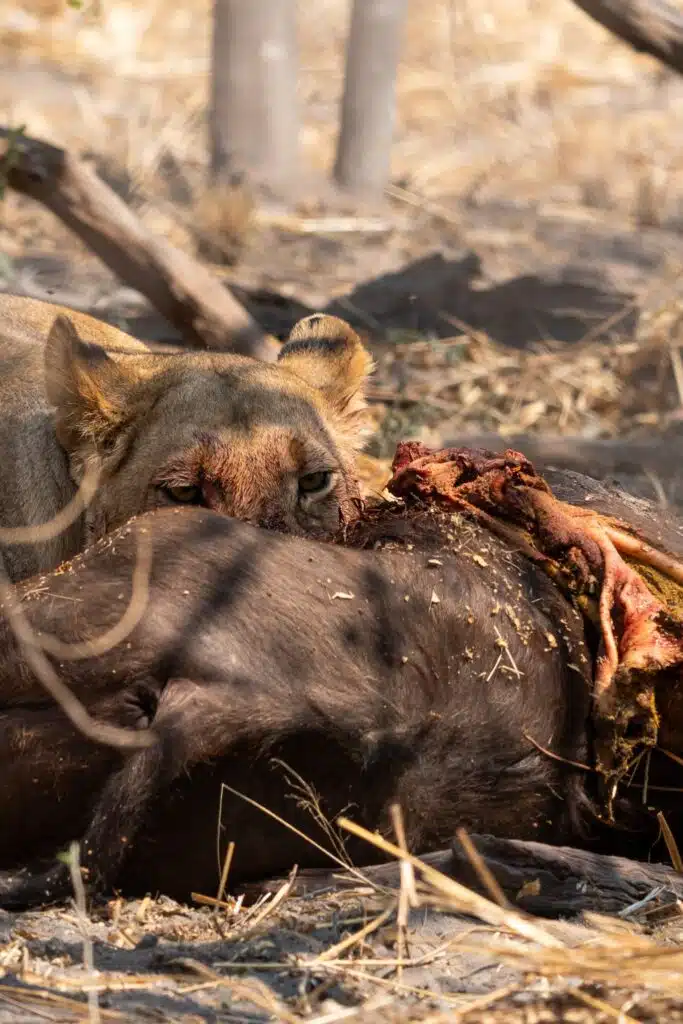
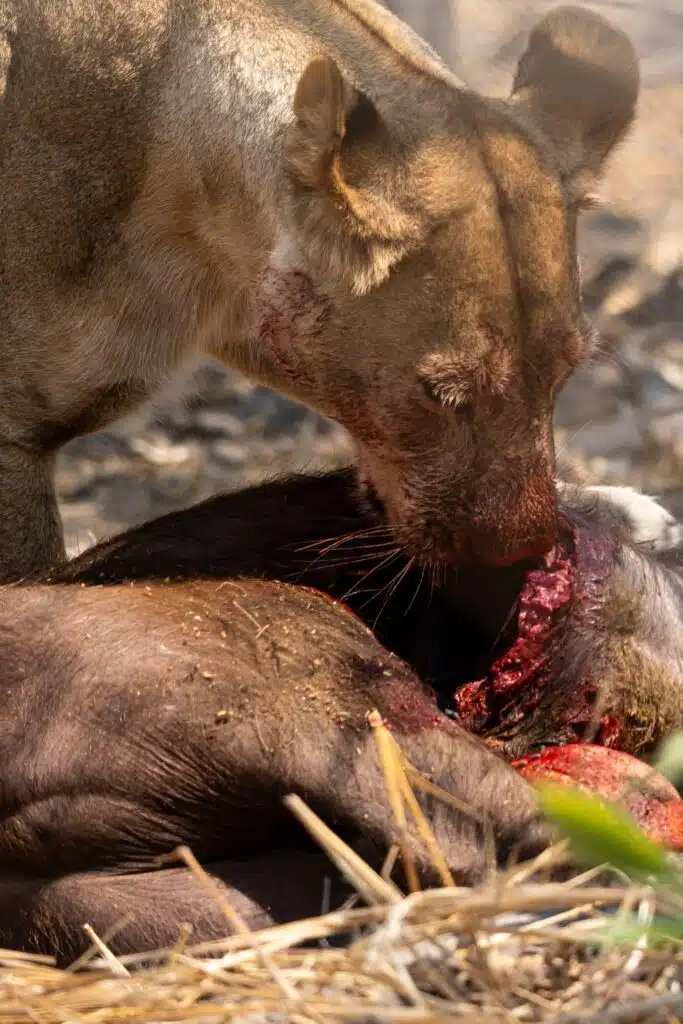
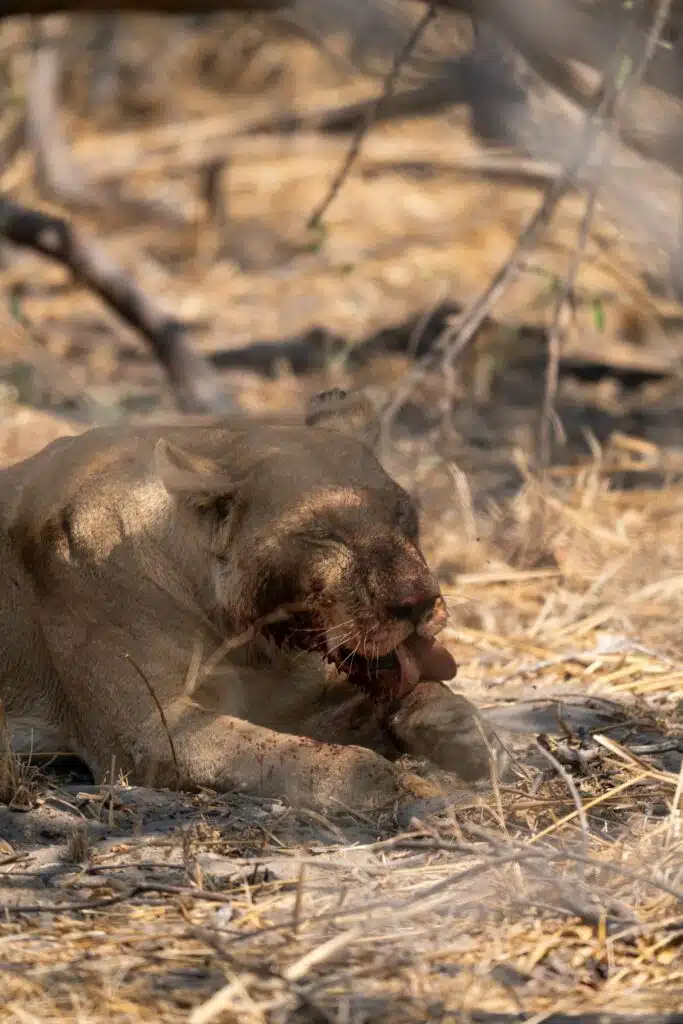
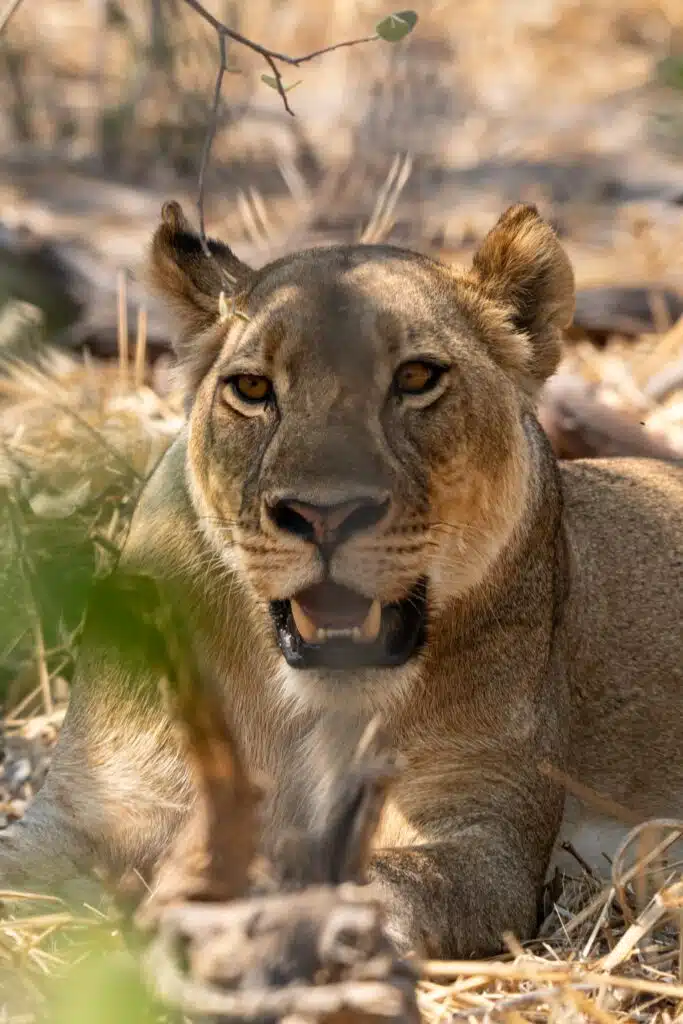
We got SO lucky when we stumbled across not 1 but 4 lionesses eating a freshly killed buffalo, which felt like we were inside our very own National Geographic documentary.
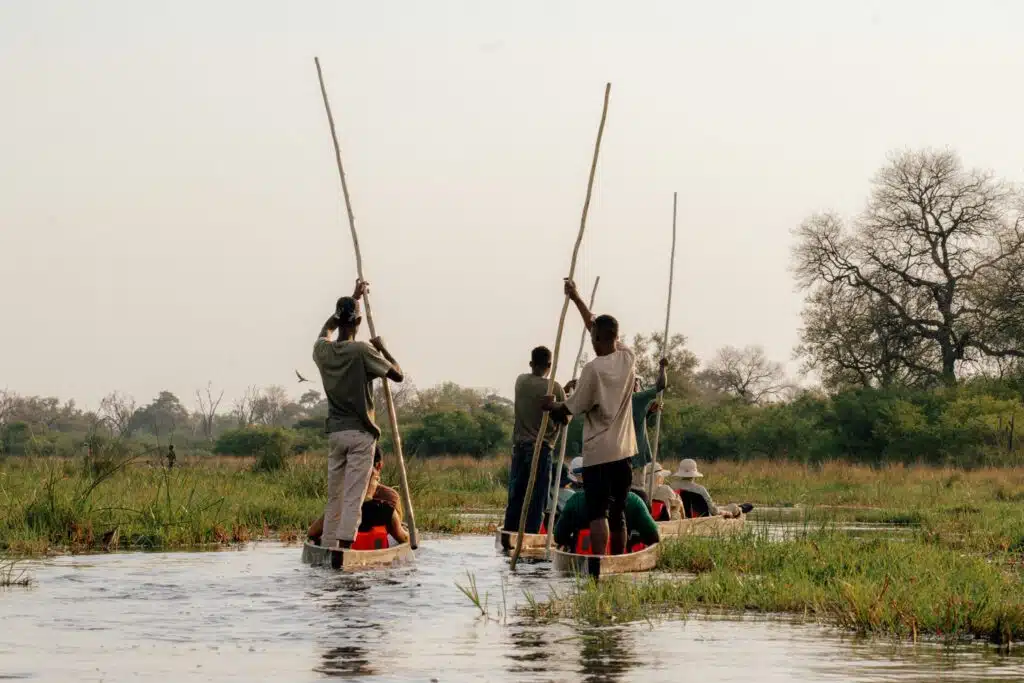
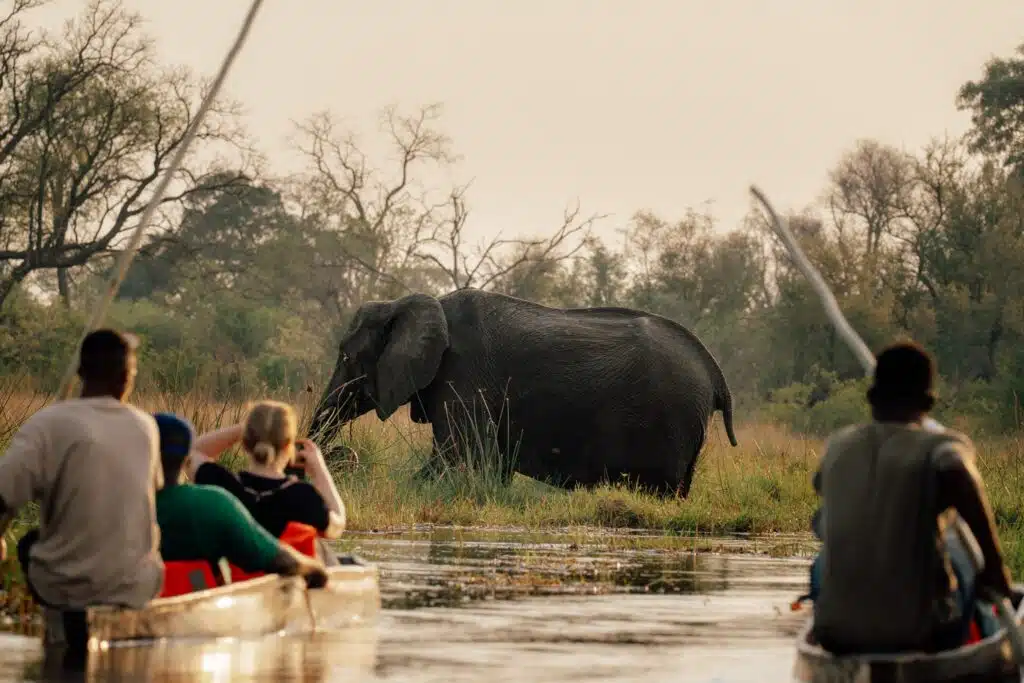
In the afternoon, we got to sail down the Delta in a traditional Mokoro Canoe, where we got to watch elephants graze at sunset. This experience was honestly so, so magical.
Day 9: Khwai to Nata
We packed up super early on this morning, rejoined the truck in Maun, and made our way to Nata.
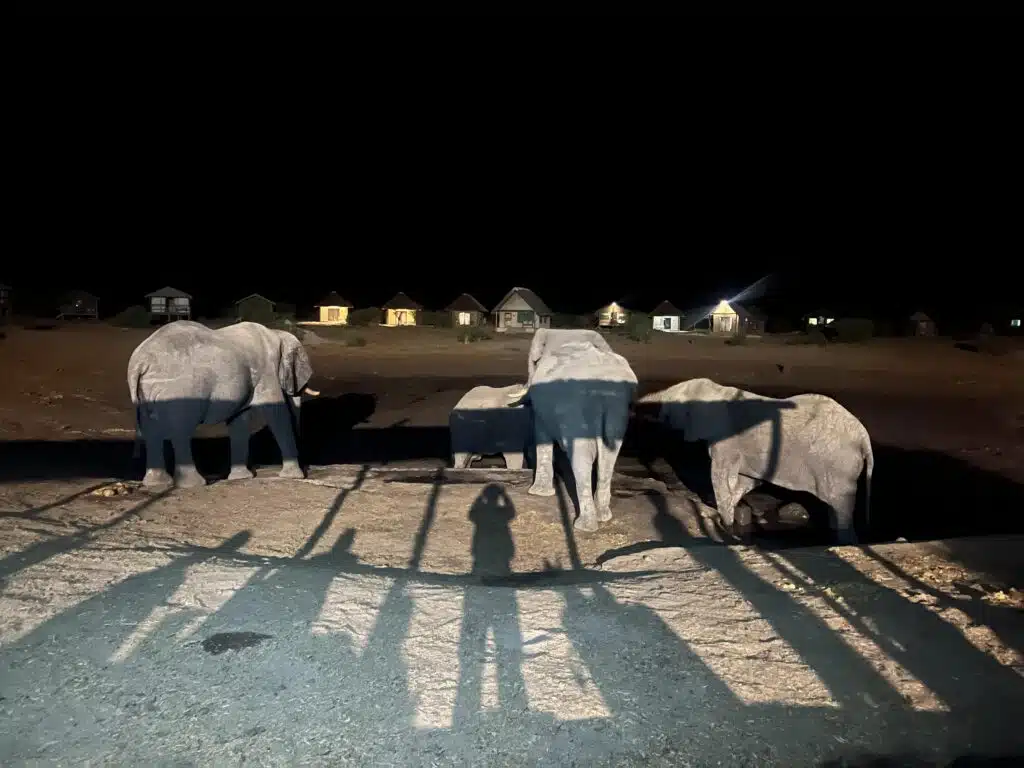
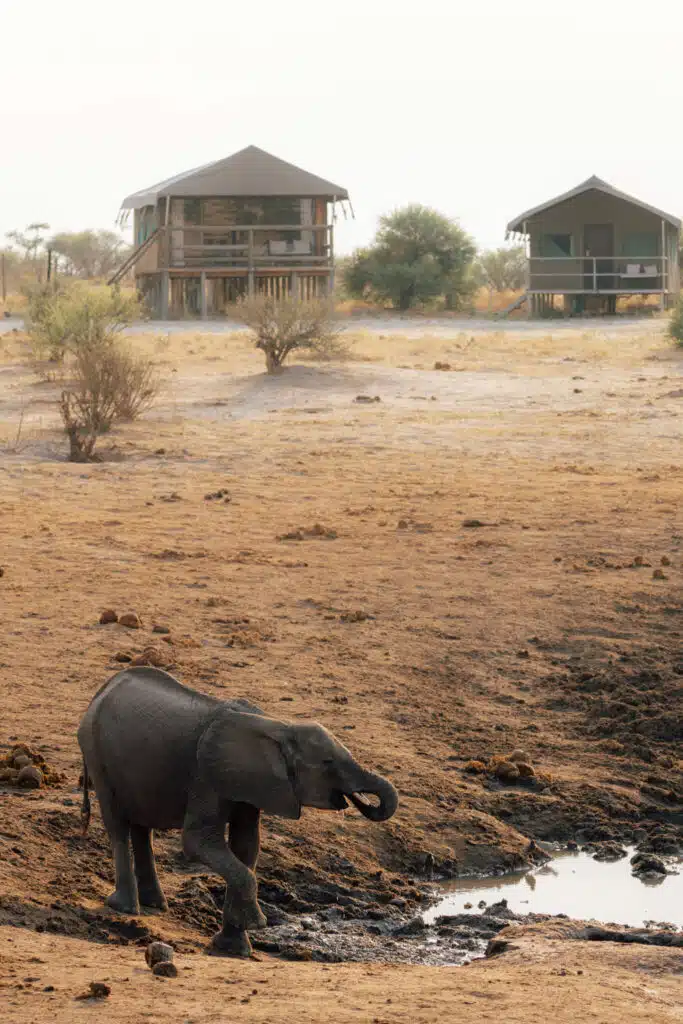
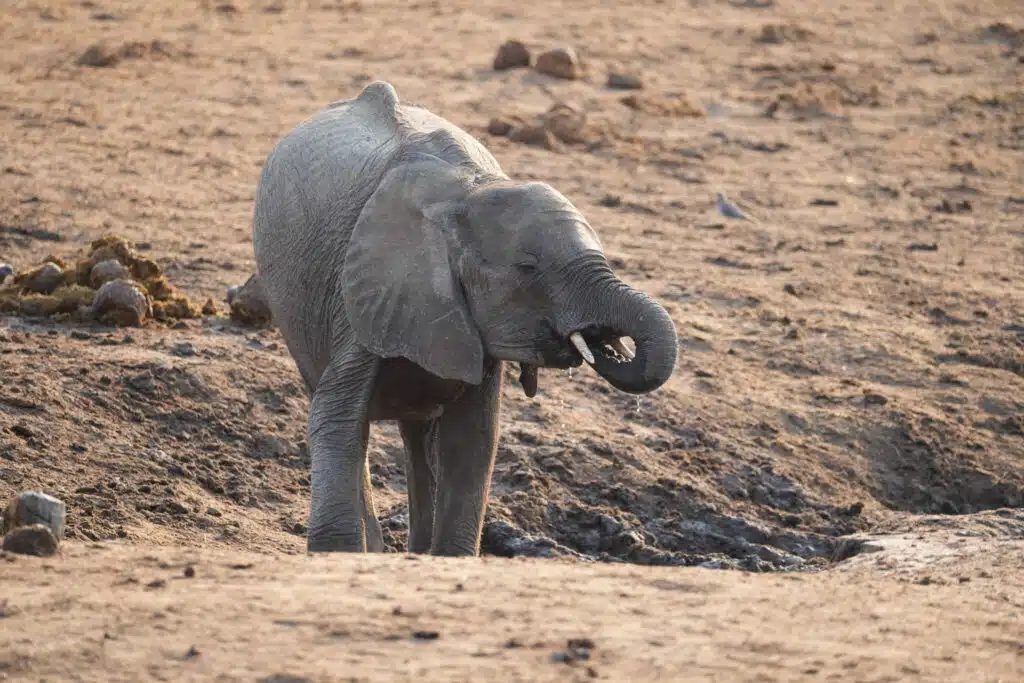
This was another very memorable night as we got to stay at the incredible Elephant Sands Lodge, where we got to watch elephants drink from the watering hole in front of the hotel bar.
Elephants are allowed to roam freely around here, so if you’re staying in a lodge, you must get escorted back to your room; however, if you’re in the campsite, you might just wake up to an elephant outside your tent.
Want to know what to expect at Elephant Sands? You can take a peek here.
Day 10: Nata to Kasane + Chobe River Cruise
This morning, we got our first lie-in of the trip as we didnt have to leave until 9 am.
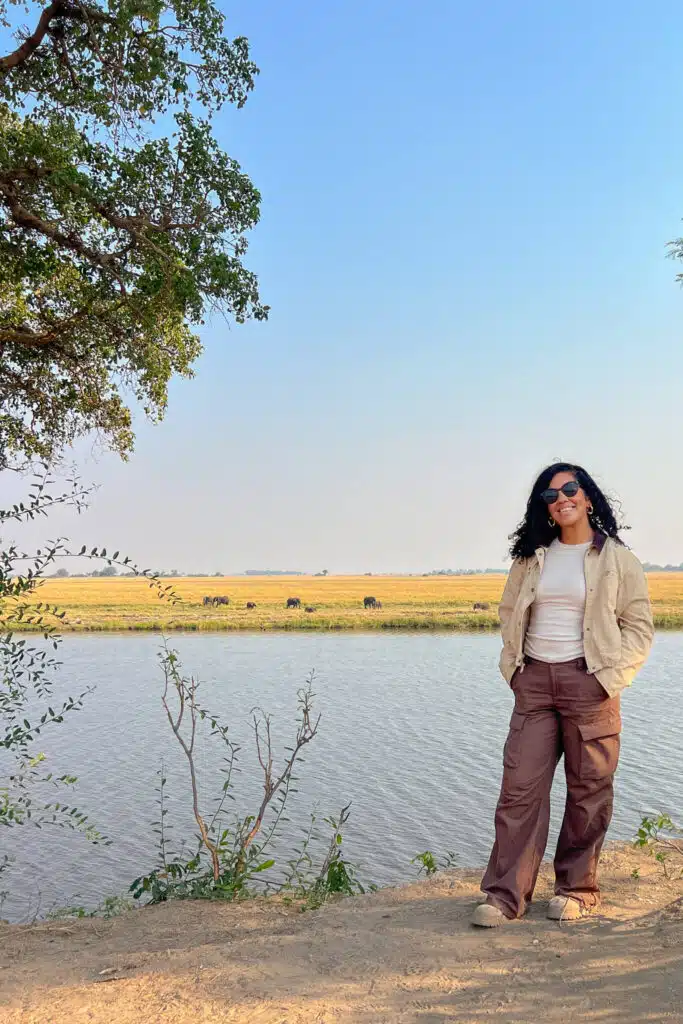
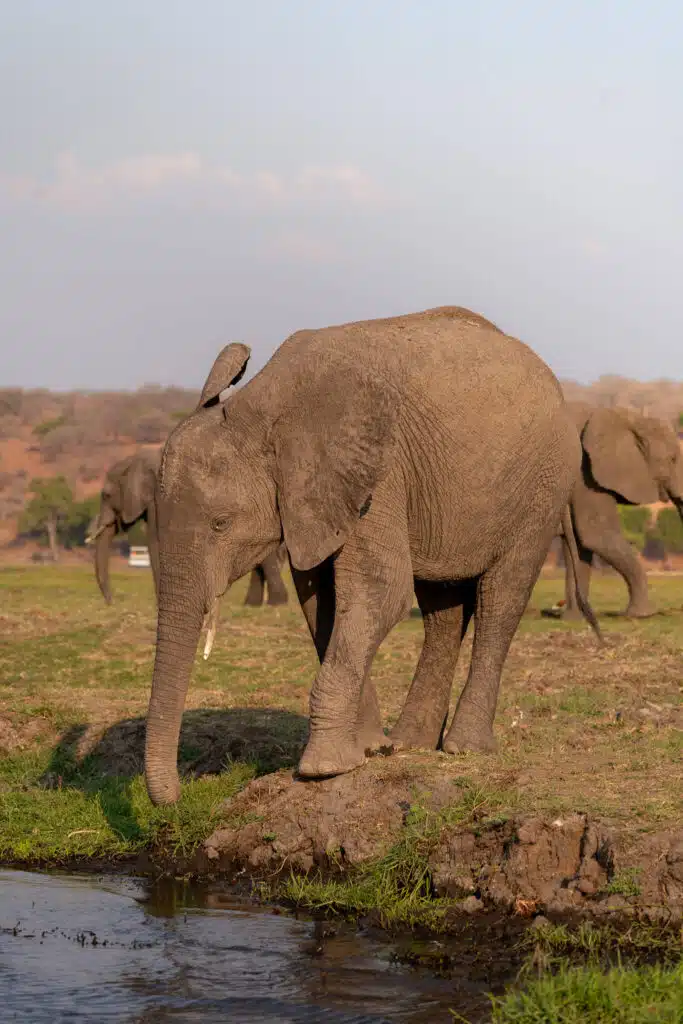
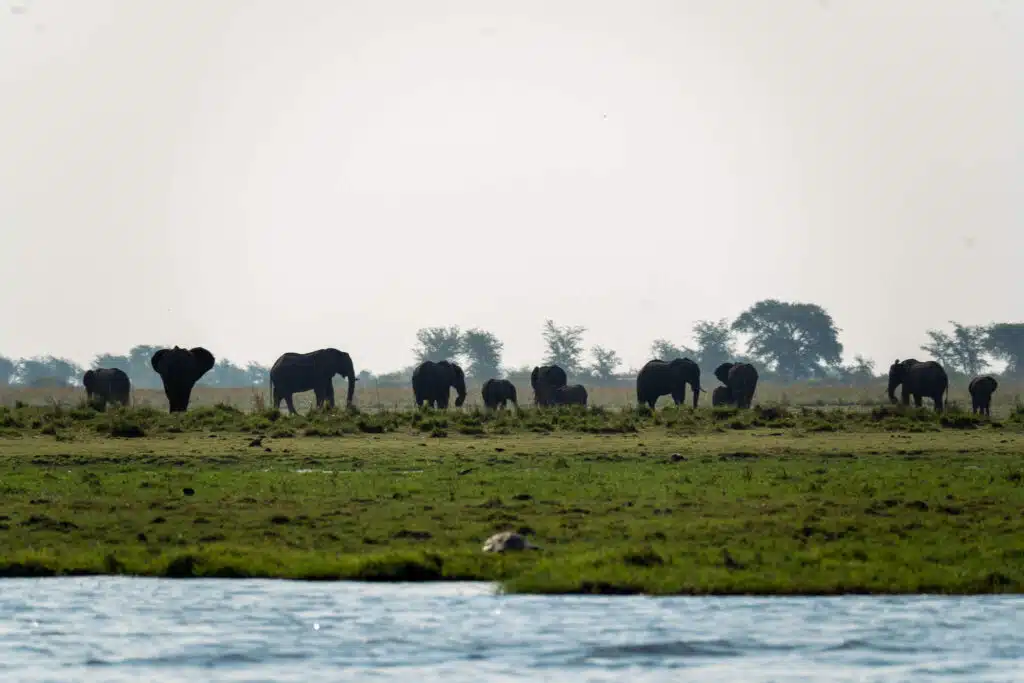
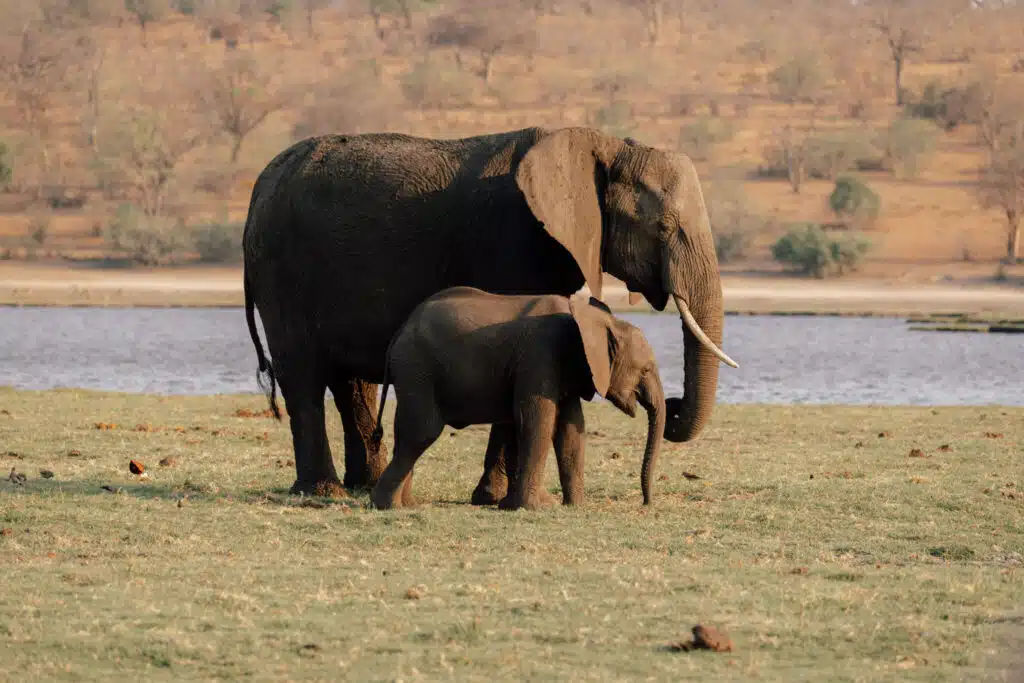
We travelled to Kasane for another one of my favourite experiences: a sunset boat cruise through Chobe National Park. There were soooo many elephants here, and we were able to get super close to them thanks to being on the boat.
Day 11: Into Zimbabwe + Victoria Falls
This morning, we did another incredible safari through Chobe National Park. Again, we got treated to lots of elephant sightings (Botswana is the best place to visit if your favourite animal is an elephant).
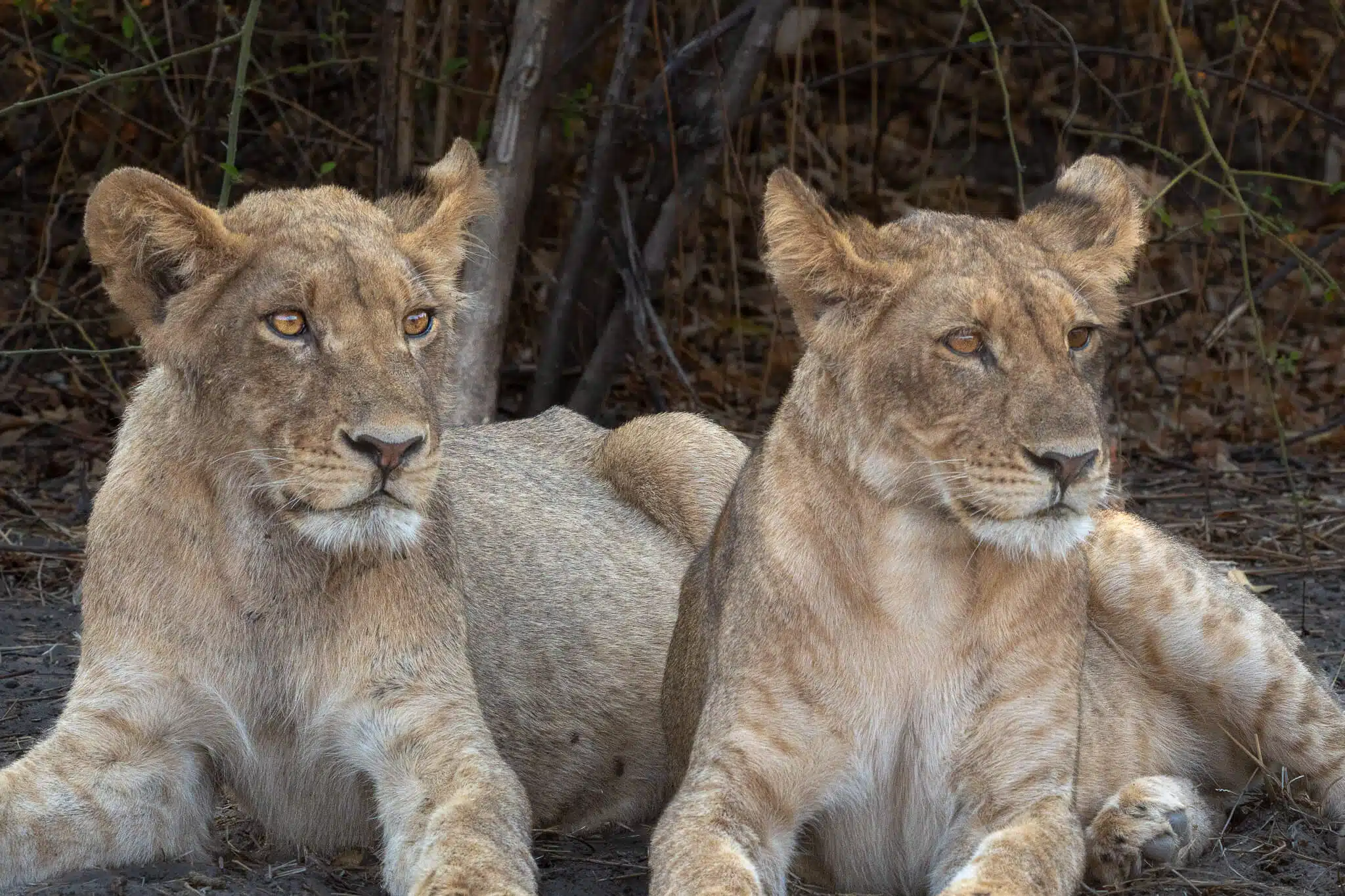
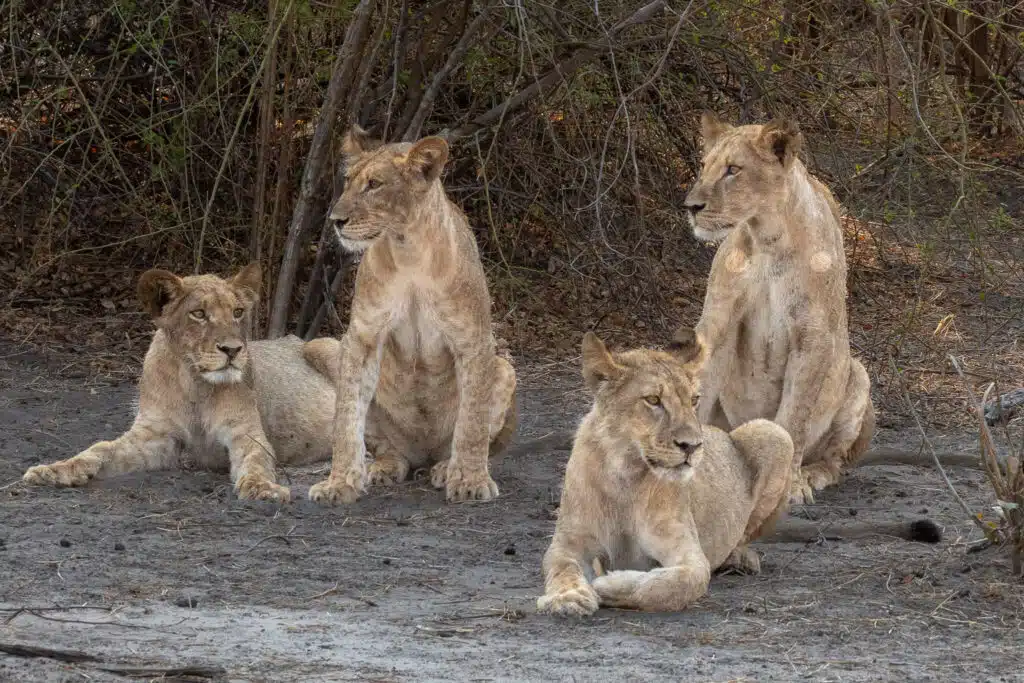
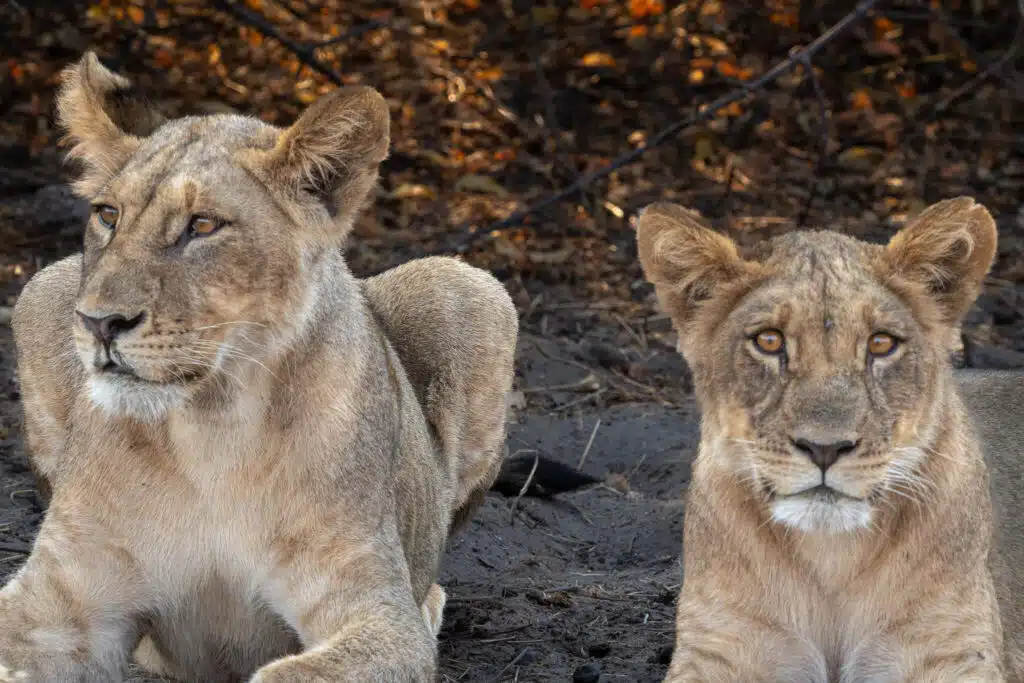
Then we got lucky AGAIN, when we were able to see 2 male lions and 4 older lion cubs within the space of 20 minutes.
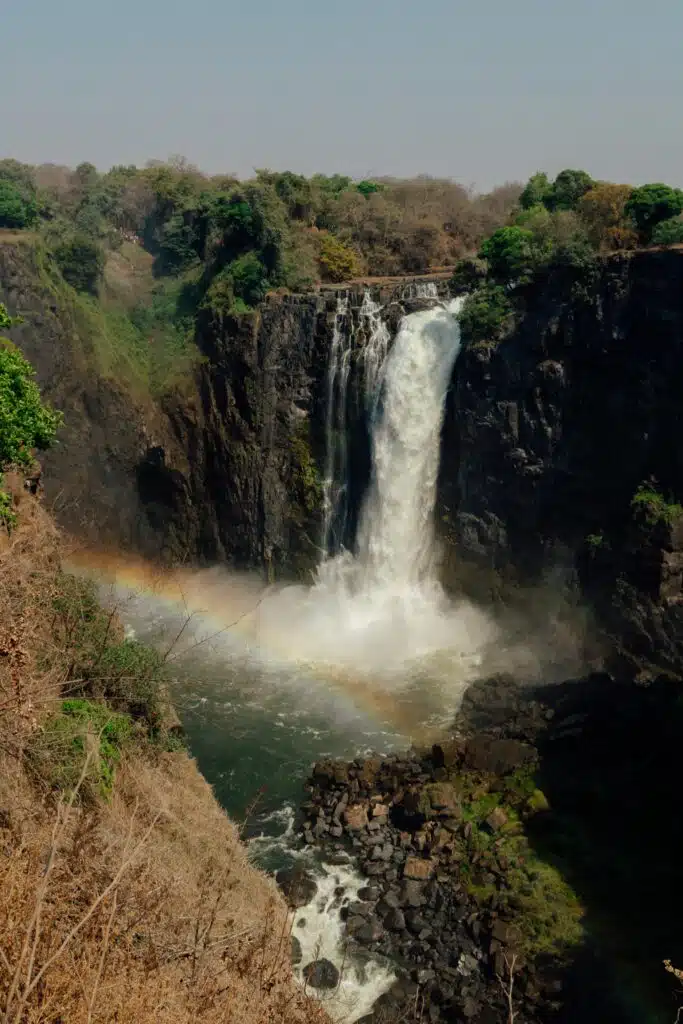
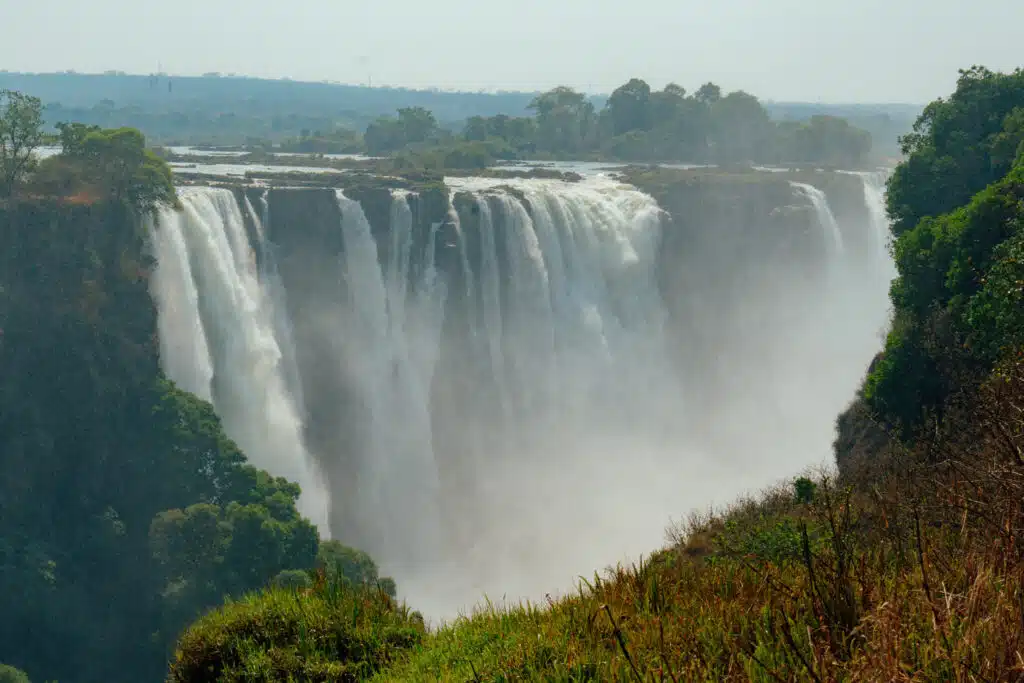
In the afternoon, we did a short border crossing into Zimbabwe, which brought us to Victoria Falls, and we had the afternoon free to explore the falls before dinner.
Day 12: Free Day in Victoria Falls
This was a choose-your-own-adventure kind of day.
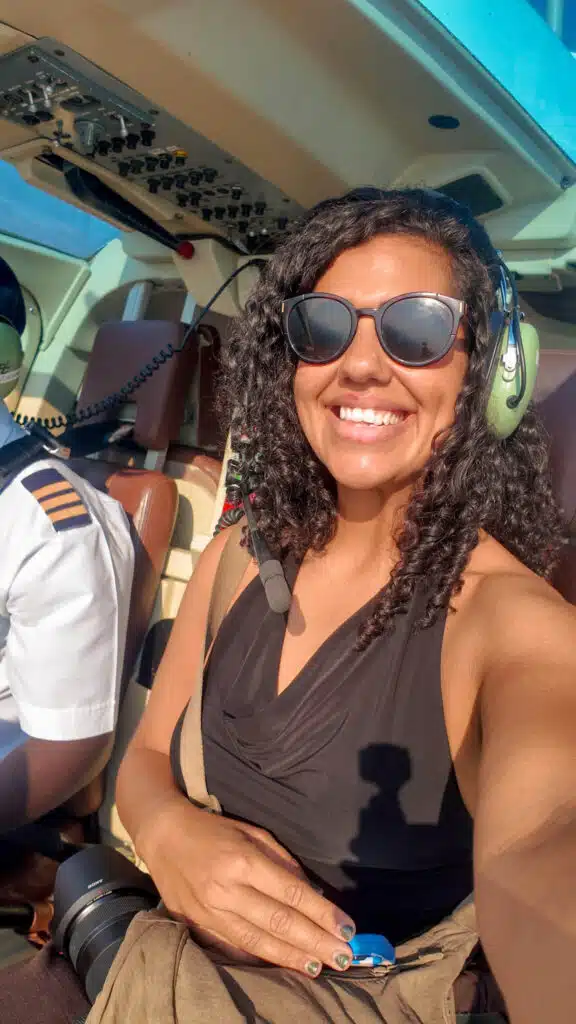
Some of the group went bungee jumping or rafting. I opted for an afternoon helicopter ride; again, I was absolutely petrified of going up in one, but I’m so glad I did.
I ended up having the best experience and the view of the falls from the sky, which was nothing short of inspirational.
This Victoria Falls helicopter ride is not included and will cost an additional $185.
Day 13: Victoria Falls to Hwange National Park
On this day, we had one of the longest drives of the trip on some very bumpy Zimbabwean roads to head to Hwange National Park, which is Zimbabwe’s largest national park (which is approximately half the size of Belgium).
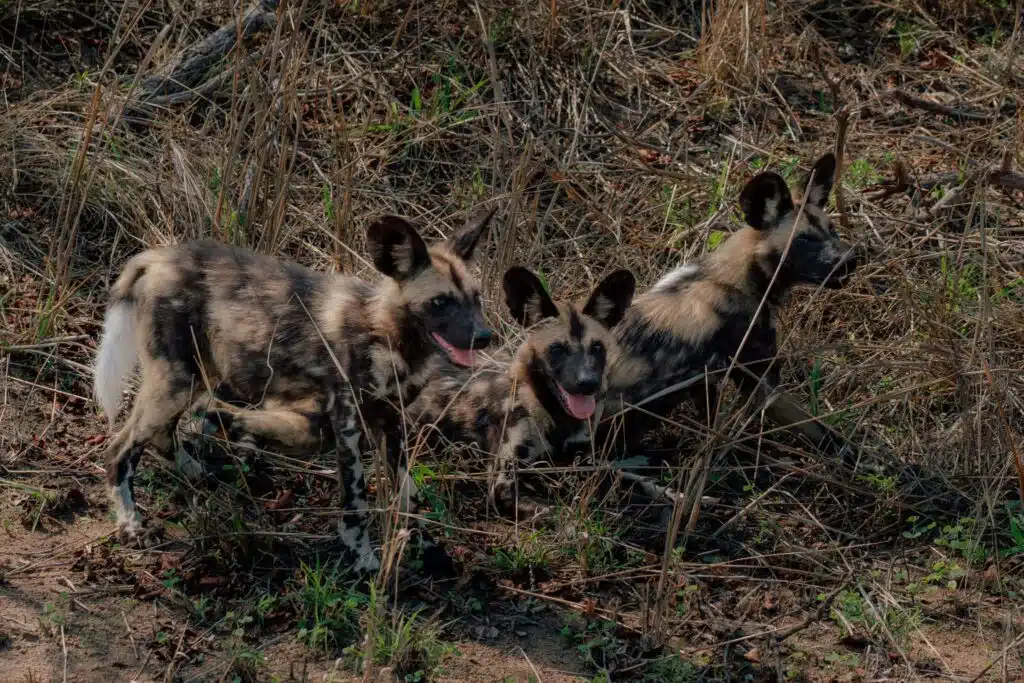
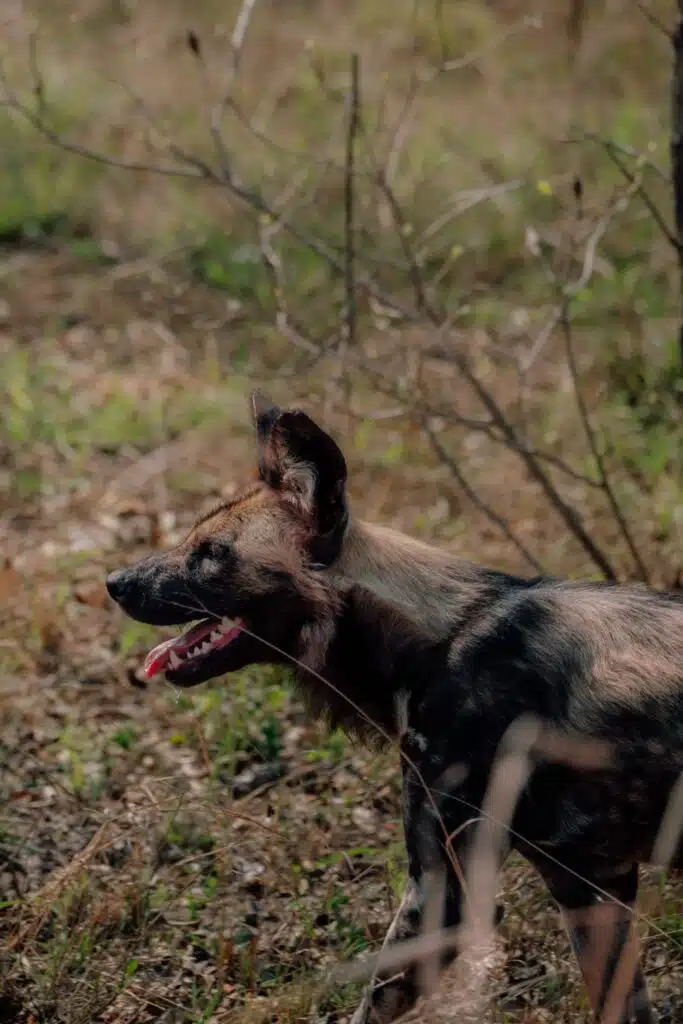
On the way, we visited the Painted Dog Centre, which was super interesting to learn more about painted dogs and how they hunt.
We then checked into the beautiful, and a little more rustic, Miombo Safari Camp. I loved staying here because we got to experience an elephant crashing into our camp one evening (from a safe distance, of course).
Day 14: Full-Day Safari in Hwange
We woke up early for another Safari. I really, really enjoyed the landscapes at this National Park as they felt very different to the previous national parks we had already experienced on this trip.
We were super hopeful to get some big cat sightings, as the group from the previous day had seen both a lion and a leopard; however, they had fled the area by the time we arrived.
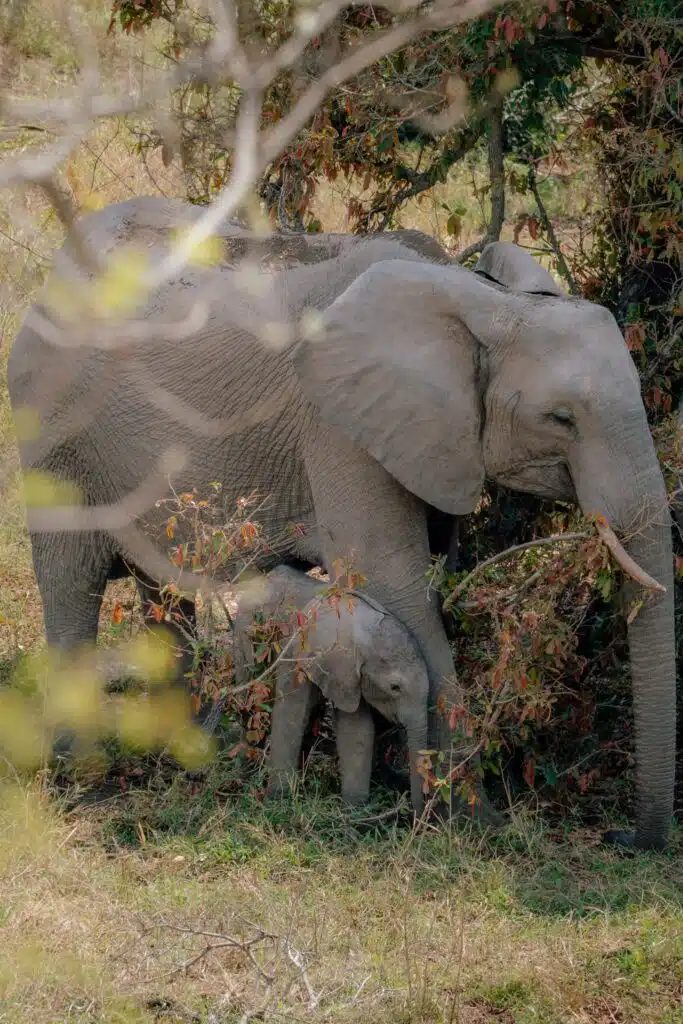
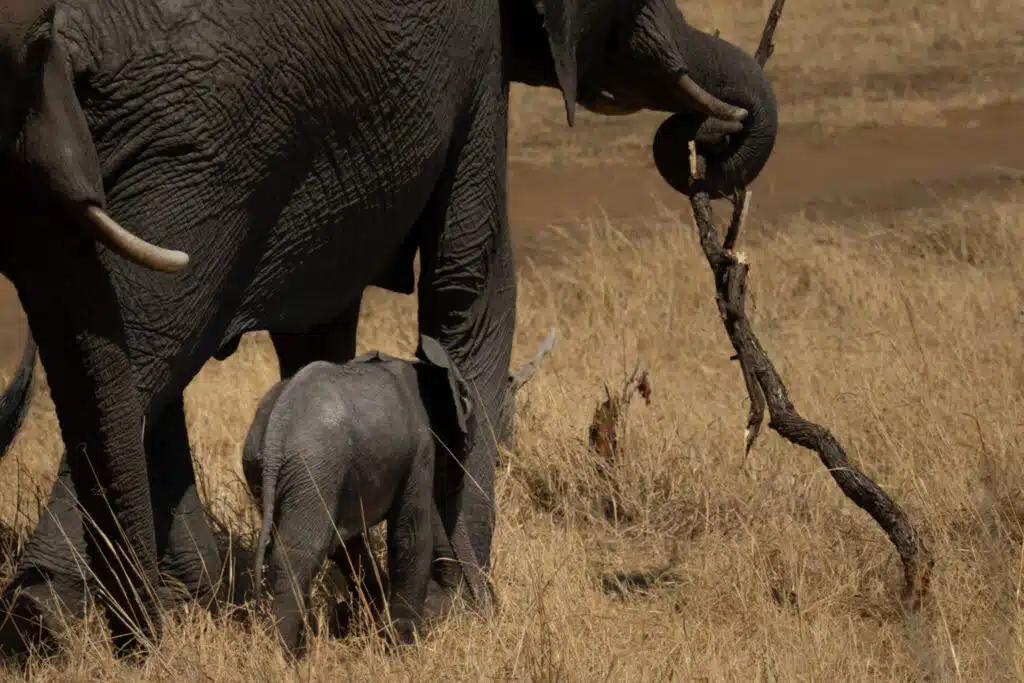
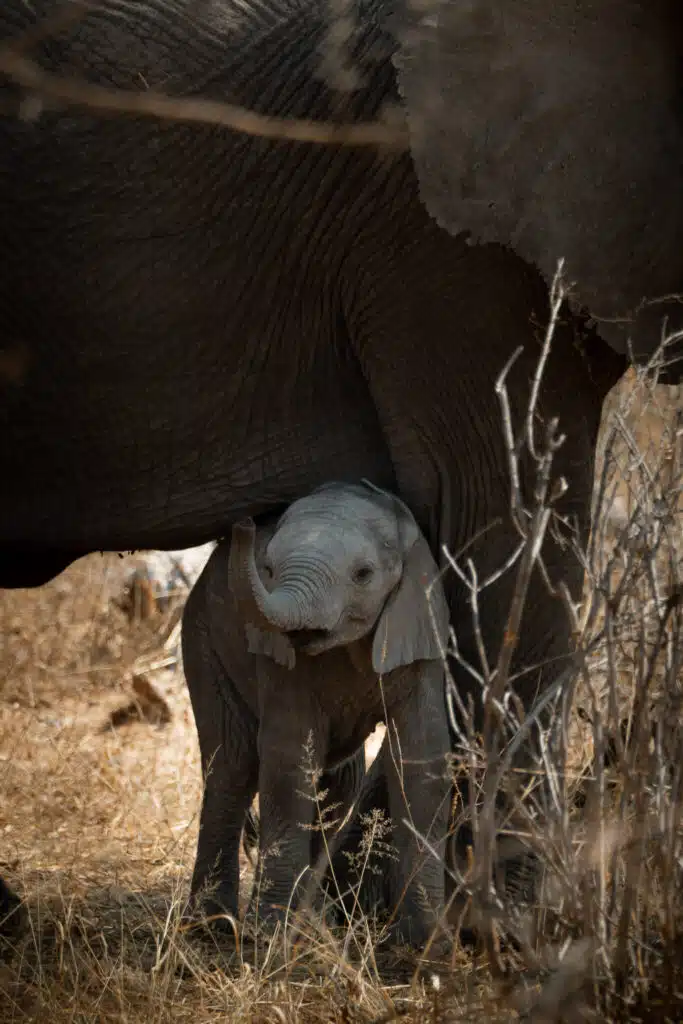
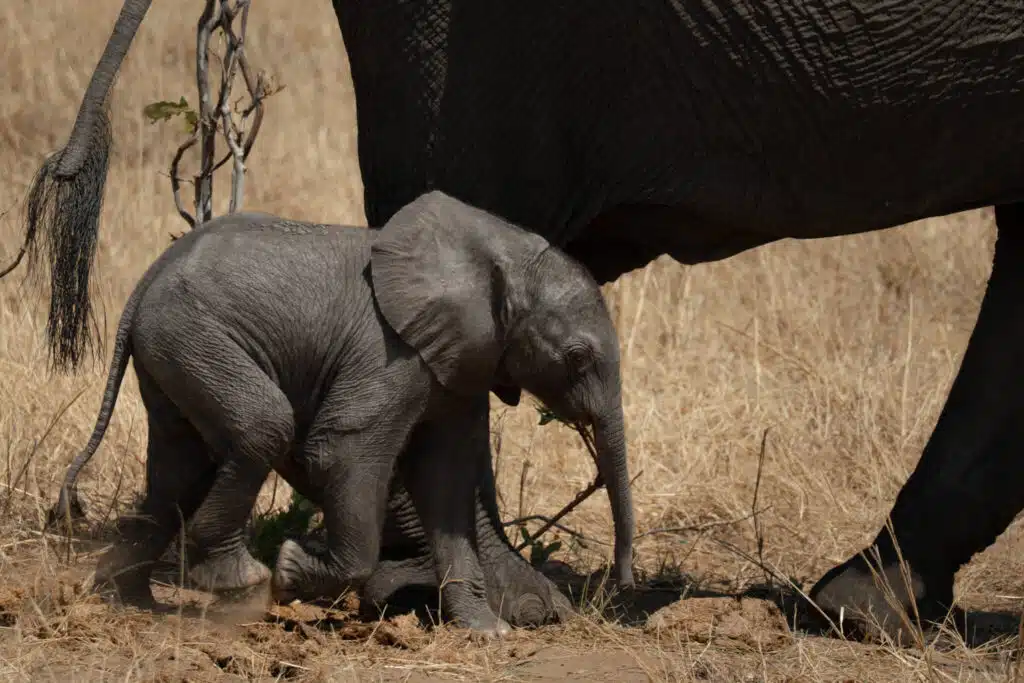
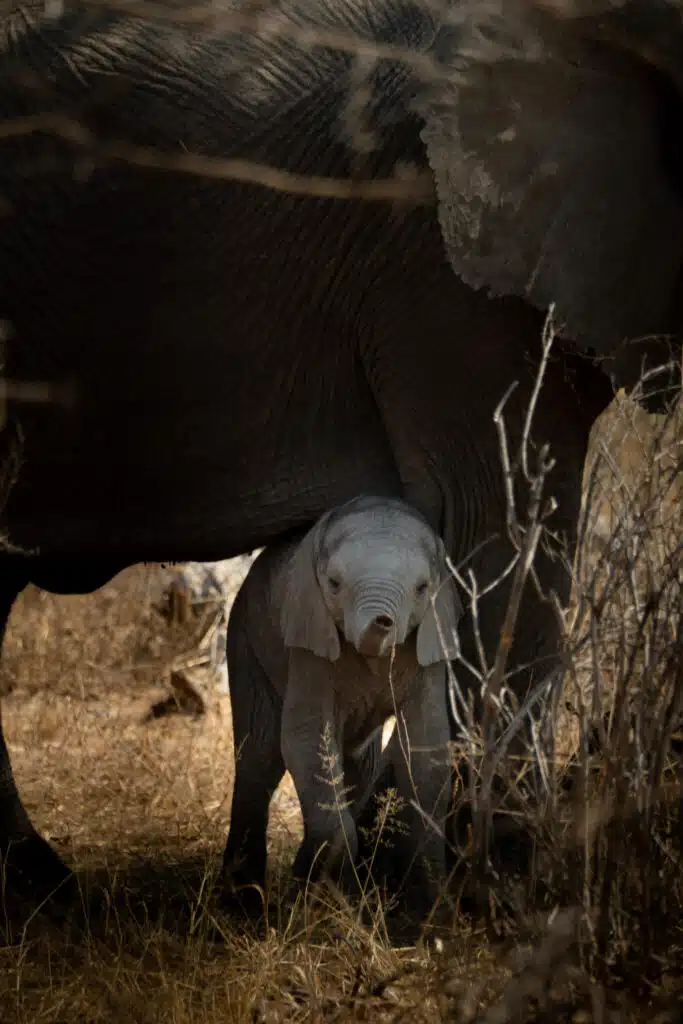
Thankfully, we were so lucky to see two of the smallest baby elephants I had ever seen (this moment was a real highlight for me, too).
Day 15: Hwange to Matopos National Park
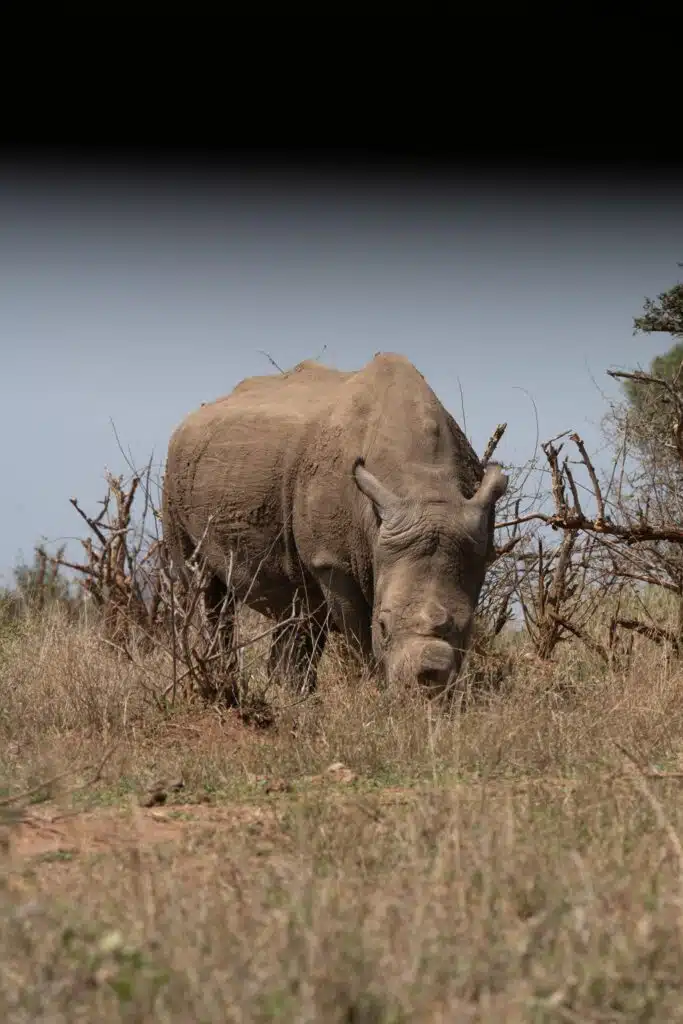
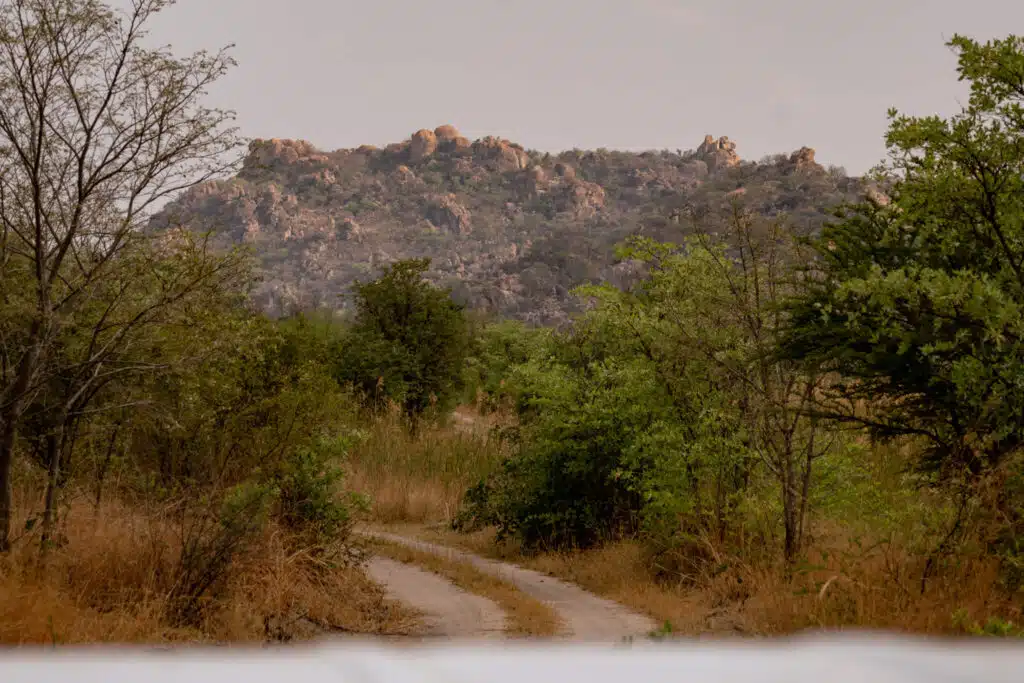
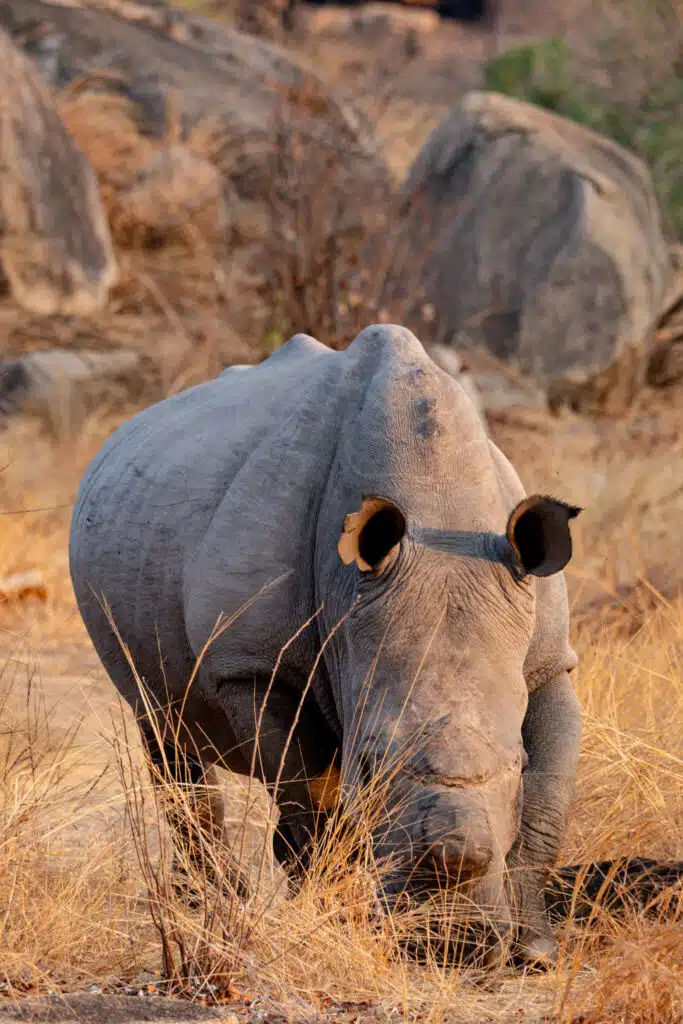
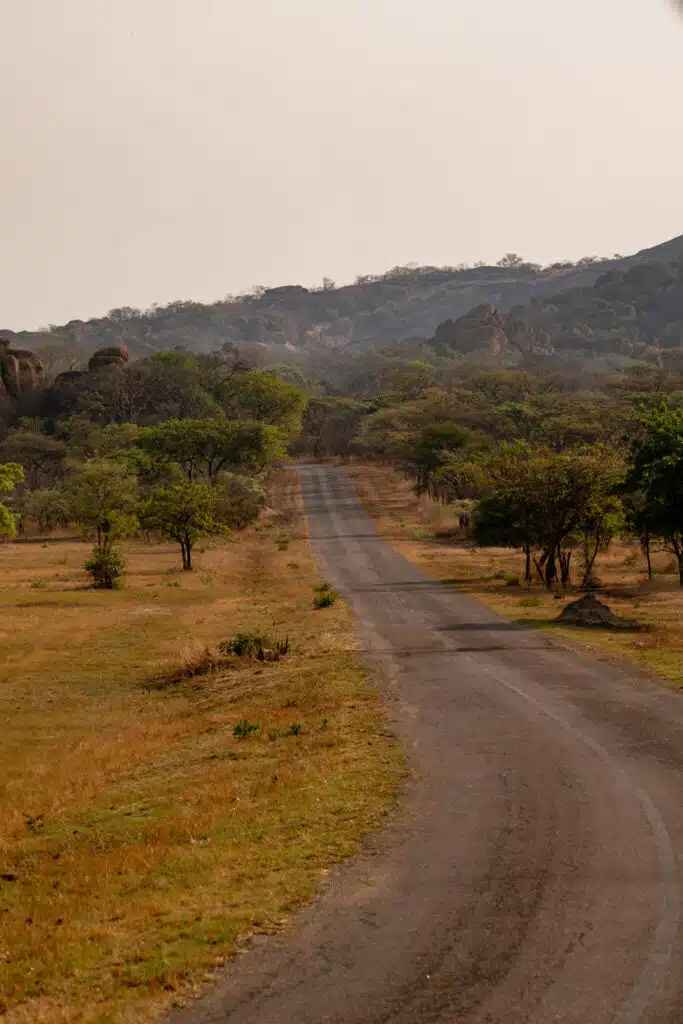
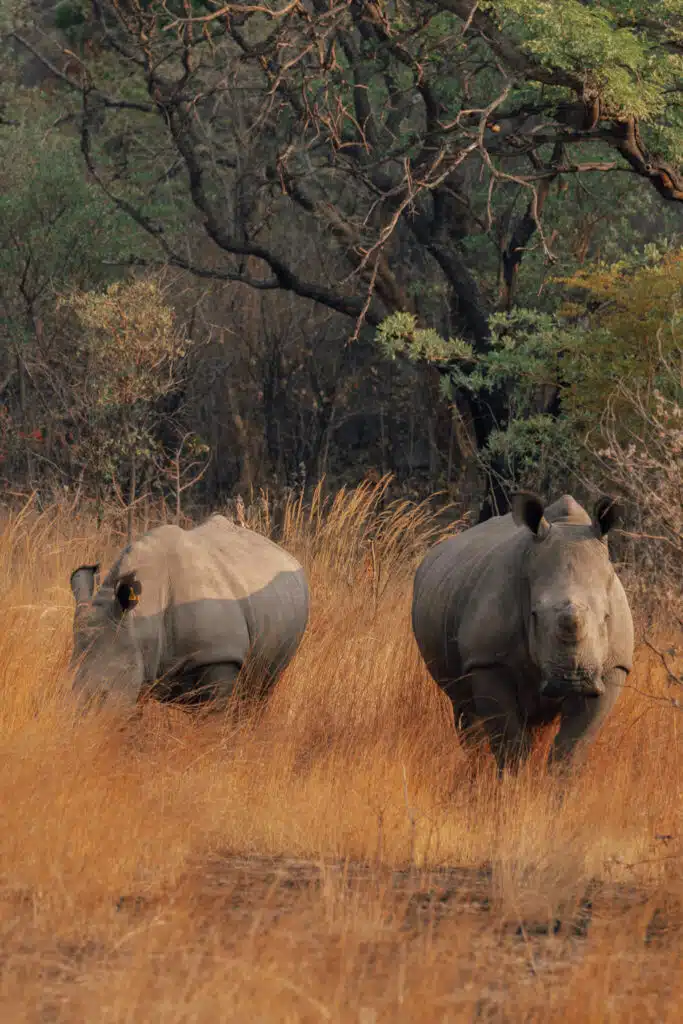
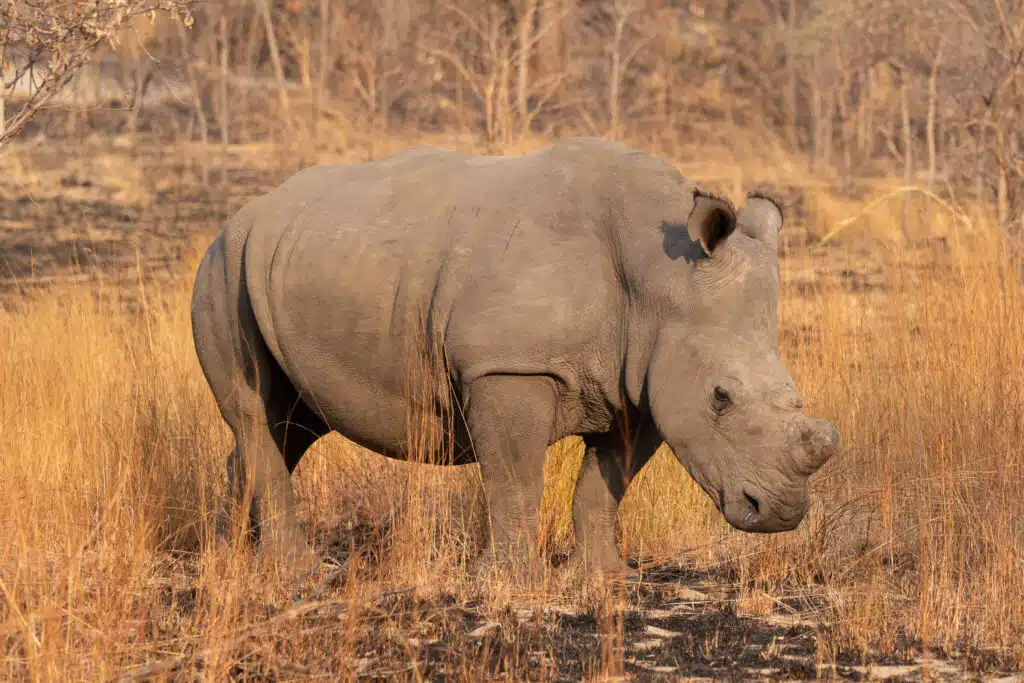
We travelled from Hwange to Bulawayo and into Matopos National Park (a UNESCO World Heritage Site), which is famous for its unique Bushman paintings, granite boulders and most importantly its Rhino population.
That afternoon, we got to explore the park and enjoy a guided walk to get closer to the wild rhinos, which was such a bucket-list moment.
We also got to learn more about the anti-poaching efforts that go on to ensure that these rhinos are not killed. These efforts include: sadly removing their horns, and 24-hour anti-poaching patrols by armed guards.
We even witnessed first-hand the efforts poachers will go to, when we saw a deliberate attempt to start a wildfire in the park.
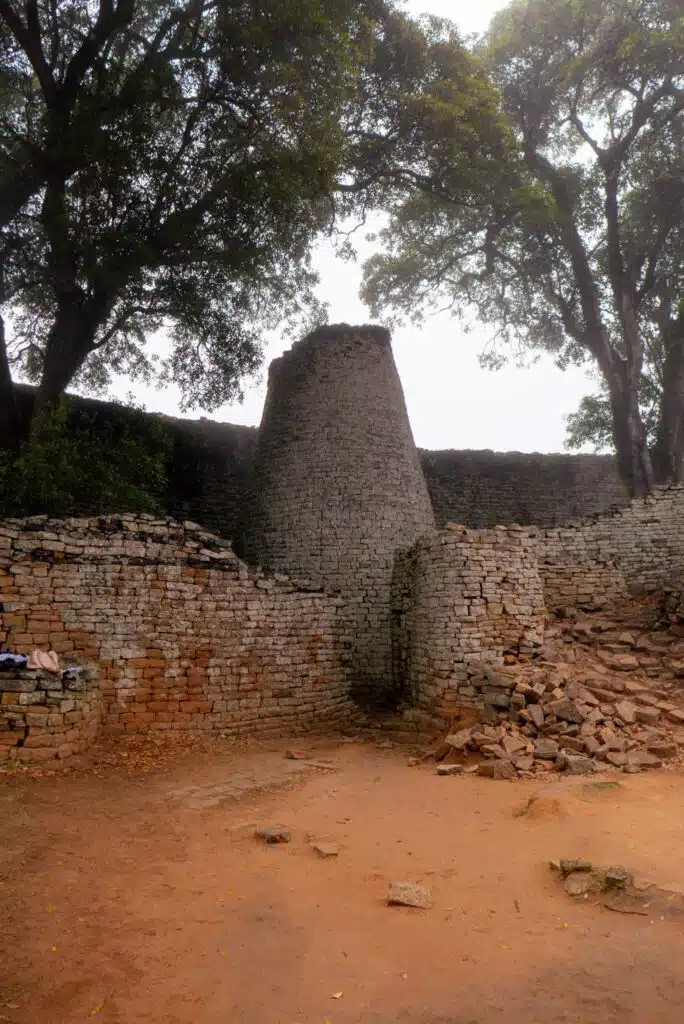
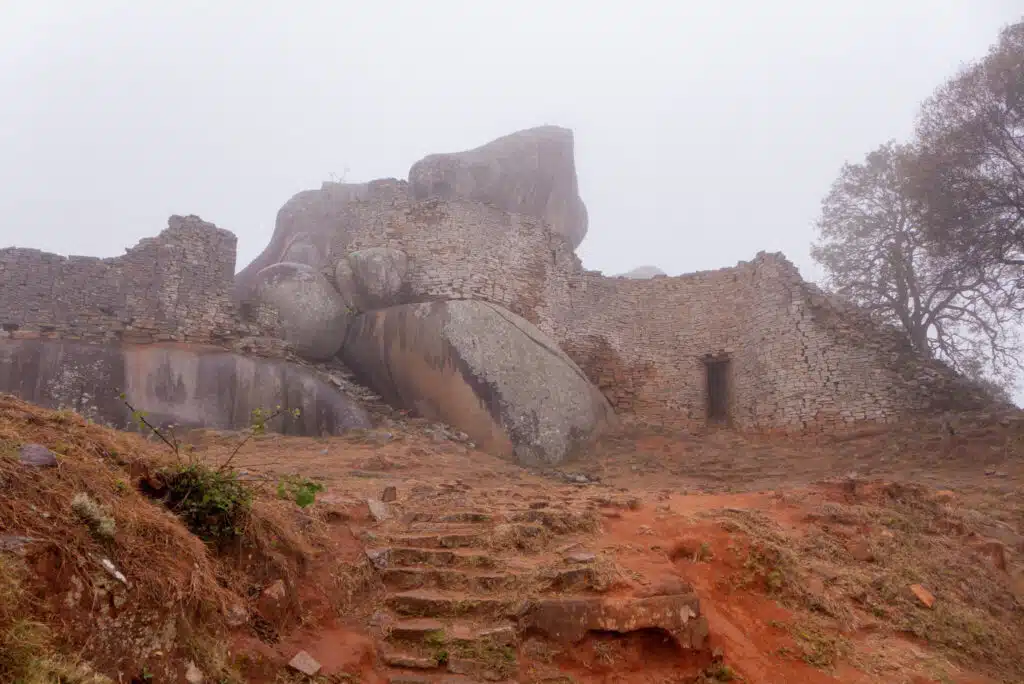
Day 16: Great Zimbabwe Ruins
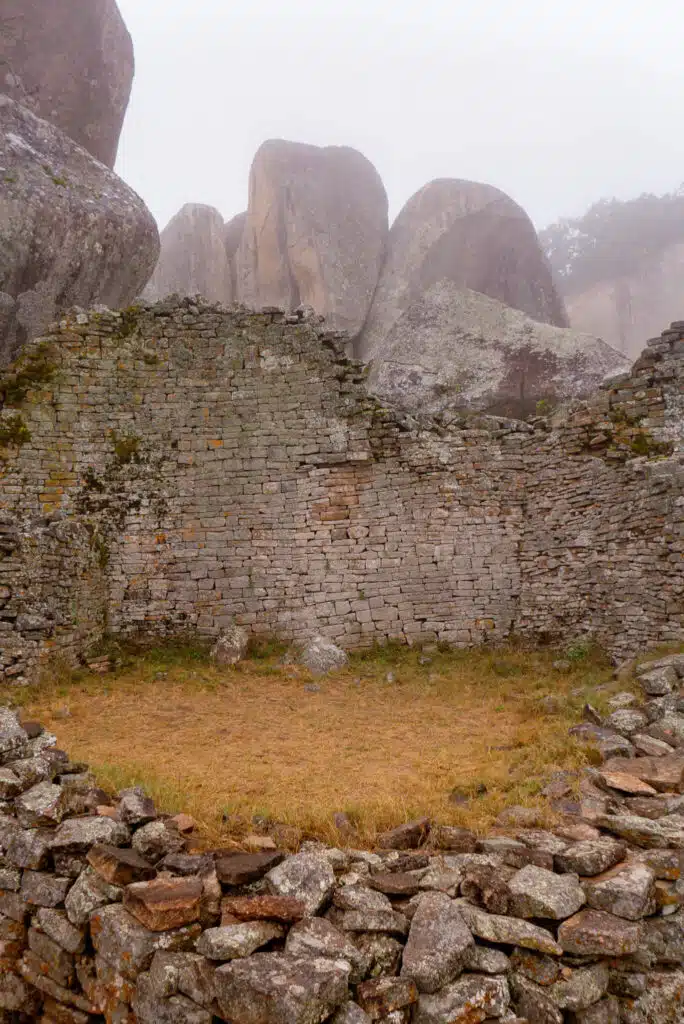
We headed south to the town of Masvingo to visit the Great Zimbabwe Ruins. I’m not someone who’s usually into history like this, but it was truly fascinating. We to learn so much about this ancient city and the Shona people who lived here.
I also loved how passionate the tour guide was; he’d been working here as long as I’ve been alive (33 years).
Day 17: Into South Africa – Mapesu Private Game Reserve
We crossed the border back into South Africa and camped at Mapesu Private Game Reserve. This accommodation was so beautiful, and it felt like the perfect end to a perfect trip.
Day 18: Return to Johannesburg
In the morning, we enjoyed a short, final game drive on the reserve, where we got to see some Lions and rhinos before heading back to Johannesburg.
After nearly 6,000 kilometres together, it was hard to say goodbye to the crew and group, but I definitely left with such incredible memories.
🐘Have I convinced you to book a tour? Check out African Overland Tours if you want to experience one of the most memorable trips of your life!
Is An African Overland Tour Worth It?
If you’re considering a trip like this, the big question is: Is an African Overland Tour worth it? In my experience, YES, especially if you’re planning your first trip to this part of the continent and want a safe and stress-free way to see multiple countries.
This style of travel isn’t for everyone, but it’s well-suited to solo travellers and first-timers in Africa. Or if you’re the kind of person who wants someone else to do all the thinking and planning for you.
You’ll get to see a lot in a short amount of time, and the group dynamic really adds a lot of fun along the way.
FAQ’s on Overlanding Africa
Is African Overland Tours a legit company?
Yes, African Overland Tours is a reputable tour platform that partners with trusted overland operators across the continent. While they don’t run the tours themselves, they vet all itineraries and ensure high standards.
What is the best African safari tour company?
To be honest, there’s no single “best” because it depends on your travel style. What’s great about African Overland Tours is that you can search for the best tour option for you, based on its curated list of tours from reputable tour companies.
When is the best time to do an African overland tour?
The dry season (generally May to October) is the best time to go out on game drives, especially in Southern Africa. This is when animals congregate around watering holes, meaning that sightings are much more common and frequent.
What’s included in an African overland tour?
Most tours include transport, accommodation (camping or lodge), most meals, entrance fees for national parks, and a qualified guide and driver. Optional excursions and personal expenses like snacks, drinks, and tips are usually extra.
Are African safari tours safe?
Yes! Especially when travelling with a tour company. Overland tours are well-organised, and guides are trained to manage safety in remote areas. That said, make sure that you always follow your guide’s advice and be aware of your surroundings.
Are overland tours in Africa safe for solo female travellers?
Yes. Many solo female travellers (including myself) choose overland tours for the safety and structure they offer. You’ll be part of a group, travel with professional guides, and most campsites and accommodations are secure (minus the odd elephant or two).
How much do overland tours in Africa cost?
Prices vary depending on the length, route, and comfort level. A 3-week Africa overland tour typically ranges from $3,000–$6,000 USD (excluding flights).
Are African safari tours worth the money?
Absolutely! If you’re after once-in-a-lifetime experiences like seeing the Big Five and/or visiting multiple countries in one trip, it’s 100% worth it.
Do I need a lot of camping experience for an overland tour?
Not at all. Most people on my trip had little or no camping experience. If you’re not sure about something (including how to put up your tent), the crew and other tour members will always be on hand to help.
What should I pack for a 3-week overland tour in Africa?
I’d recommend packing light but practical. Make sure to bring layered clothing for warm days and cold nights, a good headlamp, toiletries (including wet wipes), a reusable water bottle, a power bank, and a soft duffel bag (not a hard suitcase).
You’ll also want a basic first aid kit and copies of key documents.
Can I go on an African overland tour if I’m in my 30s or older?
Yes! While some travellers are in their 20s, the majority of people on my tour were in their 30s, 40s, 50s, 60s (and even 80s). The age diversity on these trips adds a lot to the group dynamic, and it’s really lovely to listen to and connect with people of all ages from different parts of the world.
What travel insurance do I need for an African overland tour?
Look for comprehensive travel insurance that covers:
-Medical emergencies (hospital stays, evacuations, repatriation)
–Trip cancellation or interruption
-Baggage loss or theft-Travel delays
-Emergency evacuation
-Personal liability
I can really recommend World Nomads, which is the insurance company I used to provide cover for this trip.
Final Thoughts: Would I Book with Africa Overland Tours Again?
Absolutely. This overlanding experience through Southern Africa gave me everything I hoped for and so much more.
From the logistics, to the guides, who really work their butts off to ensure you have the best time, to the sheer variety of landscapes and wildlife, it was honestly such an unforgettable journey and one that I will reminisce about when I’m an old lady.
I’d personally recommend it to anyone who wants to explore Africa, and especially for solo travellers or those short on time who still want to cover a lot of ground.
If you’re considering exploring Africa and want the ease of a pre-planned route with trusted providers, then African Overland Tours is a great place to start.
So if you’re ready to start researching, check the current overland tour options with Africa Overland Tours.
If you have any questions, please drop them in the comments, and of course, I’ll be happy to help.