

The ULTIMATE 4-Week India Itinerary (North & South India)

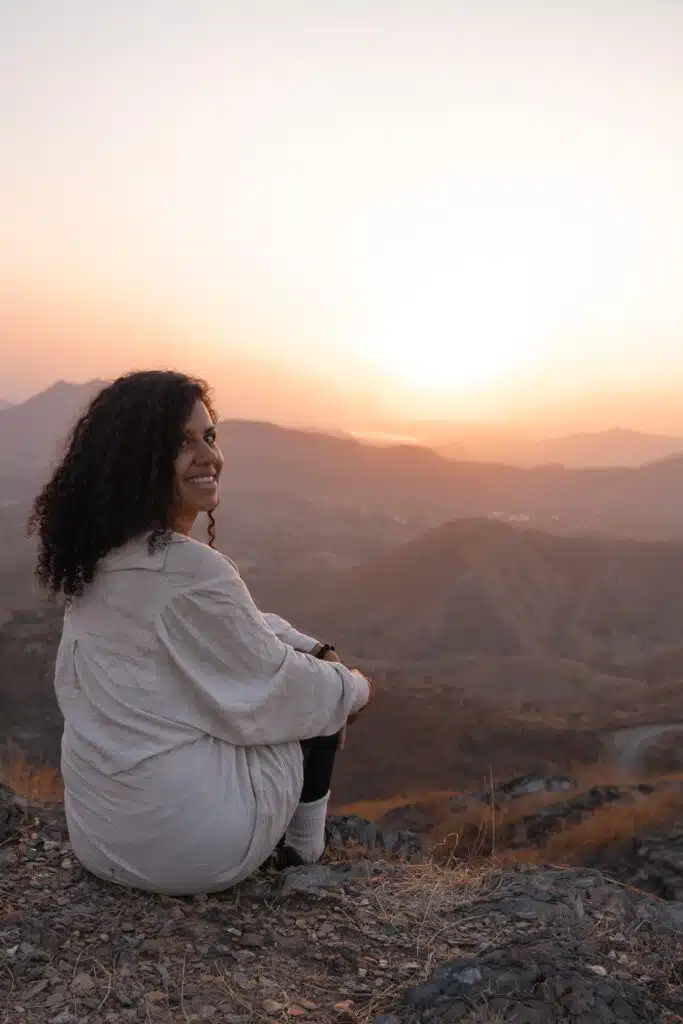
If you’re planning one month in India and want an itinerary that balances iconic North Indian highlights with the slower, more laid-back feel of the South, this is the exact route I’d recommend.
India is huge, and the contrast between North and South honestly feels like travelling through two different countries.
In the North, I found the experience intense, historic, and deeply moving from the spiritual atmosphere in Varanasi to the colour and chaos of Rajasthan.
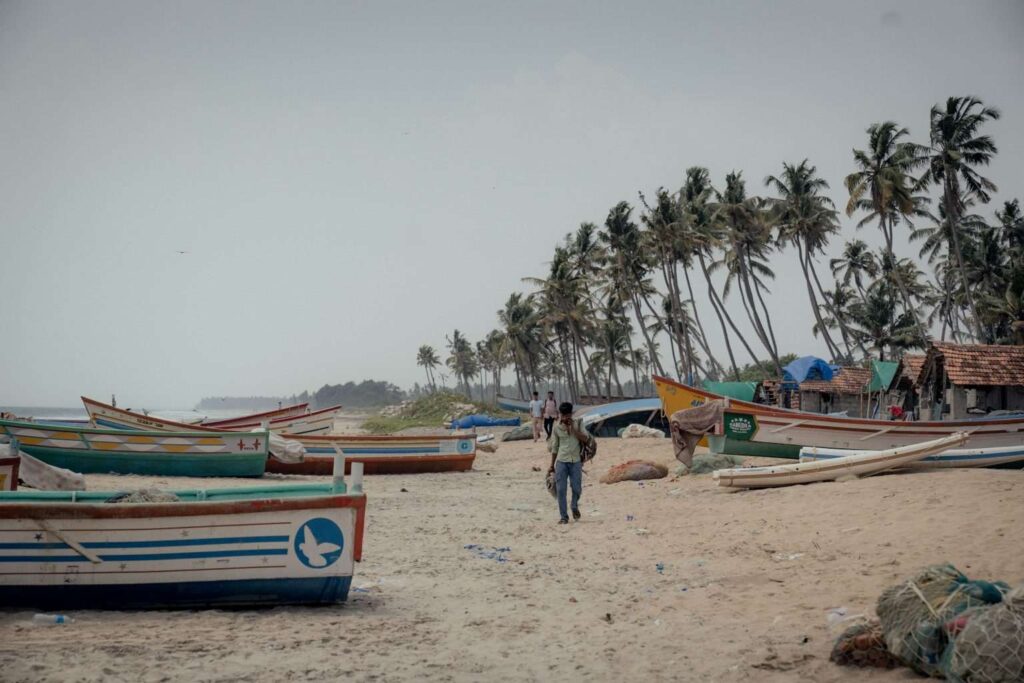
The South, on the other hand, was where I finally slowed down, swapped cities for beaches, and spent time in nature in places like Goa and Kerala.
This itinerary is based on the route I personally followed, with a few adjustments I’d make now to avoid burnout (because India can be incredible… and a lot if you don’t pace yourself).
Whether you travel North to South or South to North, this guide explains how to plan your route around the weather, energy levels, and travel time, so that you can enjoy your 4 weeks in India rather than rush through it.
Disclaimer: This post contains affiliate links. If you decide to make a verified purchase through the links in this post, I will earn a small commission. This will be at no extra cost to you. Thank you.
Why trust this India itinerary?
I spent just over one full month backpacking through India, following this route through both the North and South.
During that time, I relied on a mix of overnight buses, trains, domestic flights, and local transport, staying in everything from budget hostels to boutique guesthouses.
I’ve included places where it makes sense to slow down, realistic travel days, and honest advice around navigating long distances and avoiding burnout.
I’ve also travelled extensively as a solo female traveller, so safety, location choice, and ease of transport have been considered throughout (especially for first-time visitors).
4-Week India Itinerary Overview (At a Glance)
To make planning easier, here’s a quick snapshot of the full route before we dive into each destination in detail.
Weeks 1 & 2 – North India
- Day 1: Arrival in India & travel to Varanasi
- Days 2-3: Varanasi
- Day 4: Agra
- Days 5-8: Rishikesh
- Days 9-10: Jaipur
- Days 11-12: Pushkar
- Days 13-14: Udaipur
Weeks 3 & 4 – South India
- Days 15-19: South Goa
- Days 20-21: Fort Kochi
- Days 22-23: Munnar
- Day 24: Alleppey
- Days 25-27: Varkala
- Day 28: Hometime
Important: This itinerary is designed as a realistic guide, not a rigid schedule. If you can allow 30–31 days, you’ll have breathing room for delays, rest days, or places you end up loving more than expected (and trust me — that will happen).
When is the best time to do this itinerary?
In general, the best time to visit India is between November and April, when most of the country experiences drier weather and more comfortable temperatures.
That said, when you travel will determine which direction this itinerary works best (and this makes a big difference to how enjoyable your trip feels).
Here’s what I recommend:
- Travelling between November and February? Do this itinerary North → South. You’ll experience the cooler temperatures in North India first and finish your trip relaxing on the beaches and backwaters of the South.
- Travelling between February and April? Do this itinerary South → North. From mid-March onwards, places like Kerala and Goa become extremely hot and humid, which can be tough if you leave them until last.
I learned this the hard way. I visited Kerala in late March without properly thinking about the weather and spent most of my time sweaty, exhausted, and with extremely frizzy hair!

Day 1: Arrive in India (and travel to Varanasi)
I recommend starting this itinerary in Varanasi, one of the oldest and most spiritually significant cities in India. It’s an intense introduction, but also one of the most magical cities I visited in the country.
If you’re arriving internationally, you’ll almost always transit through Delhi first. From there, getting to Varanasi is fairly straightforward:
- Domestic flight: around 90 minutes and, in my experience, the easiest option after a long-haul journey
- Train: roughly 8 hours, a more traditional (but longer) introduction to India
- Overnight bus: around 13 hours, usually the cheapest but also the most tiring
After flying long-haul into India myself, I personally found the connecting flight to be well worth it as it saved so much time and energy without costing much more.
⬇️Book Your Transport⬇️
✈️ Flights: comparing domestic routes is easiest using Skyscanner
🚆 Trains: book directly via the IRCTC website or use 12go Asia
🚌 Buses: 12go Asia or RedBus are the most straightforward
Days 2 & 3 – Varanasi
Varanasi was, without question, the most intense and unforgettable place I visited in India. It’s one of the oldest continuously inhabited cities in the world and a major centre of Hindu pilgrimage, which gives the city a spiritual weight you can genuinely feel.
The open-air cremations take place along the ghats 24/7. This is so incredible to see in real life, and it offered a powerful insight into Hindu beliefs around life, death, and rebirth.
Of all the places I visited in North India, Varanasi stayed with me the longest. It’s not “easy” travel, but for me, I felt safe here, and it was the highlight of the entire trip.
I spent two full days exploring Varanasi, and that felt like the right amount of time to experience the highlights of the city.

Where To Stay In Varanasi
For first-time visitors, I recommend staying around Assi Ghat. I found this area to be a great balance as it’s close enough to the main ghats and ceremonies, but slightly calmer and easier to navigate than some of the more hectic parts of the city.
Staying here also makes early mornings on the Ganges much more manageable, especially if you plan to see the sunrise or attend aarti ceremonies.
These are the places I’d personally consider staying in, depending on your travel style:
- Moustache Varanasi– a good option if you want a social atmosphere without it feeling like a party hostel
- Hotel Temple on the Ganges – ideal if waking up to river views is high on your list
- Via Varanasi Boutique Hotel – a more comfortable, boutique-style stay if you’re ready for a bit of downtime

Things To Do In Varanasi
There’s a lot happening in Varanasi, and it’s easy to feel overstimulated. These were the experiences I found most worthwhile during my visit.
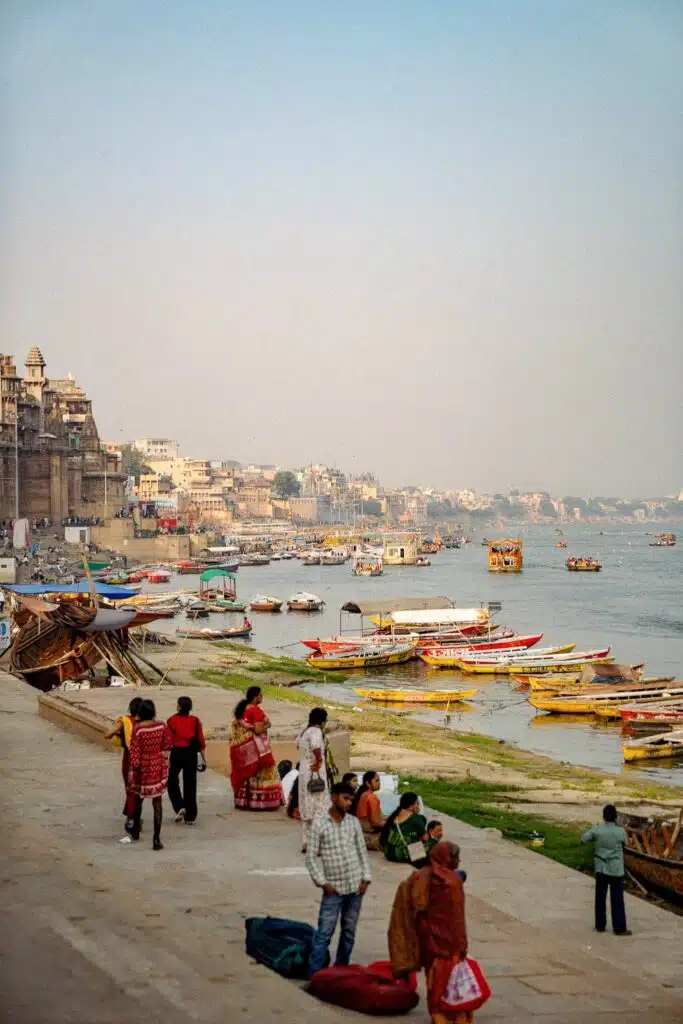
- Take a sunrise boat ride on the Ganges: This was one of the most peaceful experiences I had in India. Watching the city wake up from the river gives you a completely different perspective than exploring on foot.
- Attend an aarti ceremony (sunrise or sunset). Sunrise aarti at Assi Ghat felt calmer and more intimate, while sunset aarti at Dashashwamedh Ghat was far more intense and crowded. Both are incredible, just very different experiences.
- Walk along the ghats. There are more than 80 ghats lining the river, and simply walking between them ended up being one of my favourite ways to absorb the atmosphere.
- Observe daily rituals. The open-air cremations take place at specific ghats (Manikarnika Ghat is the most famous). This is absolutely something you have to witness whilst you’re in the city.
- Visit the Kashi Vishwanath Temple. This is one of the most important temples in the city and is worth a visit.
- Get lost in the backstreets. Some of my most memorable moments came from wandering and stumbling upon small temples, street food stalls, and quiet corners tucked away from the main routes.

Sunrise Boat Tour On The Ganges
Price: $30
Rating: 5/5
Duration: 2 hours
Includes: Sunrise boat tour, Morning Arti Ceremony, Ritual of Havan

Days 4 – Agra
Agra is a short but essential stop for one reason: the Taj Mahal. I’m genuinely glad I went, but I’ll be honest. Beyond the Taj, Agra wasn’t one of my favourite places in India, so I’d recommend keeping this to one focused day.

Getting from Varanasi to Agra
The most practical options are:
- Overnight train: around 8–9 hours
- Overnight bus: roughly 11–12 hours
I’d choose based on arrival time rather than price, especially if you want to see the Taj early the next morning.
⬇️Book Your Transport⬇️
🚆 Trains: book directly via the IRCTC website or use 12go Asia
🚌 Buses: 12go Asia or RedBus are the most straightforward
Where To Stay In Agra
Staying in Tajganj makes things much easier as you’ll be within walking distance or a short rickshaw ride from the Taj Mahal, which is ideal for sunrise visits.
Places I’d consider:
- Joeys Hostel – social and budget-friendly
- The Hideout Agra – relaxed atmosphere with great rooftop views
Things To Do In Agra
- Visit the Taj Mahal at sunrise. This is the main reason to come to Agra, and sunrise really is the best time (book tickets online here).
- Explore Agra Fort. I found Agra Fort more interesting than I expected. It gives useful historical context to the Taj Mahal and offers great views back towards it from inside the complex.
- Visit Itimad-ud-Daulah (Baby Taj). Smaller and quieter than the Taj, this is a nice stop if you have a bit of extra time. It’s less crowded and helps break up the day.
- Watch the sunset from Mehtab Bagh. This is one of the few places where you can see the Taj Mahal from across the river. It’s a calmer alternative if you want photos from a different perspective.
- Stop by Sheroes’ Hangout Café. This café is run by acid attack survivors and is well worth visiting. Even a short stop here helps support an important cause and adds more meaning to your time in Agra.


Days 5–8: Rishikesh (slow down + reset)
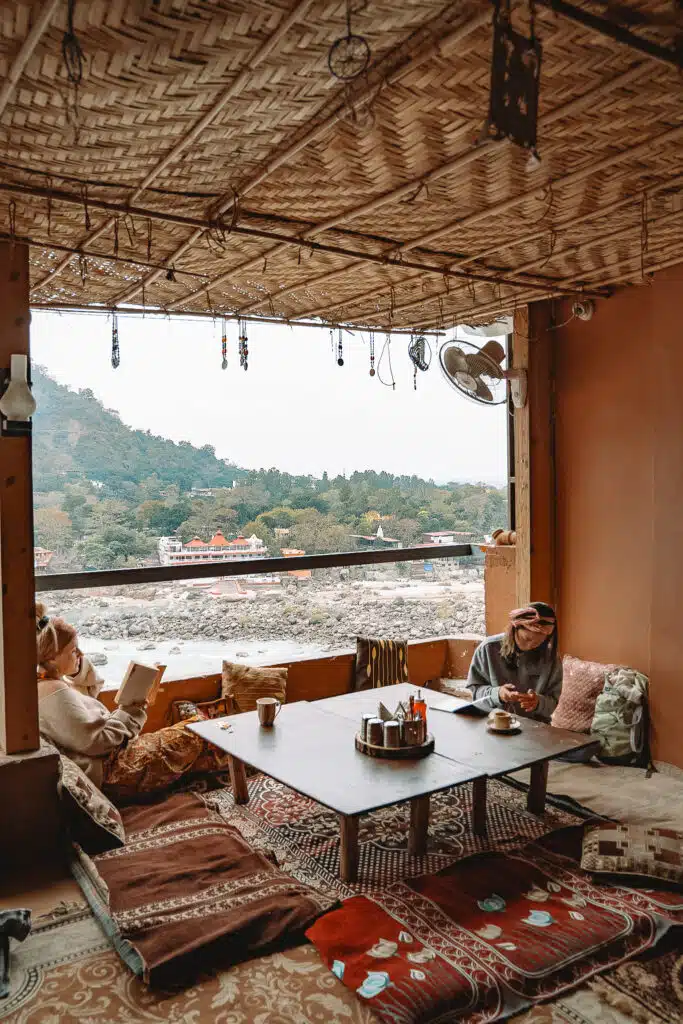
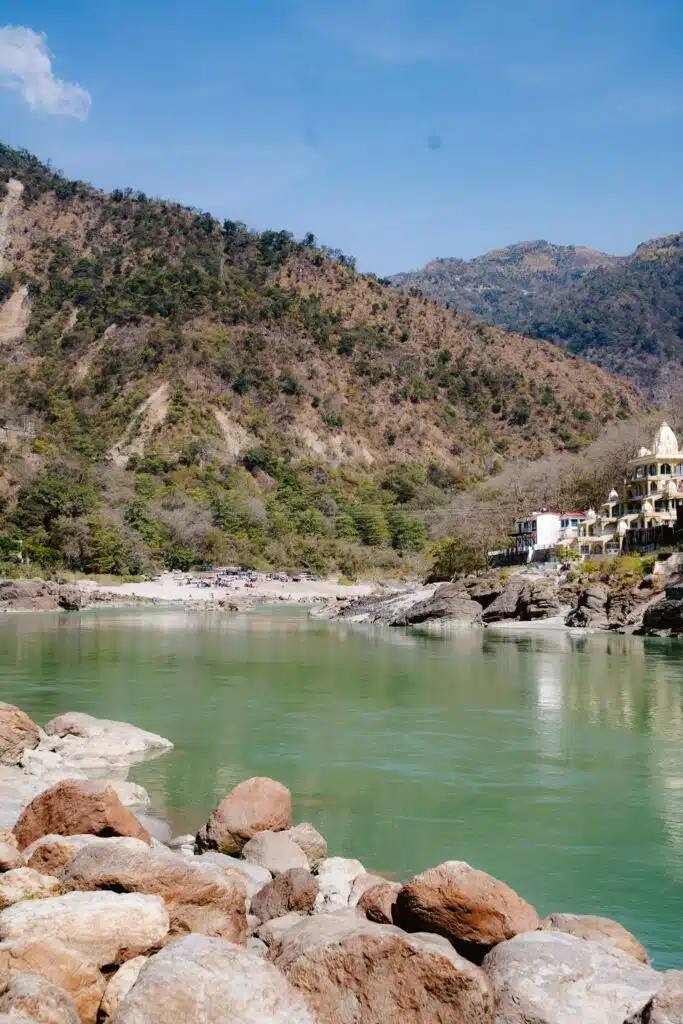
After the intensity of Varanasi and Agra, Rishikesh was where I felt like I could slow down for the first time on my trip. Set along the Ganges and surrounded by hills, it’s a much calmer place to experience India’s spiritual side.
Even if yoga isn’t usually your thing, Rishikesh is still worth the stop. I found it to be a great place to rest, eat well, and break up the pace of Northern India before moving on.
Getting from Agra to Rishikesh
The most straightforward option is an overnight bus, which usually takes around 8–10 hours.
⬇️Book Your Transport⬇️
🚌 Buses: 12go Asia or RedBus are the most straightforward
Where To Stay In Rishikesh
Rishikesh is mainly split into Lower Tapovan, Upper Tapovan, and Lakshman Jhula.
If you want easy access to cafes, yoga studios, and the river, I’d base yourself in Lower or Upper Tapovan.
Places I’d personally consider:
- The Hosteller, Upper Tapovan – social but still relaxed
- The Blue Jay Hostel– quieter and well-located
- Moustache Rishikesh– good balance of comfort and atmosphere
- Holy Water By Ganga Kinare – more peaceful, riverside option
Things To Do In Rishikesh
- Try a yoga or meditation class. You don’t need to commit to a retreat; even drop-in classes give you a feel for why Rishikesh is the birthplace of yoga.
- Visit Kunjapuri Temple at sunrise. This was one of my favourite mornings in Rishikesh. It’s an early start, but the views over the Himalayas at sunrise are worth it.
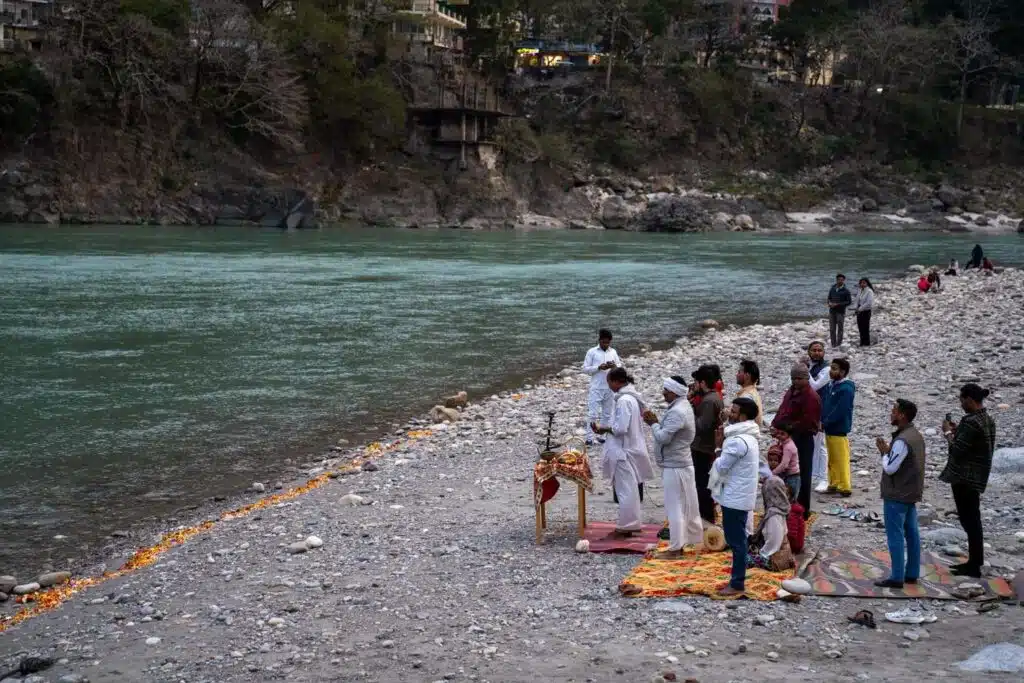
- Watch the Ganga aarti at Parmarth Niketan. Held every evening, this ceremony feels much calmer than the ones in Varanasi.
- Explore the Beatles Ashram. A peaceful place to wander, with a mix of street art and decaying buildings.
- Spend time by the river. Chilling by the river with a good book formed some of my best moments here. I can highly recommend this if you want to chill.
- Eat your way through Rishikesh’s cafes. I was surprised by how good the food scene is in Rishikesh, especially if you’re coming from more chaotic parts of North India. There are loads of relaxed riverside cafes serving everything from Indian thalis to smoothie bowls and great coffee.
Days 9 & 10 – Jaipur
Jaipur was my first stop during a week travelling through Rajasthan, and it was a pretty unforgettable introduction to the region.
The city is busy and chaotic in parts, but the architecture and colour make it one of the most visually striking places I visited in North India.
Known as the Pink City, Jaipur is packed with forts, palaces, and viewpoints, and while two days doesn’t cover everything, it’s enough to see the highlights.

Getting from Rishikesh to Jaipur
The most common option is an overnight bus, which usually takes around 10–11 hours. It’s efficient and saves a night of accommodation.
⬇️Book Your Transport⬇️
🚌 Buses: 12go Asia or RedBus are the most straightforward
Where To Stay In Jaipur
If you want a comfortable base with good cafes, hostels, and easy transport links, I recommend staying in the C-Scheme. I found this area much easier to navigate than the Old City, especially after arriving overnight.
Places worth considering:
- Moustache Jaipur – social and well-located
- Bhola Bhawan Bed and Breakfast – relaxed and welcoming
- Blue Beds Hostel – comfortable and modern
- Magpie Villa – quieter boutique option
The Old City and Raja Park are also good options if you want to be closer to the main sights.

Things To Do In Jaipur
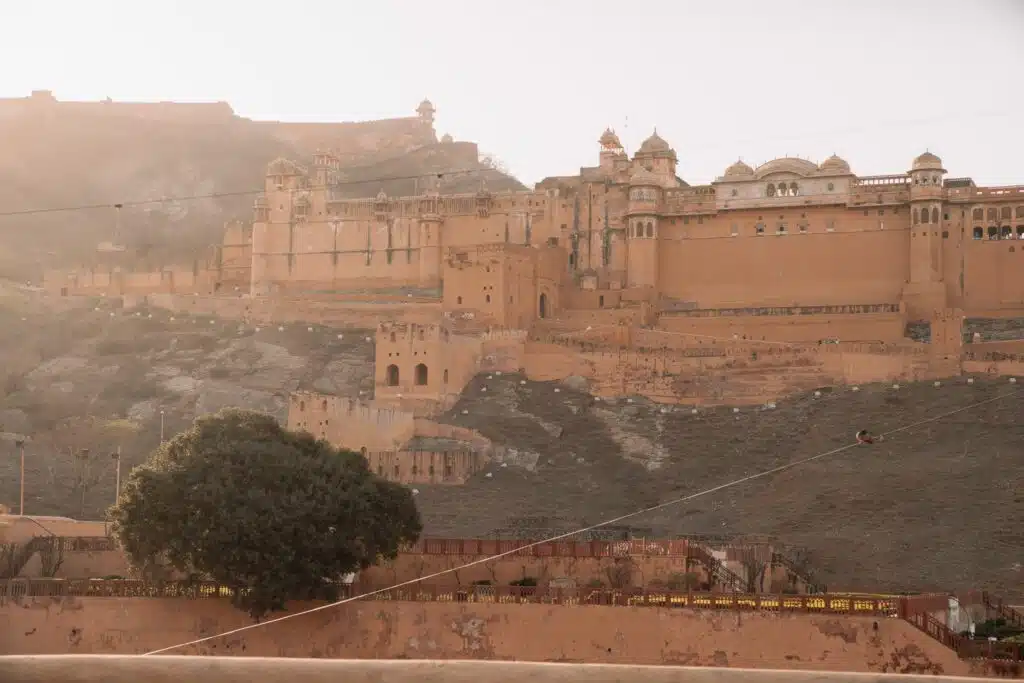
- Explore Amber Fort. This was one of my favourite forts in Rajasthan. Arrive early if you can — it gets very busy by mid-morning.
- Visit Panna Meena ka Kund (stepwell). A quick stop, but worth it. It’s one of the most photogenic stepwells in the region and far less crowded than many of Jaipur’s bigger sights.
- Admire Hawa Mahal. I preferred viewing it from a rooftop cafe rather than going inside.
- Head to Nahargarh Fort at sunset. This offers one of the best views over Jaipur, and the sunsets here are gorgeous
- Visit the Jaipur City Palace. A good place to learn more about the city’s royal history and architecture.
- Optional: Ranthambore National Park day trip. If seeing wildlife is high on your list, a safari here can be worthwhile — just go in with realistic expectations, as tiger sightings are never guaranteed.

Ranthambore National Park Tiger safari
Price: $30
Rating: 5/5
Duration: 2 hours
Includes: Sunrise boat tour, Morning Arti Ceremony, Ritual of Havan
Days 11 & 12 – Pushkar
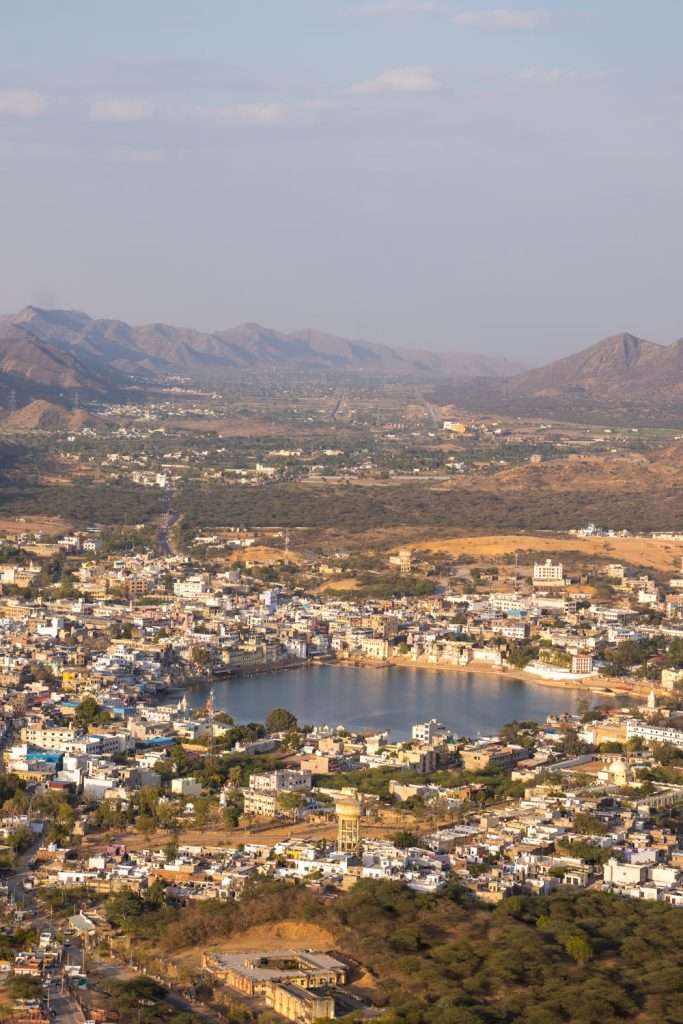
After the energy of Jaipur, Pushkar felt noticeably calmer. Pushkar is one of the oldest and most sacred towns in India, centred around Pushkar Lake and closely associated with Lord Brahma.
I spent two days in Pushkar, which turned out to be the perfect amount of time explore the town on foot and experience its spiritual side. I also felt super safe here as a solo female traveller.
Getting from Jaipur to Pushkar
This is one of the shorter travel days on the route.
Train to Ajmer + short onward trip: train to Ajmer (around 2.5 hours), then a bus or tuk-tuk to Pushkar (about 40 minutes)
Direct bus: around 4–6 hours
⬇️Book Your Transport⬇️
🚆 Trains: book directly via the IRCTC website or use 12go Asia
🚌 Buses: 12go Asia or RedBus are the most straightforward
Where To Stay In Pushkar
I recommend staying as close to Pushkar Lake as possible. It makes early mornings and evenings much easier, especially if you want to watch aarti or explore on foot.
Places I’d consider:
- Madpackers Pushkar – social but relaxed
- Moustache Pushkar – comfortable and well-located
- Inn Seventh Heaven – great views and a peaceful atmosphere
- Hotel Brahma Horizon – good mid-range option

Things To Do In Pushkar
- Walk around Pushkar Lake. Early morning or evening is the nicest time.
- Visit the Brahma Temple. One of the few temples in the world dedicated to Lord Brahma and an important pilgrimage site.
- Watch the evening aarti by the lake. A quieter, more reflective experience compared to aarti ceremonies in larger cities.
- Visit Savitri Mata Temple at sunset. You can hike or take the cable car — the views over Pushkar at sunset are worth it either way.
- Browse the markets. Pushkar is a good place for souvenirs and for refreshing your wardrobe.

Days 13 & 14 – Udaipur
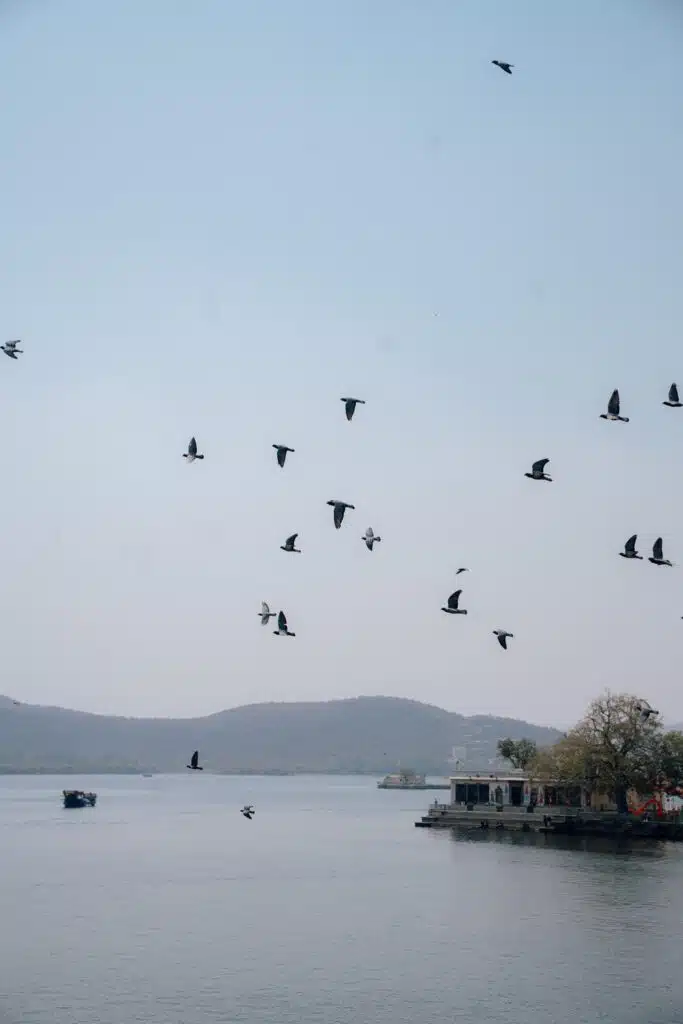
Udaipur is well worth visiting, and it ended up being my favourite stop in Rajasthan. The lakes and surrounding hills give the city a completely different atmosphere to the others you will visit on this itinerary
Often called the City of Lakes, Udaipur has a more relaxed and romantic feel. I enjoyed it so much that I actually returned a second time to celebrate Holi festival, which was an unforgettable experience and only confirmed how special this city is.

Getting from Pushkar to Udaipur
You’ll first need to travel from Pushkar to Ajmer (around 40 minutes by bus or tuk-tuk).
From Ajmer:
- Bus: around 8 hours
- Train: approximately 4.5–5.5 hours (my preferred option if timings work)
⬇️Book Your Transport⬇️
🚆 Trains: book directly via the IRCTC website or use 12go Asia
🚌 Buses: 12go Asia or RedBus are the most straightforward
Where To Stay In Udaipur
I highly recommend staying in the Lal Ghat area. It’s close to the lake, walkable, and full of cafes, guesthouses, and viewpoints.
Places I’d personally consider:
- Dreamyard Udaipur – social and well-located
- Madri Haveli – beautiful heritage stay
- Peacock Guesthouse – great views and a relaxed atmosphere
Things To Do In Udaipur
- Explore the City Palace. One of the most impressive palaces I visited in India. The views over Lake Pichola are simply stunning.
- Visit Jagdish Temple. Located right in the old town, this is an easy stop while wandering the surrounding streets.
- People-watch at Gangaur Ghat. A great place to watch daily life unfold by the lake.
- Watch the Dharohar folk dance show. Held nightly at Bagore Ki Haveli, this was a fun and easy way to experience local dance and music.
- Take a sunrise tour to the Bahubali Hills. An early start, but the views over the lakes and countryside were well worth it.
- Visit Kumbhalgarh Fort. A longer day trip, but fascinating if you’re interested in history. It’s home to one of the longest walls in the world.


Top Tour ⬇️
Days 15–19: South Goa (slow down by the beach)
By the time you reach South Goa, you’ll be more than ready for a change of pace
After weeks of cities, buses, and early starts, South Goa will feel like a place to properly rest and reset.
Compared to North Goa, the south is quieter and more relaxed, with wide beaches and fewer crowds. If your idea of Goa involves yoga, swims, sunset walks, and long meals rather than nightlife, this is where you’ll want to be.
How To Get From Udaipur To South Goa
This is one of the longest travel days in the itinerary, so it’s worth planning carefully.
The most manageable option is usually to fly, although most routes involve a layover (often via Delhi, Mumbai, or Hyderabad). Total travel time is typically 4–6 hours, depending on connections.
Train or bus travel is possible, but far more time-consuming. You’ll usually need to travel to Mumbai first (14–18 hours), then continue to Goa, which can take another 10–17 hours. I’d only recommend this if you’re very flexible with time.
Once you arrive in Goa, you’ll still need to travel south by local bus or taxi to reach Palolem or Patnem.
⬇️Book Your Transport⬇️
✈️ Flights: comparing domestic routes is easiest using Skyscanner
🚆 Trains: book directly via the IRCTC website or use 12go Asia
🚌 Buses: 12go Asia or RedBus are the most straightforward
Where To Stay In South Goa
I recommend basing yourself in Palolem or Patnem, both of which have beautiful beaches and a relaxed, walkable feel.
Places I’d personally consider:
- Bhakti Kutir – peaceful, wellness-focused stay
- Pacific Sunset View – great for views and a calm atmosphere
- Om Shanti Beach Stay – simple, beachfront option
- Palm Trees Ayurvedic Heritage– ideal if you want to fully lean into rest and recovery
Things To Do In South Goa
- Spend time at the beaches. Palolem, Patnem, Agonda, Cola Beach, Butterfly Beach, and Cabo de Rama are all beaches worth visiting
- Try yoga or wellness experiences. There are plenty of drop-in classes and retreats if you want to practice yoga or meditation.
- Browse local shops and markets. There are lots of small independent shops here selling handmade goods
- Take a day trip to Gokarna. If you have the energy, this makes a nice side trip for more beaches and a slightly different atmosphere.
Days 20-22 – Fort Kochi
Fort Kochi is a small, historic area in Kerala known for its colonial architecture.
Walking through the streets, you’ll see a mix of old Dutch and Portuguese buildings, small art spaces, and cafes, which gives the area a very distinct feel compared to other cities in India.
It’s easy to explore on foot, and I found that spending a short time here was enough time to see the main sights.

Getting from South Goa to Fort Kochi
There are two practical ways to make this journey:
- Fly: A domestic flight from Goa (Dabolim Airport) to Kochi is the fastest option, usually taking under 90 minutes, and often very affordable.
- Train: Trains from Madgaon to Ernakulam take around 13 hours and are a good option if you prefer overland travel.
From Kochi airport or Ernakulam station, it’s a short taxi or ferry ride to Fort Kochi.
⬇️Book Your Transport⬇️
✈️ Flights: comparing domestic routes is easiest using Skyscanner
🚆 Trains: book directly via the IRCTC website or use 12go Asia
Where To Stay In Fort Kochi
Fort Kochi has a great range of boutique hotels and budget-friendly hostels, many set in restored heritage buildings.
Places I’d personally consider:
- Bunk House – social and well-located
- The Fort Bungalow – charming, heritage-style stay
- Fort Bridge View – comfortable and close to the water
Things To Do In Fort Kochi
- Watch a Kathakali performance. A great introduction to Kerala’s traditional dance and storytelling, even if you’ve never seen this style of performance before.
- Visit the Chinese fishing nets. One of Fort Kochi’s most recognisable sights, especially atmospheric in the late afternoon.
- Admire Santa Cruz Basilica. One of the oldest churches in India and a reminder of Kochi’s Portuguese influence.
- Visit the Paradesi Synagogue. Located in nearby Jew Town, this offers insight into the region’s Jewish history and trading past.
- Spend time in the art cafes. Fort Kochi has a really relaxed cafe culture.


Days 23 & 24 – Alleppey
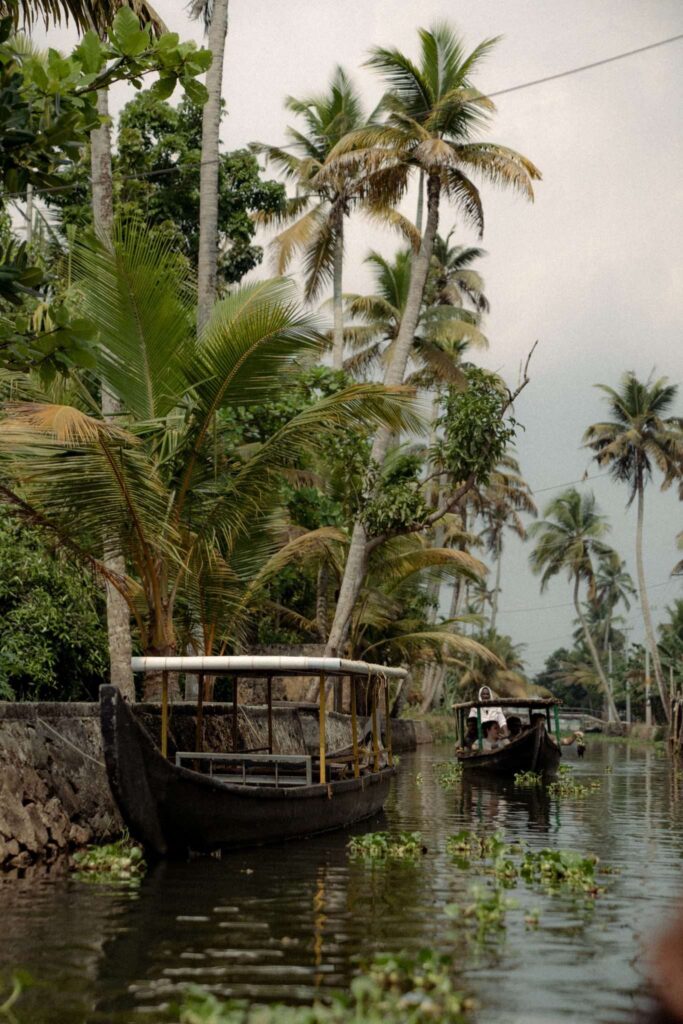
Alleppey is best known for its backwaters, and it was definitely my favourite stop during my one week in Kerala.
Rather than packing in lots of activities, Alleppey works best if you focus on the one main experience (enjoying the backwaters) and relaxing for the rest of your time.


How To Get From Fort Kochi To Alleppey
If you’re travelling from Fort Kochi, Alleppey is an easy train journey and one of the more straightforward travel days in Kerala. Trains run regularly from Ernakulam station, and the journey usually takes around two hours.
You can also travel by bus or private taxi if you prefer, but I found the train to be the simplest and most comfortable option.
⬇️Book Your Transport⬇️
🚆 Trains: book directly via the IRCTC website or use 12go Asia
🚌 Buses: 12go Asia or RedBus are the most straightforward
Where To Stay In Alleppey
I found staying in a small guesthouse or homestay, worked best here. It’s quieter and often closer to the canals.
Places I’d consider:
- Mom & Pop Thyparambil Heritage – peaceful and well-located
- Malayalam Lake Resort – great if you want to be right on the water
- The Mayflower Heritage Villa – comfortable and relaxed

Things To Do In Alleppey
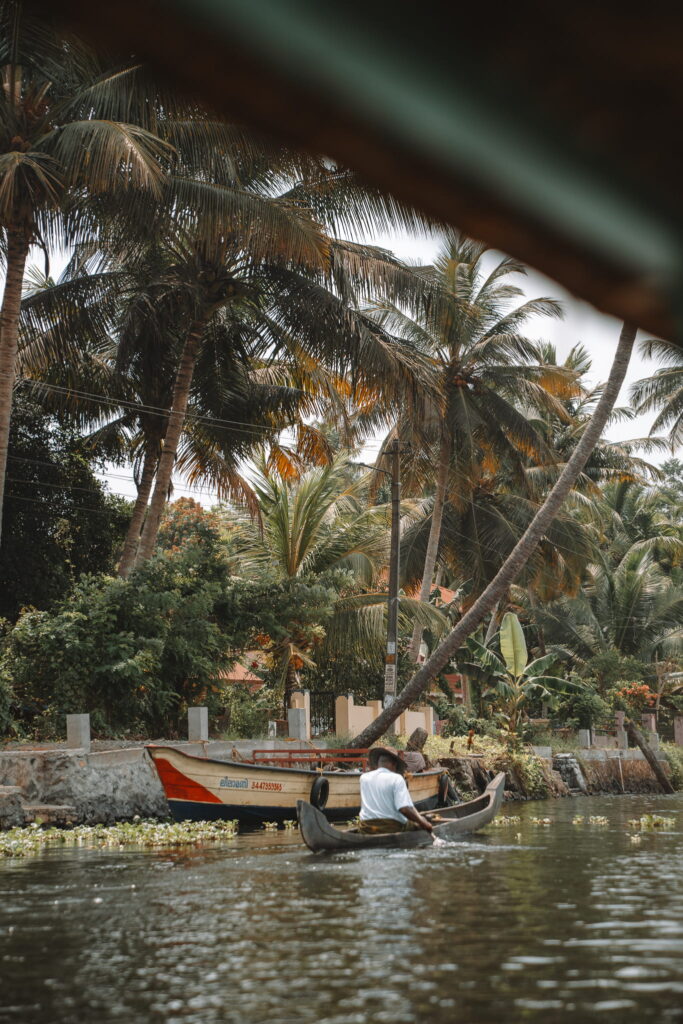
- Take a backwaters cruise. This is the main reason to visit Alleppey. You can choose between a traditional houseboat or a smaller canoe or kayak tour. I personally preferred the smaller boats, which felt quieter and more immersive.
- Explore the backwaters by kayak. Kayaking through the canals gives you a closer look at daily life along the water and feels far less touristy than larger boats.
- Visit Alappuzha Lighthouse. A short, easy stop if you want a viewpoint over the town and coastline.
- Relax at the beach. Alappuzha and Marari beaches are both nearby.

Days 25 & 28 Varkala
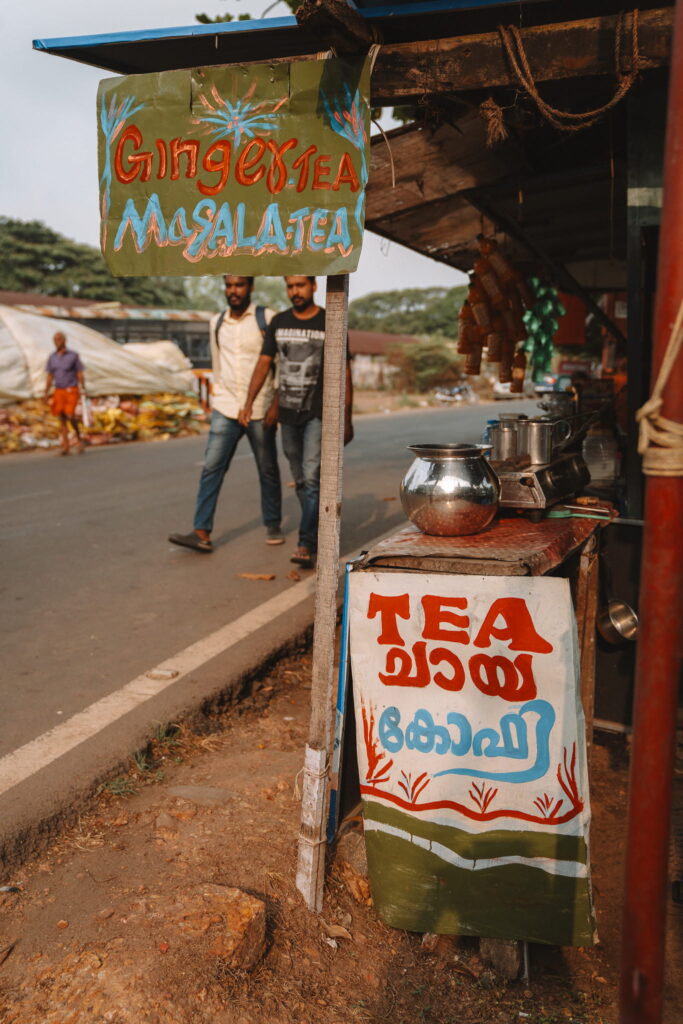
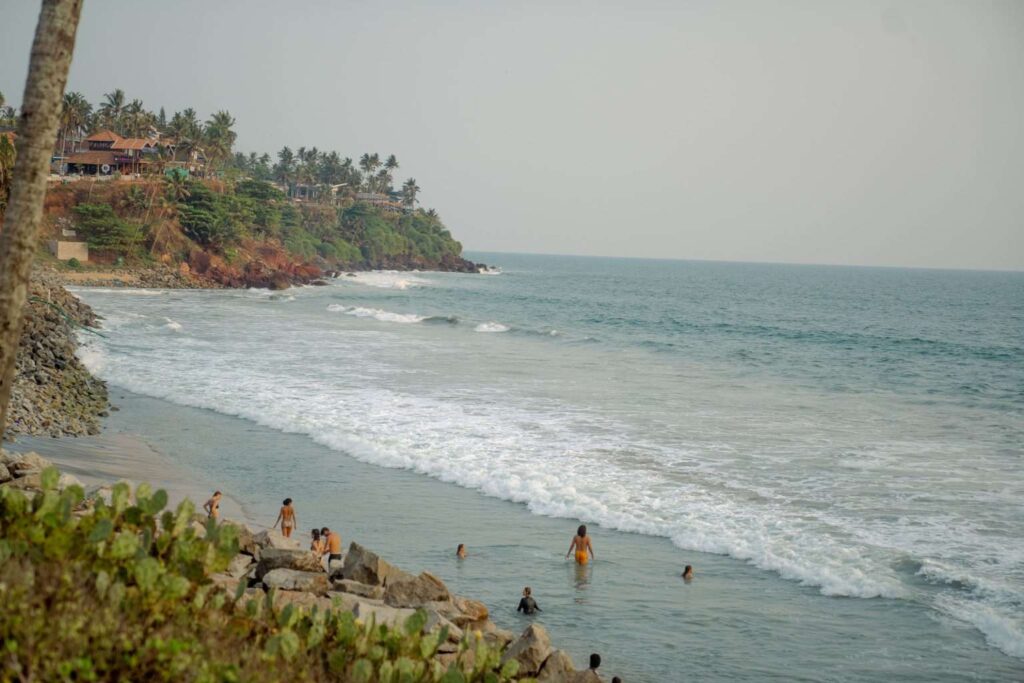
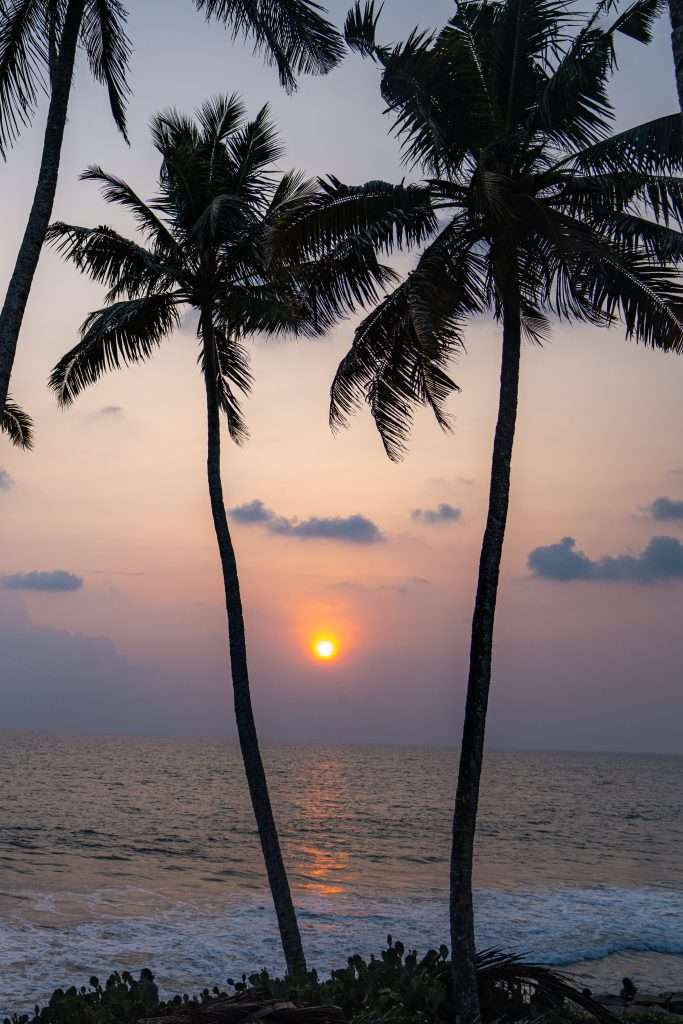
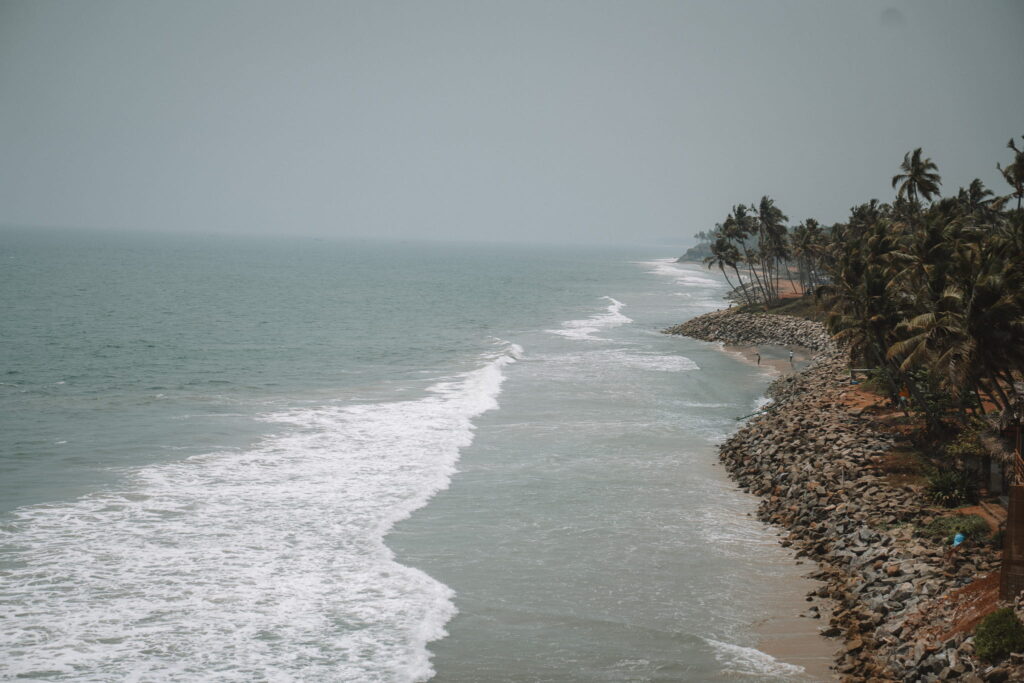
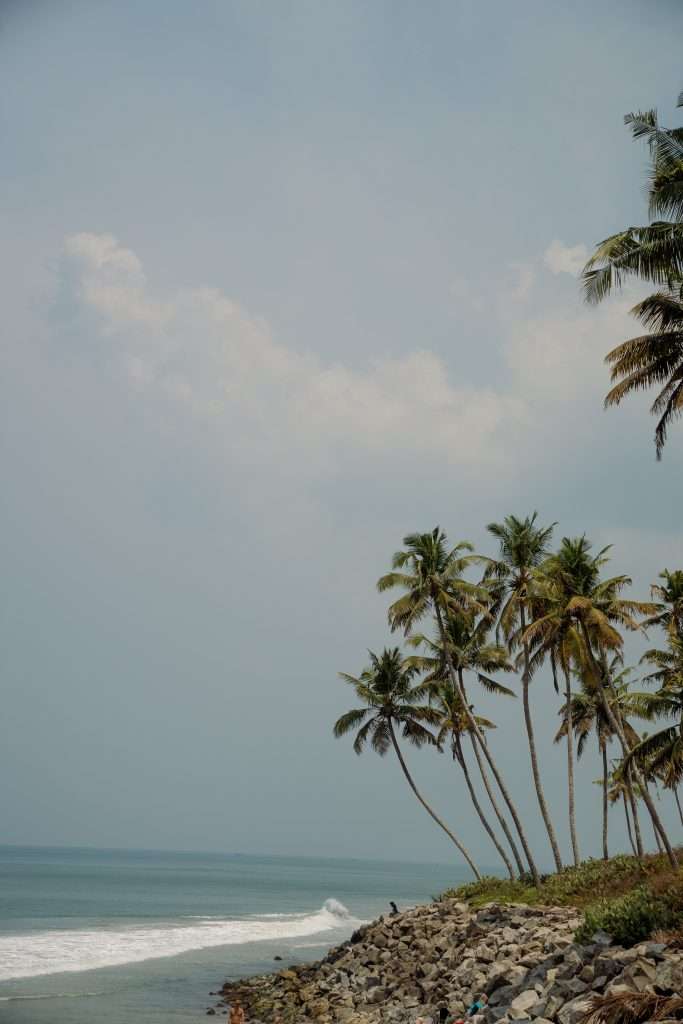
Varkala is one of Kerala’s most popular coastal towns, and it’s a really easy place to wind down at the end of a longer trip. The town sits along a clifftop overlooking the Arabian Sea, which gives it a very different feel from other beach destinations in India.
Varkala is split into North Cliff and South Cliff. The North side is more developed and popular with travellers, while the South feels quieter and more residential.
How To Get From Alleppey To Varkala
Travelling to Varkala is very straightforward.
From Alleppey, you can take a direct train from Alappuzha station to Varkala station. The journey takes around two hours, making this one of the easiest travel days on the itinerary.
⬇️Book Your Transport⬇️
🚆 Trains: book directly via the IRCTC website or use 12go Asia
Where To Stay In Varkala
There are plenty of affordable hotels and guesthouses in Varkala, particularly around the cliffs.
Places I’d consider:
- Indian ArtVilla – comfortable and well located
- Boho’s Hotel – relaxed atmosphere near the cliffs
- Point Break Varkala – a good option if you want to be close to the beach.

Things To Do In Varkala
- Spend time at the beaches. Varkala Beach (North and South Cliff), Odayam Beach, Edava Beach, and Kappil Beach are all worth visiting, depending on how much you want to move around.
- Walk along the cliffs. The clifftop paths are one of Varkala’s highlights, especially in the early morning or at sunset.
- Try surfing or yoga. There are plenty of beginner-friendly surf schools and drop-in yoga classes if you want to try something new.
- Have clothes tailored. I had a great experience getting clothes made here. If that’s something you’re interested in, ACTO Tex & Tailoring in North Cliff came highly recommended.
- Take a South Indian cooking class. A nice way to learn more about local food and end the trip on a cultural note.
Train Travel Versus Overnight Bus Travel
Train travel is often described as a must-do experience in India, and while I do think it’s worth trying at least once, during my one month in India I found overnight buses to be far easier overall, especially during my time in North India.
My experience with trains
I used trains more frequently in South India, but booking them wasn’t always straightforward. The official booking site (IRCTC) requires an Indian mobile number, which I didn’t have when I first arrived. Because of that, I often had to ask my accommodation to help me book tickets or use third-party platforms like 12go Asia, which was convenient but more expensive.
Trains also tend to sell out in advance, particularly on popular routes, so they work best if your plans are fairly fixed.
My experience with overnight buses
In contrast, I relied almost entirely on overnight buses during my first two weeks in North India, and found them much easier to manage. Buses were:
- Easier to book at short notice
- More flexible if plans changed
- A good way to save on accommodation
- Surprisingly comfortable on longer routes
If you’re a more spontaneous traveller or don’t want to plan every leg far in advance, buses can be a better option.
A safety note (especially for solo female travellers)
One thing to be aware of with overnight buses is that pick-up points aren’t always proper stations. In several places, the “stop” was simply a roadside location rather than a terminal.
When travelling solo, I’d recommend:
- Asking your taxi or tuk-tuk driver to wait with you until the bus arrives
- Confirming the exact pick-up point with the bus company in advance
- Choosing well-reviewed operators where possible
This made me feel far more comfortable when travelling alone at night.

Final thoughts
Planning a month in India can feel overwhelming at first, but with a flexible route and realistic pacing, it’s an incredibly rewarding experience.
This itinerary is designed to give you a balance of culture, nature and rest, without trying to squeeze too much into every day.
If you take anything from this guide, let it be this: allow room for flexibility. Trains run late, plans change, and you’ll inevitably want to stay longer in places you didn’t expect to love as much as you do.
If you have any questions while planning your 4-week India Itinerary, feel free to reach out as I’m always happy to help.




Hi!
Great itinerary – given me a great start to plan my own trip. Question – what would you budget for this trip?
Thanks 🙂