An Awesome 1-Week Rajasthan Itinerary: Forts, Lakes & Culture

Rajasthan is one of those places that looks completely unreal in photos, with rose-coloured palaces, desert sunsets and shimmering lakes.
The problem? Rajasthan is huge, and trying to plan a 1-week Rajasthan itinerary can quickly spiral into either an overpacked, exhausting schedule (or a trip that barely scratches the surface).
Before I visited, I felt exactly the same. I wanted to see Rajasthan’s highlights without spending my entire week jumping on overnight buses or feeling permanently jet-lagged.
After travelling this route myself, I worked out a week-long plan that’s fast-paced but realistic, mixing iconic destinations with some more relaxing spots (and of course, just enough breathing room to actually enjoy it all).
This is my exact 1-week Rajasthan itinerary for first timers, designed to give you a true taste of the state without feeling overwhelmed.
Over the next 7 days, you’ll start in Jaipur, take a day trip to Ranthambore National Park, slow things down in Pushkar, and finish with some chilled days in Udaipur.
Along the way, I’ll share transport tips, where to stay, and the best things to do in each destination.

Disclaimer: This post contains affiliate links. If you decide to make a verified purchase through the links in this post, I will earn a small commission. This will be at no extra cost to you. Thank you.
Is This 1-Week Rajasthan Itinerary Right for You?
This itinerary is best suited to first-time visitors to Rajasthan who want to see a lot in a relatively short amount of time.
When I went to Rajasthan for the first time, I wanted an itinerary that covered the must-see places without feeling completely overwhelming (especially as a solo female traveller).
After completing this route myself, I think genuinely it strikes that balance well.
That said, this itinerary does move at a fairly quick pace. When I travelled this route, some days started early, and a few journeys were long, but I found that it was all worth it for how much I was able to experience in just one week.
If you enjoy busy days filled with culture, history, markets, temples, and a bit of organised chaos, this itinerary will suit you perfectly.
If you prefer very slow travel, luxury-only stays, or dislike long travel days, this route may not be the best fit.
When I went, I relied heavily on budget to mid-range accommodation, tuk-tuks, trains, and overnight buses, which kept costs down and made the trip more flexible, but it isn’t ideal for travellers looking for a resort-style experience.
Overall, I designed this itinerary for travellers who are happy to trade comfort for experience, want a realistic introduction to Rajasthan, and don’t mind early starts if it means seeing the highlights of the state.
Your 7 days in Rajasthan will look like this:
- Day 1 – Jaipur
- Day 2 – Ranthambore National Park
- Day 3 & 4 – Pushkar
- Day 5 & 7 – Udaipur

My India Travel Essentials
🛏️Accommodation: Make sure to check out different sites like Booking.com and Hotels.com to book your accommodation! If you’re on a budget, then make sure to check out Hostelworld.
🎟️Activities: I always book my tours through Get Your Guide and Viator, so make sure to check them out as I’m sure they’ll have the perfect tour for you.
🚗Transport: Book trains and buses around India on 12goAsia.
🦋Insurance: Make sure you’re covered against any incidents during your trip. I’ve used SafetyWing multiple times and I can’t recommend them enough! (The payouts are super quick).
📱Download an eSIM: Avoid roaming fees, and have peace of mind that you have internet access when WiFi isn’t available…I recommended downloading SIMs from either Airalo or Sim Local.
Day 1-2- Jaipur: Palaces, Forts & the Pink City Experience
Jaipur is one of the most well-known cities in Rajasthan and is often the starting point for first-time visitors.
It forms part of India’s famous Golden Triangle route (Delhi, Agra, and Jaipur) and is nicknamed “The Pink City” thanks to its distinctive pink terracotta architecture that lines much of the old town.
How to Get to Jaipur
This 1-week Rajasthan itinerary begins in Jaipur, which is easy to reach by plane, train, or bus.
Although Jaipur does have an international airport, when I travelled to India from abroad, I first landed at Delhi Indira Gandhi International Airport, which is the most common entry point for international travellers.
From Delhi, you have two main options: take a short connecting flight to Jaipur, or travel overland by train or bus.
The journey from Delhi to Jaipur takes around 7–8 hours by train or bus, and I found this route to be very straightforward.
When I was planning this trip, I compared transport options using the IRCTC website for train bookings, 12go Asia for trains and buses and the RedBus website for long-distance buses.
For flights, I always use Skyscanner to compare flight prices and schedules, especially when deciding whether flying or travelling overnight makes more sense.
For first-time visitors to Rajasthan, flying or booking an overnight train or bus from Delhi is often the easiest way to arrive in Jaipur.

How To Get Around Jaipur
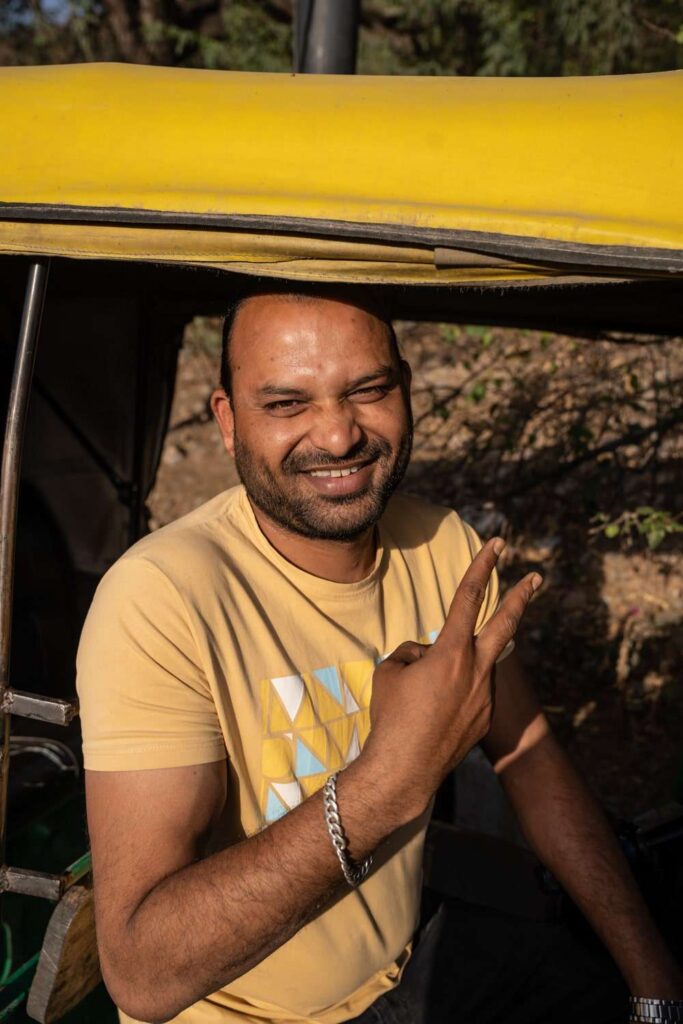
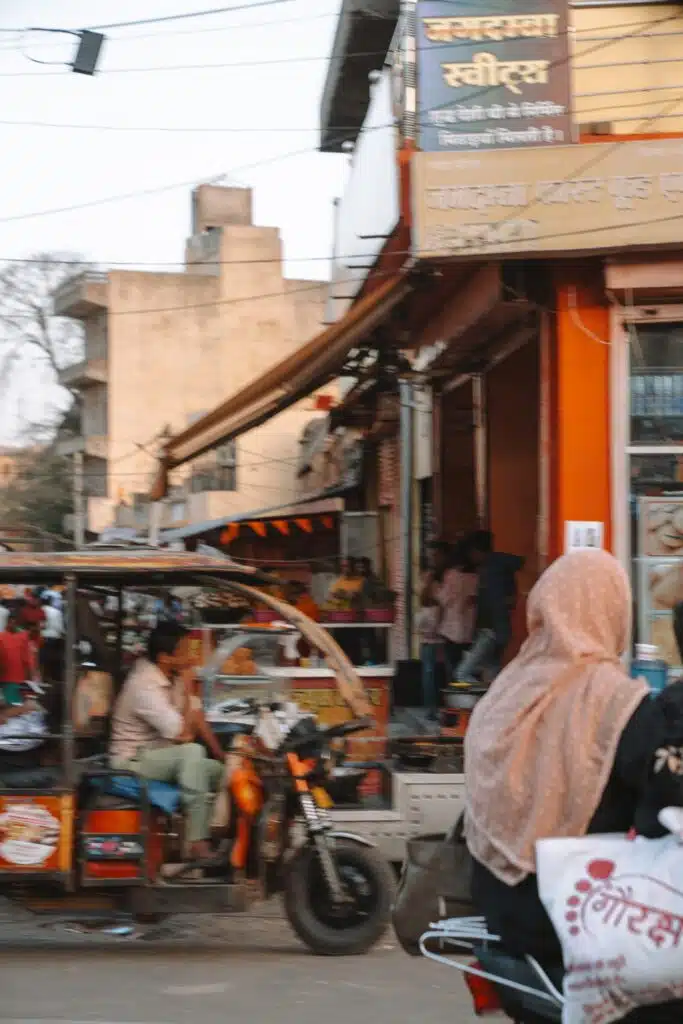
The simplest and most cost-effective way to get around Jaipur is by hiring a tuk-tuk driver for the day.
I paid around ₹800 for around 8 hours of driving and exploring.
I used this driver (whose name is Raj) during my time in Jaipur, and he was such a nice, lovely person who made me feel extremely safe and comfortable, especially as a solo female traveller in India.
I’m not sure if he is very active on that Instagram account anymore, so feel free to send me a message, and I will be happy to share his number with you (I have permission to do so).
Alternativelty you can book a private sightseeing car tour from as little as $10.
Where to stay in Jaipur
When deciding where to stay in Jaipur, I highly recommend booking accommodation in the C Scheme area.
When I visited Jaipur for the first time, I found this neighbourhood to be one of the most convenient and comfortable bases in the city.
It’s home to some of Jaipur’s most modern hotels, a great selection of hostels, and plenty of cafés and restaurants (while still being close enough to the main attractions).
I personally stayed at Moustache Jaipur, which is located in the C Scheme area, and it was easily one of my favourite hostels in all of India.
The rooms were clean, the atmosphere was nice and social, and it was very affordable with dorm rooms starting from just $10 a night.
If Moustache Jaipur is fully booked, there are several other great accommodation options in the C Scheme area, including:
Other parts of the city that you can consider staying in are the Old City and Raja Park areas.
Jaipur Itinerary – Day 1
Stop 1 – Hawa Mahal
Hawa Mahal is one of Jaipur’s most recognisable landmarks, which is identifiable by its pink sandstone façade and honeycomb windows.
Built in 1799, it was designed so women of the royal household could observe life on the streets below without being seen.
When I visited, I found that Hawa Mahal is best admired from the outside.
The most popular viewpoint is from Tattoo Cafe, which sits directly opposite the palace. Although I do think it’s quite overpriced for what you get in terms of food, the view really can’t be beaten.
If you’re happy to walk a little, nearby cafés offer similar views for less. You can also go inside for around ₹50, but honestly, the outside view is the best!

Stop 2 – Panna Meena ka Kund
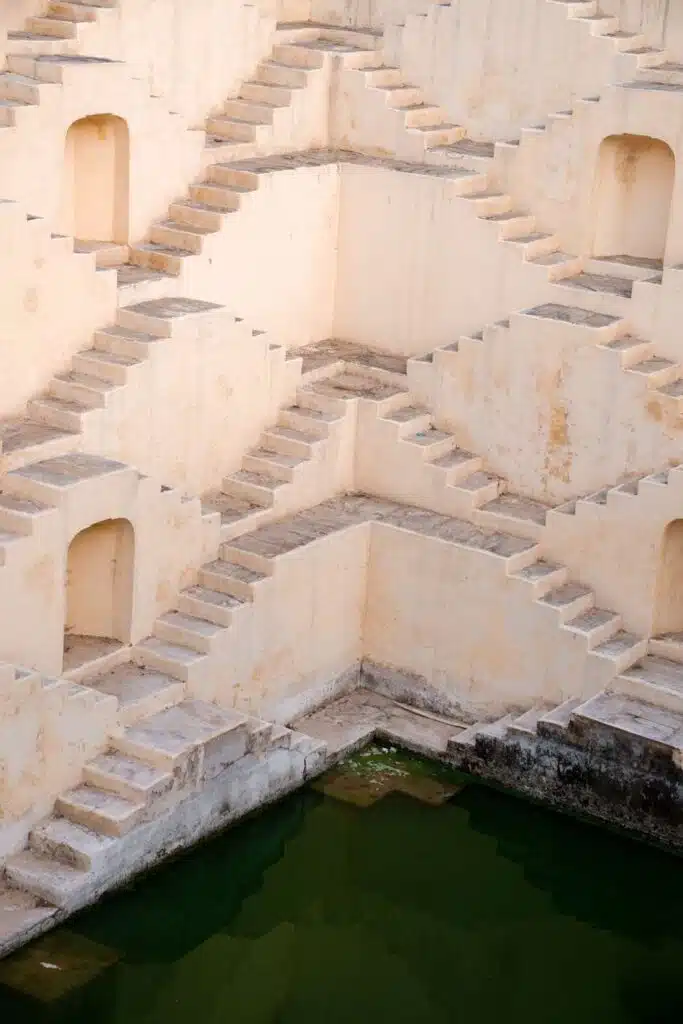
Panna Meena Ka Kund is a beautifully symmetrical 16th-century stepwell located near Amber Fort. With its funky geometric design, it’s one of the most photogenic spots in Jaipur.
Although visitors aren’t officially allowed to walk down the steps, the view from above is more than enough to appreciate it.
Stop 3 – Amber Fort/Palace
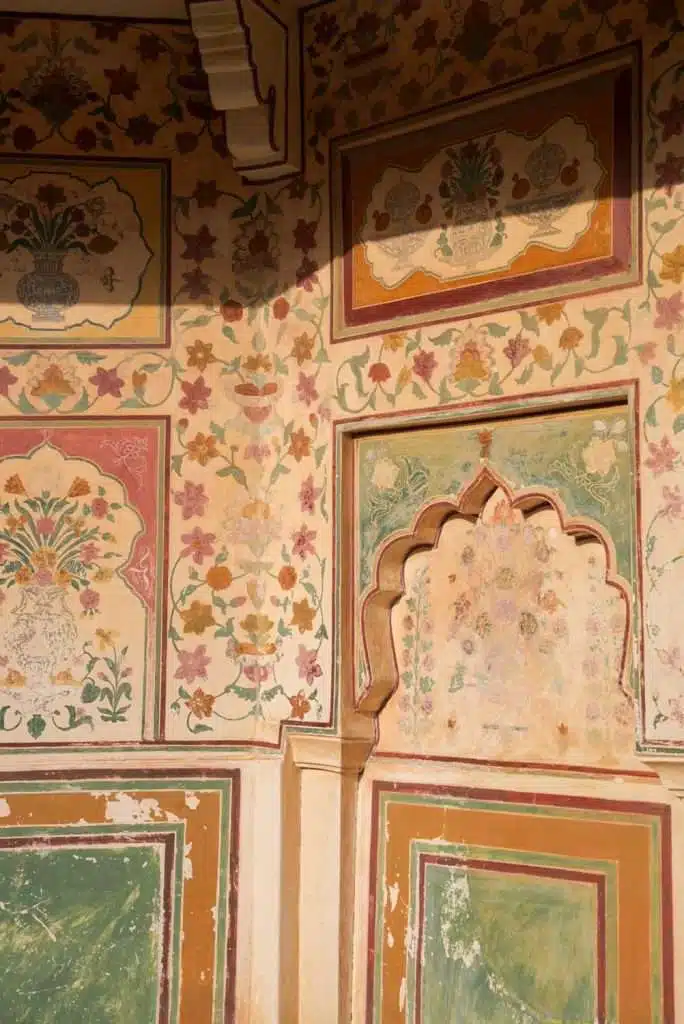
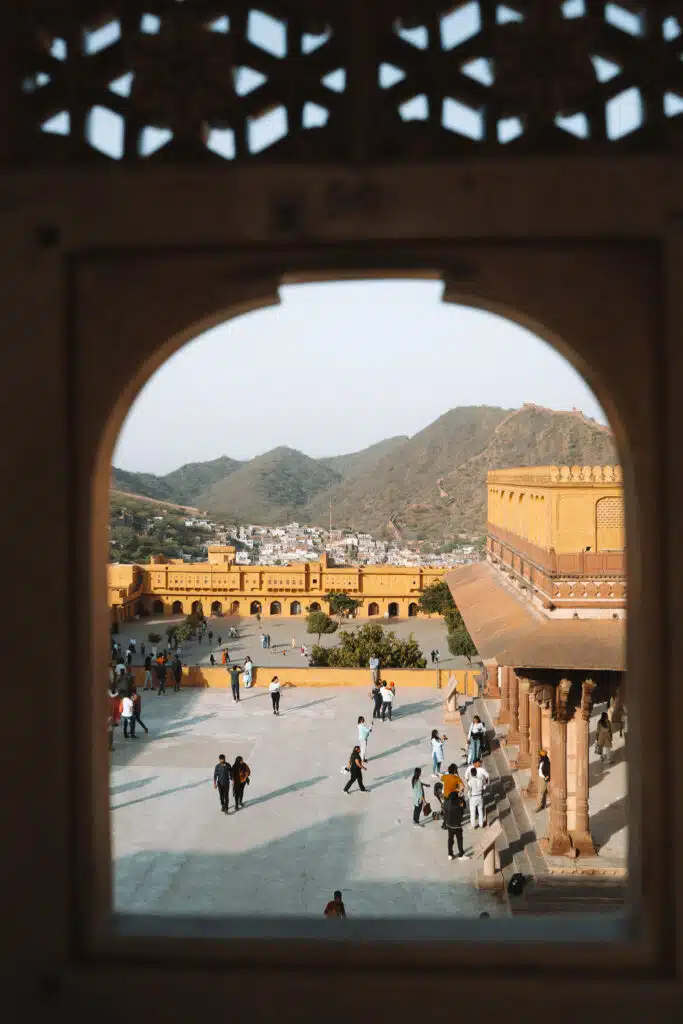
The Amber Fort (also known as Amer Fort) is one of Jaipur’s most iconic sights and a UNESCO World Heritage Site.
It was built in 1592 and named after Amba Mata (the fertility and earth goddess).
The palace is huge with a vast complex of courtyards, halls, and rooms.
This is one place where I strongly recommend hiring a guide. When I visited, having the history explained made a huge difference to me, so that I could fully comprehend what I was looking at.
You’ll need at least 2–3 hours to explore properly.
Entrance fees:
Foreigners: ₹200 | Guide: approximately ₹200–300 extra

Stop 4 – Jal Mahal
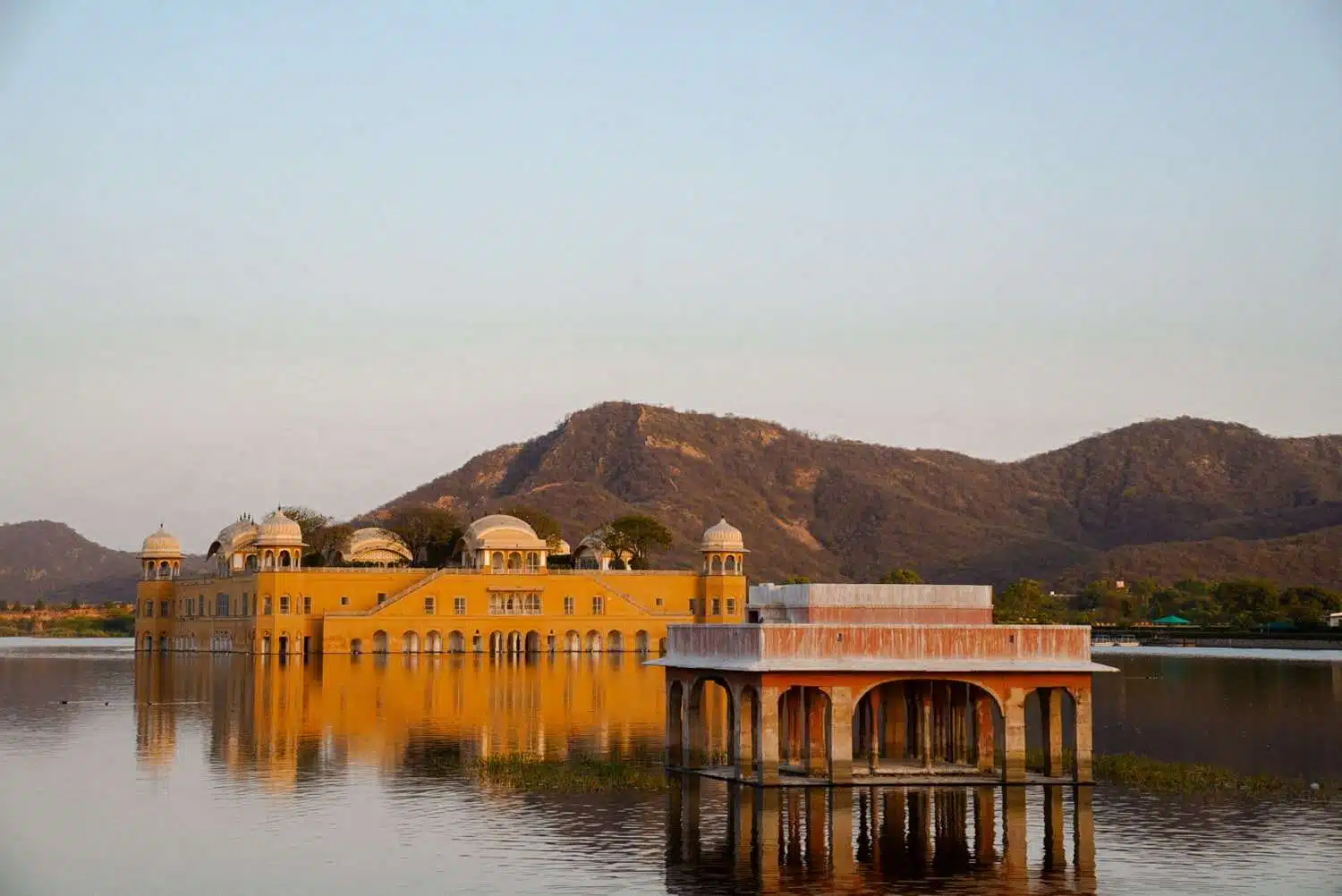
Jal Mahal is a striking five-storey palace set in the middle of Man Sagar Lake. While you can’t go inside, it’s still worth stopping to see the palace’s reflection on the water.
There is also a bustling and lively market and lots of things going on around the lake, so it’s a great opportunity to immerse yourself in some of the chaos and colour of Jaipur.

Stop 5 – Nahargarh Fort
To end your first day in Jaipur, head to Nahargarh Fort, which offers some of the best panoramic views of the city, especially at sunset.
The fort itself closes at 5:30 pm, but the walls and the on-site Padao Restaurant remain open until 9:30 pm. I watched the sunset from Kali Burj, which is considered the best viewpoint.
Entrance fee: ₹200
Jaipur Itinerary – Day 2 (Ranthambore National Park)
On day two of my 7 days in Rajasthan, I visited Ranthambore National Park as a day trip from Jaipur, rather than staying overnight.
The journey takes around 3–4 hours each way, which is why booking an organised tour is the most practical option.
When I went, we were incredibly lucky and managed to spot three tiger cubs with their mother, but it’s important to know that sightings are never guaranteed.
If seeing tigers is high on your wish list, I’d recommend choosing a tour that includes park entry fees and hotel pickup, as it makes the long day far easier.
This is the Ranthambore safari tour I booked and would recommend based on my experience.
Ranthambore National Park Tiger Safari
Price: $80
Rating: 4.2/5
Duration: 12 hours
Includes: Roundtrip transport, National Park fees


Other activities to do in Jaipur
If seeing tigers in the wild is not super high on your list, then there are plenty of other things to do and see in Jaipur, so you can definitely fill up a second day with lots of activities.
- Visit the Jaipur City Palace
- See the Patrika Gate
- Visit the Jaigarh Fort
- Visit the Royal Gaitor
- Visit Galta Ji
- Explore the Shri Jagat Shiromani Ji Temple
Days 3-4- Pushkar: Spiritual Streets, Markets & Desert Sunsets
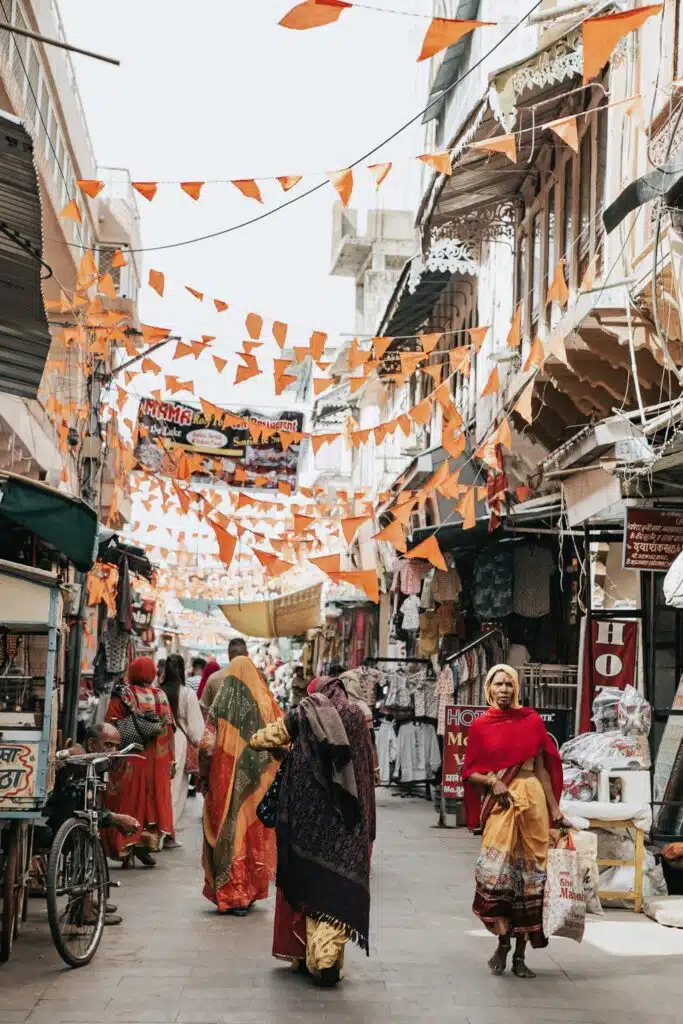
Set on the edge of the Thar Desert, Pushkar is one of India’s oldest and most sacred towns and feels worlds away from the busy cities of Rajasthan.
I absolutely fell in love with the small town when I arrived. Things felt noticeably calmer, and you could definitely feel the spiritual energy.
Pushkar is an important pilgrimage destination for Hindus due to its strong connection to Lord Brahma, who is believed to be the creator of the universe. According to legend, he also created Pushkar Lake.
If you want details on Pushkar, I’ve also written a detailed 2-day Pushkar itinerary that focuses purely on the town itself.
How to get from Jaipur to Pushkar
The easiest way to travel from Jaipur to Pushkar is by train or bus.
- Train: Around 2–3 hours, with prices starting from ₹300
- Bus: Anywhere between 2–5 hours, depending on whether you choose a public bus or private coach, with prices from ₹200
When I made this journey, I chose the 4-hour public bus ride. I won’t lie, the public bus was definitely an experience I wouldn’t want to repeat again (being squeezed in and desperate for a pee for hours with nowhere to go); however, it was extremely affordable at less than $3.
Most routes will drop you in Ajmer, the neighbouring city, from where you’ll need to continue to Pushkar by local bus or tuk-tuk. The journey from Ajmer to Pushkar takes around 35 minutes.
For bookings, I usually compare options on IRCTC (trains), 12go Asia (trains and buses), and RedBus (buses), depending on availability and timing.

How To Get Around Pushkar
Pushkar is a small and very walkable town, and I explored almost everywhere on foot. Most of the main attractions, cafés, and markets are clustered around the lake.
If you do need transport (especially at night or when heading out of town), tuk-tuks are easy to find and inexpensive.
Where to stay in Pushkar
When choosing accommodation in Pushkar, I highly recommend staying as close to Pushkar Lake as possible.
This makes it easy to walk everywhere and experience the town at its most atmospheric, especially early in the morning and at sunset.
Some great accommodation options include:
- Madpackers Pushkar – social and budget-friendly
- Moustache Pushkar – comfortable with a great traveller vibe
- Inn Seventh Heaven – beautiful rooftop views over the lake
- Hotel Brahma Horizon – mid-range and close to the action
If safety is a concern, especially if you’re travelling alone, I’ve also shared my honest thoughts on whether Pushkar is safe for solo female travellers, based on my own experience.

Pushkar Itinerary – Day 3
Stop 1 – Pushkar Lake
Pushkar Lake is the spiritual centre of the town, where pilgrims come to bathe in the sacred waters to cleanse their sins. I recommend spending some time here, people-watching and observing daily rituals from a respectful distance.
It’s honestly so fascinating to watch people take part in their sacred practices.
That said, be aware of ritual scams around the lake. When I visited, a local approached me posing as a priest and offered to perform a prayer ceremony (which I completely fell for).
The ritual ended with a demand for a large donation (around ₹800 or more), which I refused (and thankfully nothing bad came out of it).
This is one to be aware of so that you don’t get caught out as I did.

Stop 3 – Lord Brahma Temple
The Lord Brahma Temple is one of the very few temples in the world dedicated to Lord Brahma, making it one of Pushkar’s most important landmarks.
The temple is open from 6:00 am to 7:00 pm, and while there’s no entry fee, donations are optional. Dress modestly and expect security checks at the entrance.
Stop 4 – Shopping
Shopping is easily one of the most enjoyable things to do in Pushkar. The markets are filled with handmade jewellery, clothing, journals, textiles, and souvenirs, often at very reasonable prices.
I’ll admit, this was where I completely lost track of my budget and struggled to zip my backpack afterwards.



Stop 5 – Arti Ceremony
Each evening, a beautiful Aarti ceremony takes place by Pushkar Lake. This ritual of light is a prayer of gratitude and devotion, performed by sadhus and pujaris using lit wicks and chants.
Watching the ceremony as the sun sets is such a peaceful moment and one of my favourite moments in Pushkar.
Pushkar Itinerary – Day 4
Stop 1 – Yoga & Meditation
After a few busy travel days, I loved using my second day in Pushkar to slow down. Yoga and meditation are deeply rooted here, and there are plenty of welcoming studios for all experience levels.
Sanatan Yog is one of the top-rated yoga schools in Pushkar, offering 4–5 classes per day as well as retreats. Other good options include Pushkar Meditation Centre and Pushkar Yoga Garden.
Stop 2 – Get a Massage
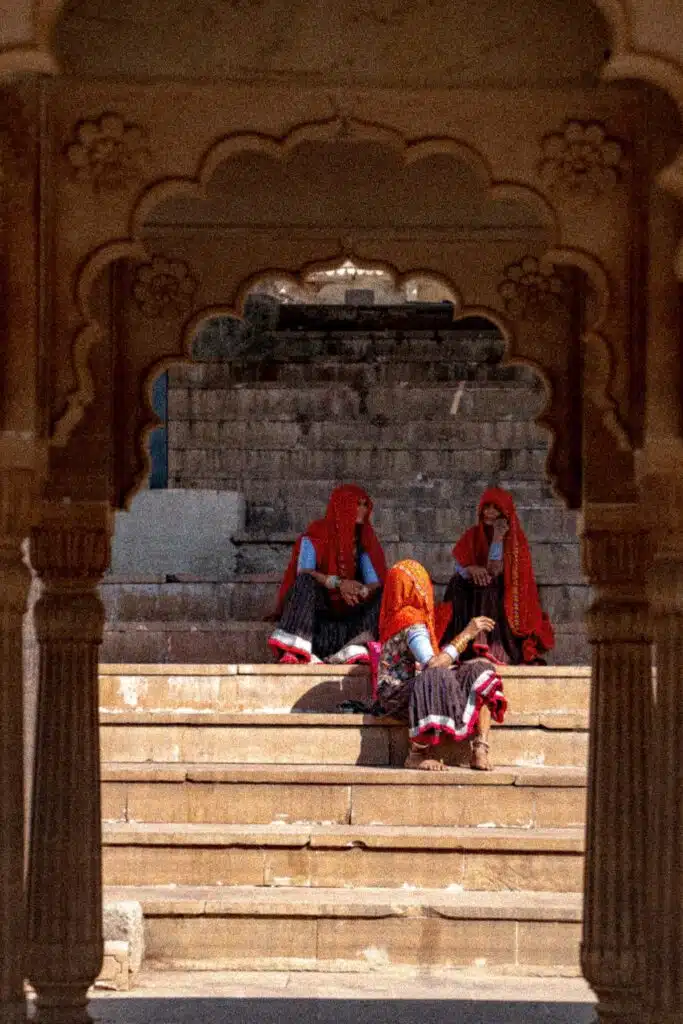
For a bit of extra relaxation, head to Deepak Ayurveda Massage Centre. When I visited, the experience was both relaxing and informative, with practitioners explaining how Ayurvedic principles relate to your body and overall well-being.
Stop 3 – Savitri Mata Temple for Sunset
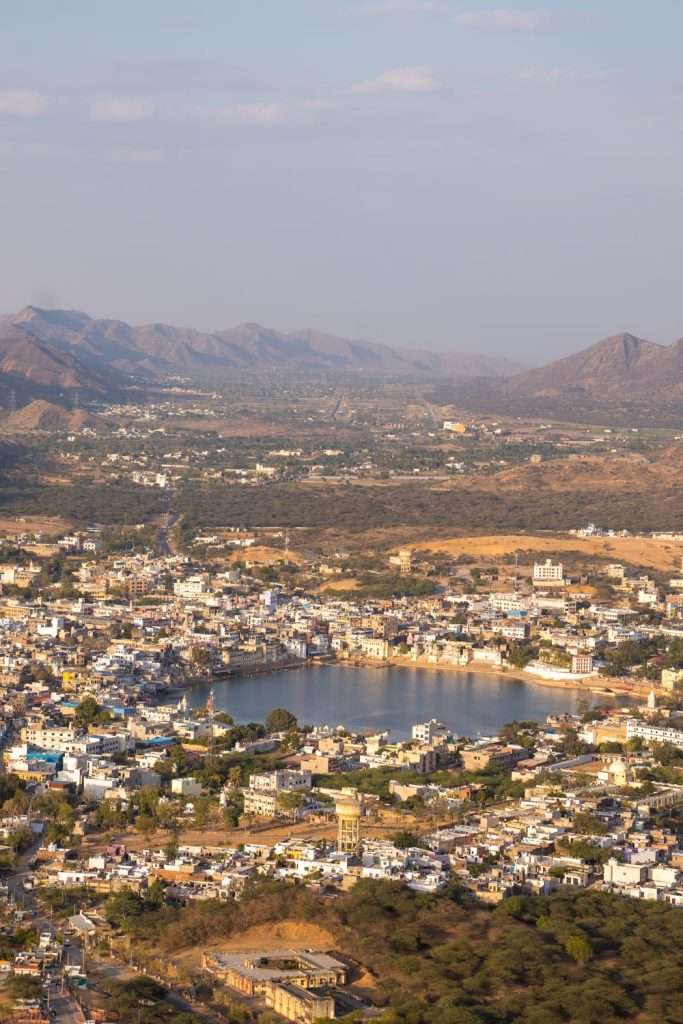
The Savitri Mata Temple, dedicated to Goddess Savitri, sits on Ratnagiri Hill and offers some of the best panoramic views of Pushkar.
From the top, you can see the town, Pushkar Lake, and the surrounding desert, especially beautiful at sunset.
When I visited Pushkar, this was easily my favourite experience. Watching the sun set over the desert was the perfect way to end my time there with some new friends I had made at the hostel.
You can reach the temple either by hiking up (around 1.5 km, taking 45–60 minutes) or by taking the cable car, which takes about 10 minutes.
A return ticket costs around ₹115 and is well worth it if you want to save your energy.

Day 5–7 – Udaipur: Lakes, Romance & Relaxed Exploring
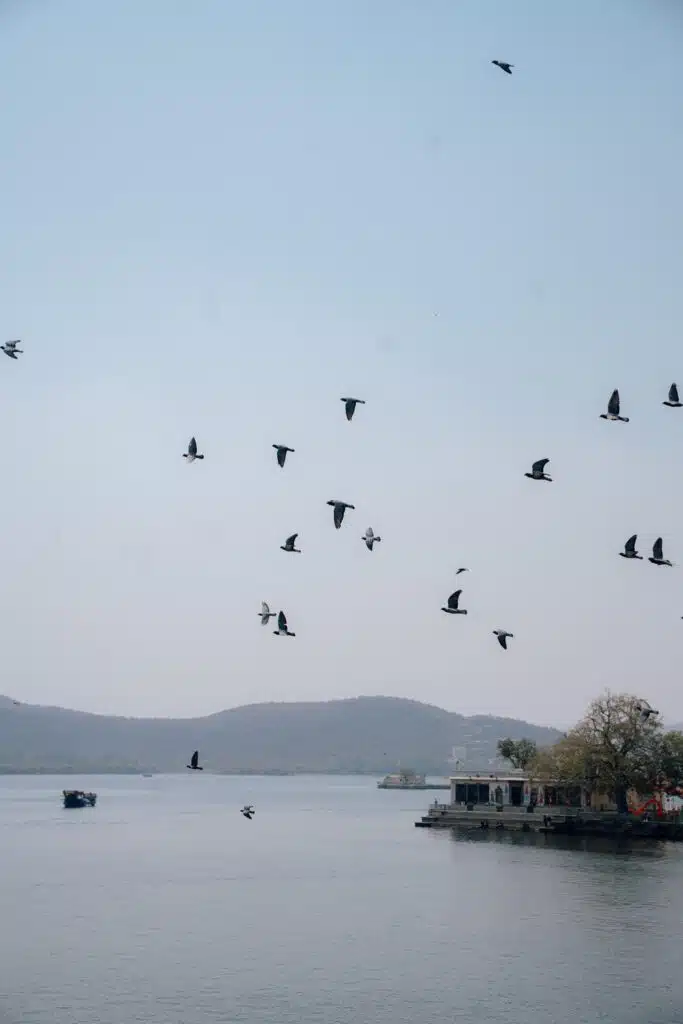
Often referred to as “the City of Lakes” and surrounded by the Aravalli Mountains, Udaipur is often described as one of the most romantic cities in India and is definitely worth visiting during your 7 days in Rajasthan.
After spending several days here myself, I found it to be the perfect place for a relaxing end to my time in Rajasthan.
Compared to Jaipur and Pushkar, Udaipur felt noticeably more relaxed. Even though Udaipur is bigger than Pushkar, I definitely felt something even more calming about this city, and that quickly makes it one of my favourite places in Rajasthan.

How To Get From Pushkar To Udaipur
Travelling from Pushkar to Udaipur can be done either by overnight bus or by train via Ajmer, as Pushkar does not have its own railway station.
I opted for the overnight bus, which takes around 7 hours and is a convenient option if you want to save time and avoid losing a full day of travel. Buses can be booked online, and I found this to be a straightforward and reliable option.
To get to Udaipur, you’ll first need to travel from Pushkar to Ajmer (approximately 35 minutes by bus or tuk-tuk).
From Ajmer, trains to Udaipur take around 4–5 hours, with prices starting from ₹300, depending on the class you choose.
To compare and book transport options, check IRCTC for trains, 12go Asia for trains and buses, and RedBus for long-distance buses.

How To Get Around Udaipur
Udaipur is very walkable, especially if you stay near the old town and the lake. I explored most of the city on foot, with the occasional tuk-tuk when heading further out or in the evenings.
Where To Stay In Udaipur
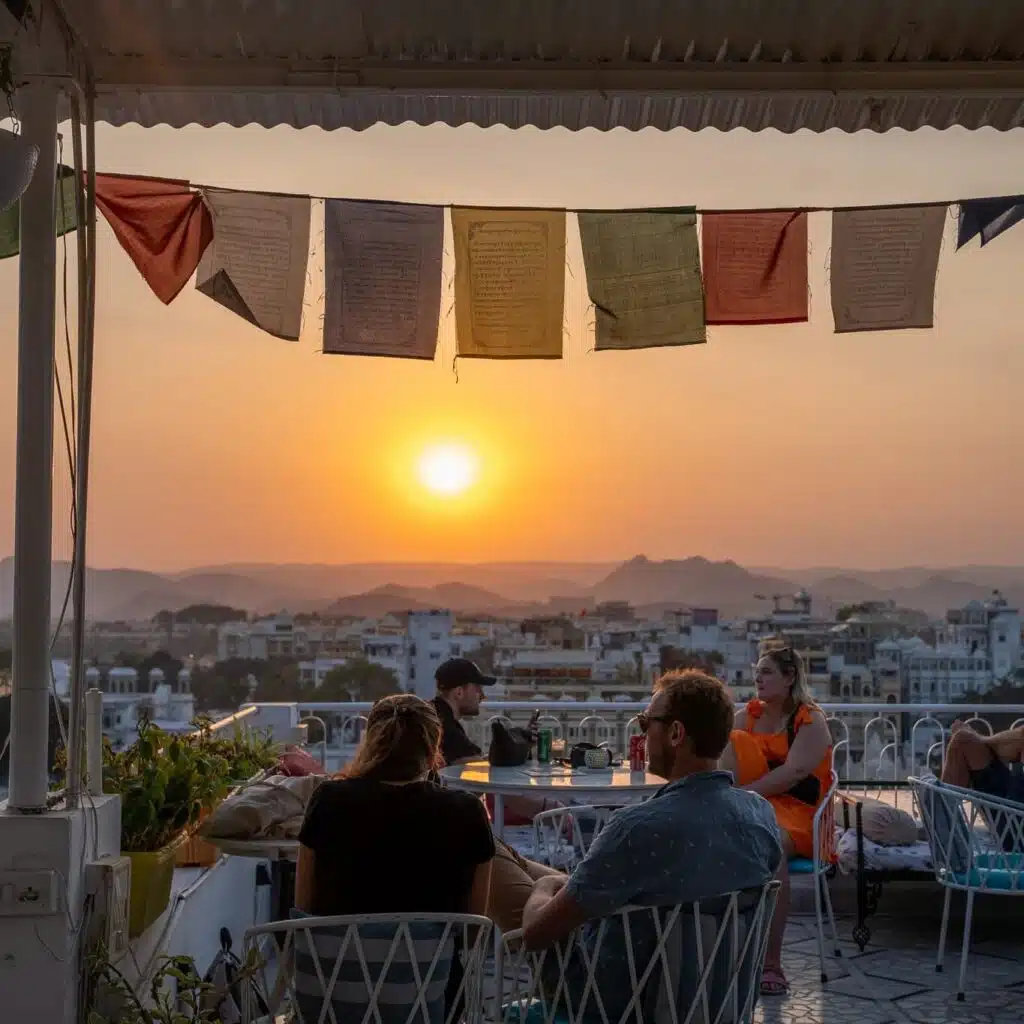
During your time in Udaipur, I highly recommend staying in the Lal Ghat area. This neighbourhood puts you within walking distance of Lake Pichola, the City Palace, cafés, ghats, and many of the city’s main attractions.
I stayed at Dreamyard Udaipur, and I can genuinely recommend it. It was super social and a great base for booking tours and activities.
Other great accommodation options in the area include:
Udaipur Itinerary – Day 5
Stop 1 – City Palace
The City Palace is the largest palace complex in Rajasthan and one of Udaipur’s main highlights. Built over 400 years ago, it has both Rajasthani and Mughal architecture and is made up of 11 smaller palaces, each with its own style.
The palace sits on the eastern side of Lake Pichola, offering beautiful lake and mountain views. I especially loved visiting later in the day, and the sunset views from the palace are not to be missed.
Entrance fee: approximately ₹400.

Stop 2 – Jagdish Temple
Just a short walk from the City Palace, the Jagdish Temple is a Hindu temple dedicated to Lord Vishnu, built in 1651.
The temple is free to enter. Inside, you’ll see shrines dedicated to Lord Vishnu, Lord Ganesha, and Lord Shiva.
Stop 3 – Gangaur Ghat
Located close to both the City Palace and Jagdish Temple, Gangaur Ghat is one of the most scenic and peaceful spots in Udaipur.
I spent some time here simply people-watching and enjoying the views, and it’s a lovely place to slow the pace of the day.

Stop 4 – Wander The Streets of Udaipur
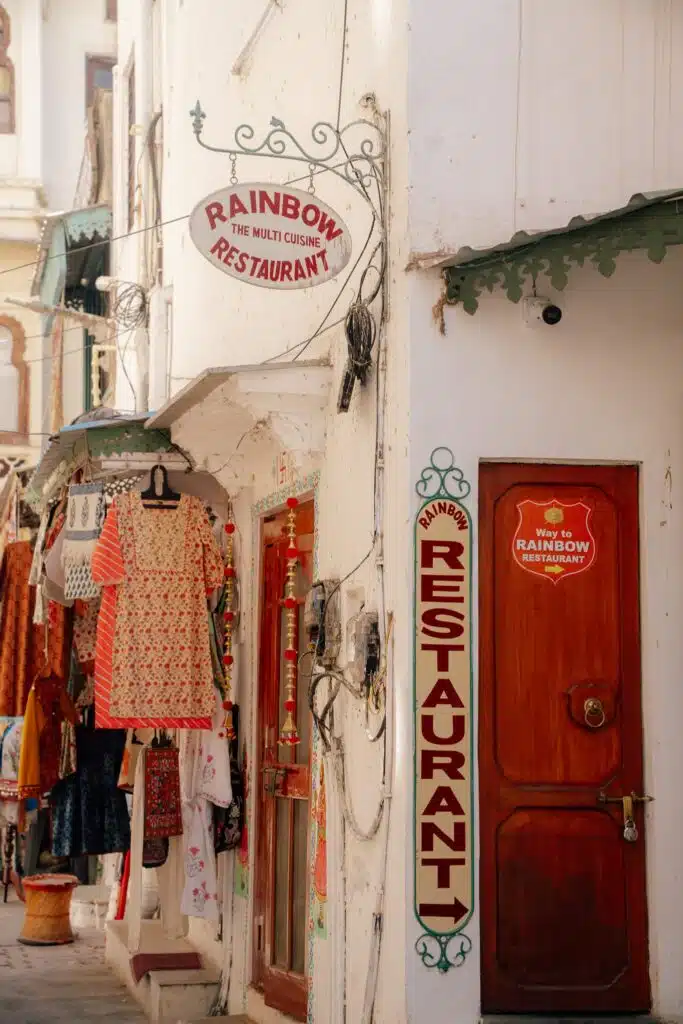
Exploring the old streets of Udaipur was one of my favourite things to do in the city. The narrow lanes are colourful, chaotic, and full of independent shops selling handmade items, clothing, and souvenirs.
It’s very easy to lose an hour or two wandering, and it was one of my favourite things to do in Udaipur.

Stop 5 – Dharohar Folk Dance Show
In the evening, I highly recommend attending the Dharohar Folk Dance Show at Bagore Ki Haveli, a historic mansion overlooking Lake Pichola.
The show features traditional Rajasthani music and dance, including Ghoomar and Bhavai, accompanied by live instruments such as the tabla.
- Time: Every evening from 7:00 pm
- Duration: ~1 hour
- Tickets: ~₹90 (Indians) / ~₹150 (foreigners)
Udaipur Itinerary – Day 6
Stop 1 – Sunrise Tour
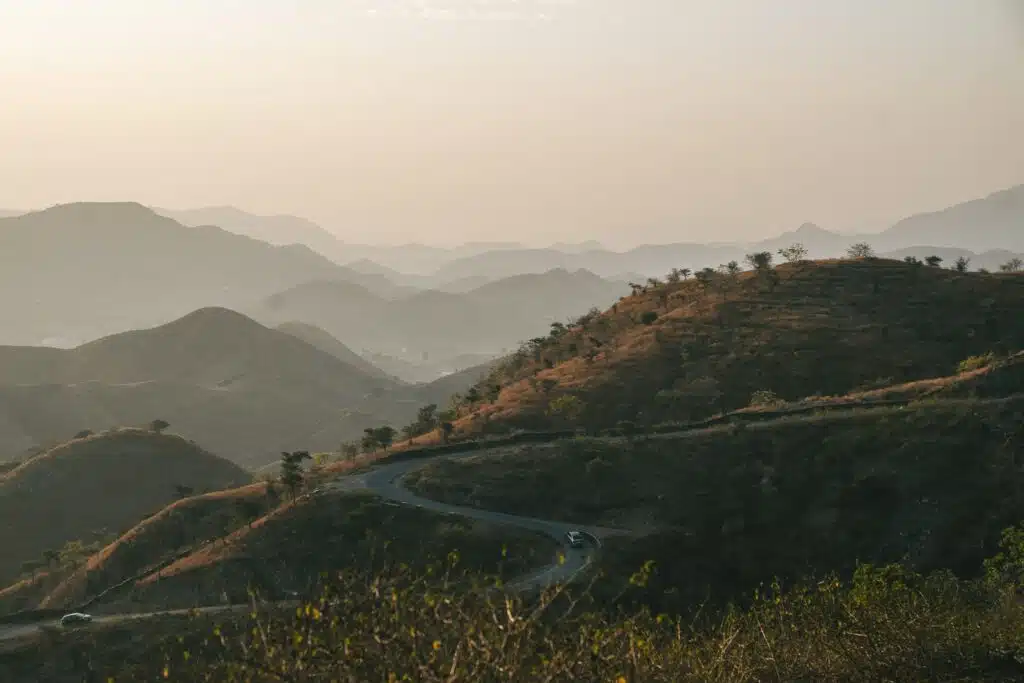
One of the highlights of my time in Udaipur was taking a sunrise lake tour, which involves heading out early to watch the sunrise from the Bahubali Hills before visiting several scenic lakes around the city.
I booked this tour directly through my hostel, Dreamyard Udaipur, which made the whole process easy. If you enjoy early mornings and photography, this is well worth doing.


Stop 2 – Kumbhalgarh Fort
If you’re a fan of history and architecture, a day trip to Kumbhalgarh Fort is a great option from Udaipur. This UNESCO World Heritage Site is famous for having one of the longest walls in the world, second only to the Great Wall of China, earning it the nickname “The Great Wall of India”.
Visiting Kumbhalgarh as part of an organised tour makes logistics much easier and allows you to see the fort without worrying about transport.
Book The Tour ⬇️
Udaipur Itinerary – Day 7 (Free Day)
I intentionally left Day 7 in Udaipur as a free day. After several busy travel days, I personally used this time to slow down, spend a few hours café hopping, and relax by the lake, and honestly, it was one of my favourite days of the trip.
That said, if you’d prefer to keep sightseeing, here are some great options to fill your second full day in Udaipur.
Things to Do in Udaipur on Your Free Day
- Visit Bagore Ki Haveli – a historic mansion with exhibits on local culture
- Explore Saheliyon Ki Bari – a peaceful garden with fountains and lotus pools
- Take a boat ride on Lake Pichola – especially scenic in the late afternoon
- Visit the Jagmandir Island Palace – reached by boat from the lake
- Explore Ambrai Ghat – great views back towards the City Palace
- Eat at a lake-view restaurant – Udaipur has no shortage of beautiful rooftop cafés
Celebrating Holi in Udaipur
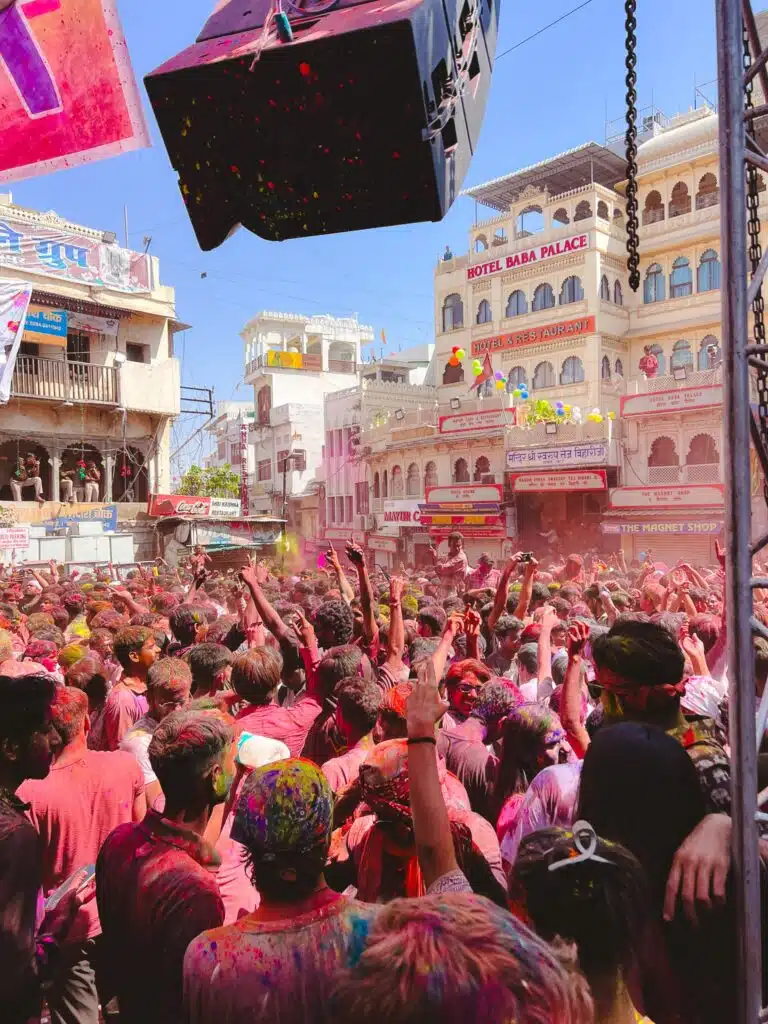
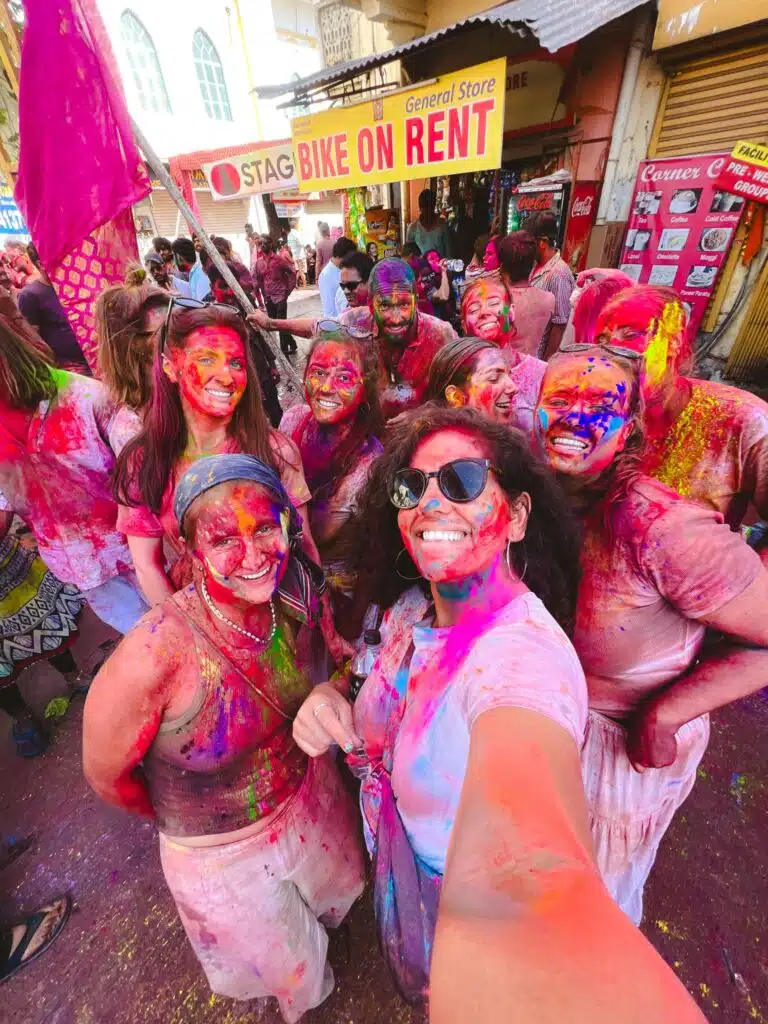
If your trip to 1-week in Rajasthan coincides with Holi, I can confidently say that Udaipur is a magical place to experience the festival, and it was one of the highlights of my time in India.
Holi in Udaipur is generally less overwhelming than in larger cities.
If you’re travelling solo, one big Holi festival tip I can offer is to celebrate Holi through organised events or accommodation-based celebrations. I celebrated with my hostel, Dreamyard Udaipur.
Alternative Options For Your Rajasthan Itinerary
As much as I loved travelling through Rajasthan, I’ll be honest, after a while, I started to experience what I can only describe as “fort fatigue.”
With so many palaces and forts across the state, it can reach a point where they begin to blur together, especially if architecture isn’t your main interest.
If you find yourself feeling the same, it’s worth adjusting your itinerary to include a different side of Rajasthan.
If you are craving more nature and unique experiences, Jaisalmer is a popular alternative. It’s one of the best places in Rajasthan to do an overnight desert stay under the stars.
I didn’t manage to visit Jaisalmer during my time in India, but it came highly recommended by almost everyone I met who had been there, which says a lot.
If your schedule allows, it’s a great option to swap in for one of the more fort-heavy stops.
The Best Time To Visit Rajasthan
The best time to visit Rajasthan is between November and March, when the weather is dry, sunny, and far more comfortable for sightseeing.
During these months, daytime temperatures are warm without being too hot!
Visiting between April and October can be challenging due to extreme heat, high humidity, and the monsoon season, which brings heavy rainfall and occasional travel disruptions.
March is an especially great month to visit Rajasthan, as this is when the Holi Festival takes place.
Rajasthan is one of the best places in India to experience Holi, and celebrating it here was genuinely one of the most memorable moments of my trip.
Train Travel Versus Bus Travel In Rajasthan
Train travel is often described as a must-do experience when visiting India, and while I did enjoy it in other parts of the country, I personally found bus travel far easier in Rajasthan.
During my two weeks in North India, I relied mostly on overnight buses, which helped me save time and avoid losing full days to travel.
One challenge I ran into with train travel was the booking process. The official train website, IRCTC, requires an Indian mobile number, which I didn’t have at the time.
Because of this, I either had to ask my accommodation to help me book tickets or use 12go Asia, which was convenient but slightly more expensive.
If you plan to use trains regularly, I’d recommend getting an Indian SIM card at the airport, as it makes booking through IRCTC much smoother. Otherwise, 12go Asia is a good alternative if you’re happy to pay a little extra for convenience.
One important note for overnight buses:
Bus “stations” in India are sometimes informal roadside stops rather than official terminals. As a solo female traveller, I always asked my driver to wait with me until the bus arrived, which made the experience feel much safer.
A 1-Week Trip To Rajasthan Budget
Your overall budget will depend on your travel style, but Rajasthan is very manageable on a budget to mid-range spend. Below is a realistic breakdown based on my own experience:
- Accommodation: ₹1,000 – ₹5,000 per night
- Food & drinks: ₹200 – ₹700 per meal
- Transport between cities: ₹300 – ₹1,500 per journey
- Local transport (tuk-tuks & taxis): ₹50+ per ride
- Tours & activities: ₹50 – ₹6,000 per activity
Travelling comfortably in Rajasthan doesn’t require a huge budget, especially if you mix local transport with the occasional organised tour.

Scams To Be Aware Of In Rajasthan
Like many popular destinations, Rajasthan has its fair share of scams. Being aware of them ahead of time makes them much easier to avoid.
Some of the most common scams include:
- Fake guides – unlicensed guides offering incorrect information or pushing commission-based shops
- Gem scams – overpriced or fake gemstones sold as “investment pieces”
- Overpriced camel rides or safaris – experiences that don’t match what was promised
- Fake handicrafts or antiques – mass-produced items sold as handmade or historic
- Pickpocketing – especially in crowded markets and tourist areas
- Fake holy men – offering blessings or readings before demanding money
- Overpriced transport – drivers inflating prices or taking longer routes
- Fake charity scams – donations pocketed by individuals posing as charity workers
- Commission-based drivers – steering you to shops or restaurants for kickbacks
- Fort ticket scams – fake or inflated tickets sold near major attractions
- Bait-and-switch hotels – advertised rooms replaced with lower-quality ones
- Fake tourist offices – charging inflated prices for tours or tickets
Keeping these scams in mind helped me avoid any major issues during my trip. When in doubt, walk away.

Is 1 week enough time to visit Rajasthan?
Yes, one week is enough to see Rajasthan’s highlights, especially if it’s your first visit. While the state is huge, a well-planned route allows you to experience major cities without feeling rushed.
Is Rajasthan safe for solo female travellers?
In my experience, Rajasthan can be safe for solo female travellers, especially in popular destinations like Jaipur, Pushkar, and Udaipur. That said, it’s important to stay aware of common scams, dress respectfully, and choose accommodation in central, well-reviewed areas.
Is Rajasthan expensive to travel around?
Not at all. Rajasthan is very manageable on a budget to mid-range spend. Affordable accommodation, cheap local transport, and reasonably priced food make it an excellent destination if you are a budget-conscious traveller.
Final Thoughts: Planning the Perfect Rajasthan Trip
This 1-week Rajasthan itinerary is designed for first-time visitors who want to see the highlights without overloading every day.
It covers a mix of busy cities, slower-paced stops, and enough flexibility to adjust based on your travel style.
If you’re planning a longer trip through India or want to tweak this route, these guides may be useful:
- My Perfect 2-Week North India Itinerary for First-Time Visitors shows how Rajasthan fits alongside places like Varanasi and Agra.
- For travellers with more time, The Ultimate 4-Week India Itinerary (North & South India) breaks down a slower, more varied route across the country.
- If you’re deciding which destinations to prioritise, I’ve also written detailed posts on whether Udaipur is worth visiting and whether Pushkar is safe for solo female travellers, based on my own experiences.
- Finally, if you want tips on how to plan a backpacking trip around Rajasthan, or india as a whole, this guide will help you massively.
Rajasthan can feel intense at times, but with a realistic itinerary and a bit of flexibility, it’s a rewarding place to travel, especially if it’s your first introduction to India.