Is Namibia Worth Visiting? 16 Reasons Why You NEED To Visit

Wondering “Is Namibia worth visiting?” You’re not alone, and you’re in the right place to get a real answer.
Whether you’re planning your first trip to Africa or you’ve been scrolling through endless Namibia travel blogs and itineraries, it’s a fair question to ask. I spent five weeks solo travelling in Namibia, volunteering and exploring the country on a ten-day tour, and I can honestly say it’s one of the most unusual and unforgettable places I’ve ever travelled to.
Namibia feels like nowhere else. Between the rust-red dunes of the Namib Desert, the empty salt pans of Etosha, and the Atlantic crashing into the desert along the Skeleton Coast, it often felt more like another planet than another country.
If you’re into wide open spaces, striking scenery, unique wildlife, and starry skies that don’t quit, this will be the place for you!
That said, Namibia isn’t always easy. The distances are long, the roads can be rough, and things don’t always go to plan. But if you’re up for the challenge, you’re rewarded with raw beauty, deep stillness, and a sense of real adventure that’s hard to find elsewhere.
In this post, I’ll walk you through what makes Namibia worth it, from the highlights to the practicalities. I’ll share the parts that blew me away, the things I wish I’d known before I went, and why I’d go back in a heartbeat.
Read on below to discover all the reasons why I believe Namibia is totally worth visiting!
Disclaimer: This post contains affiliate links. If you decide to make a verified purchase through the links in this post, I will earn a small commission. This will be at no extra cost to you. Please check my privacy policy for details. Thank you.
⬇️Namibia At A Glance⬇️
⛵WHAT TO DO⛵
– Enjoy a walking tour of Windhoek
– 9 Day camping tour around the country
– An epic 4×4 Sandwich Harbour dunes experience
✅Travel Essentials For Namibia✅
– Book flights with Skyscanner
– Stay connected with an eSIM from Airalo
– Rent a 4×4 Through Discover Cars
– Get covered by SafetyWing – My favourite Travel Insurance provider
📅WHEN TO VISIT📅
The best time to visit Namibia is during the dry season, which runs from May to October. This period offers pleasant temperatures and the conditions to see wildlife in Etosha National Park.
So, What Makes Namibia Worth Visiting?
Namibia is a country that stands out for all the right reasons. From its dramatic desert landscapes to its unique wildlife and remote, quiet spaces, it offers a travel experience that’s unlike anywhere else.
Here’s what makes it worth your time.
Namibia is home To The Oldest Desert In The World
Namibia is home to the Namib Desert, widely recognised as the oldest desert on Earth, with parts of it dating back over 55 million years, according to geologists. That’s older than most mountain ranges, and honestly, it feels like it.
The desert’s harsh conditions have shaped a surprisingly rich ecosystem. Out here, you’ll find desert-adapted elephants, brown hyenas, and mountain zebras, along with more commonly spotted species like springbok, oryx, jackals, and a few too many snakes for my liking.
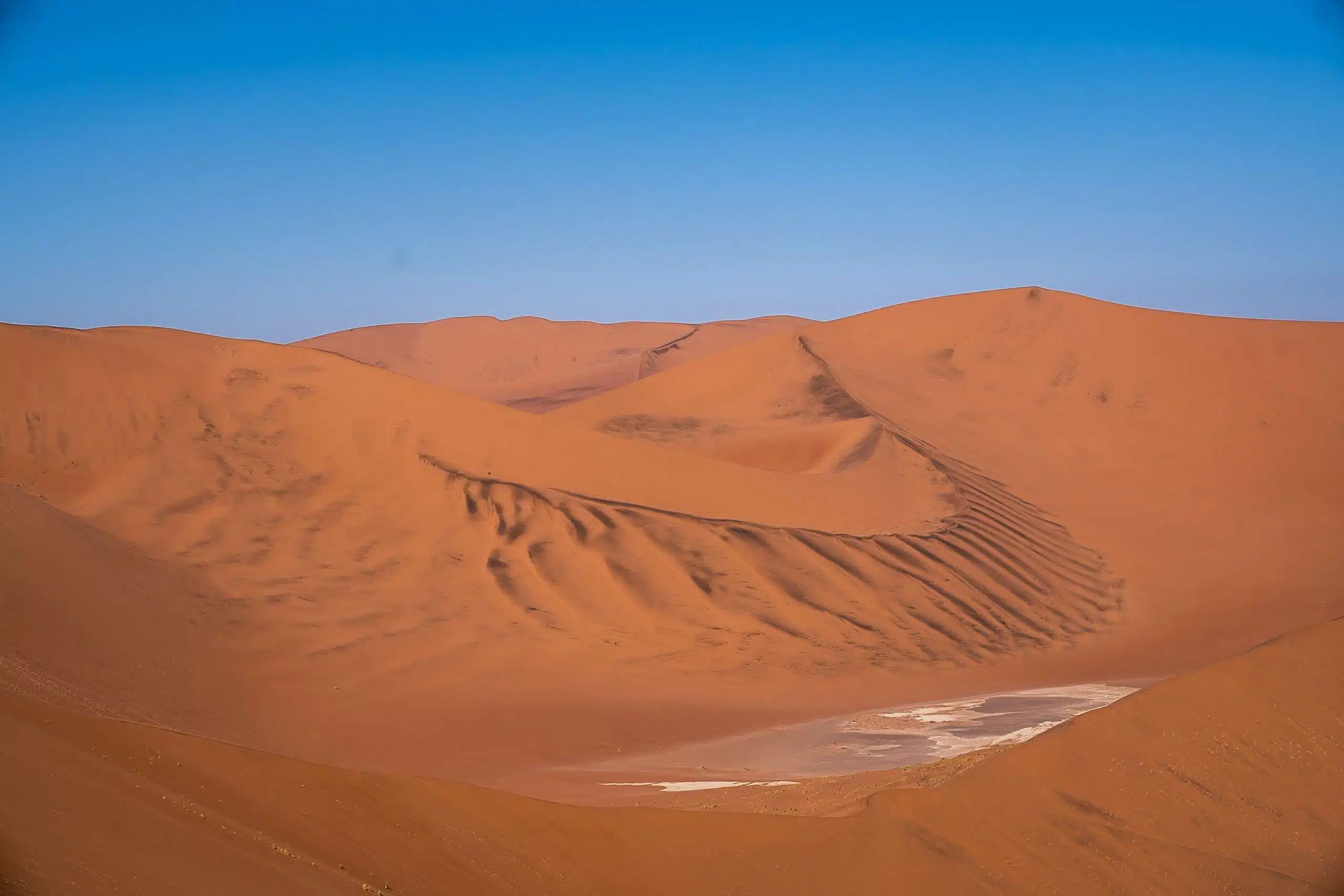
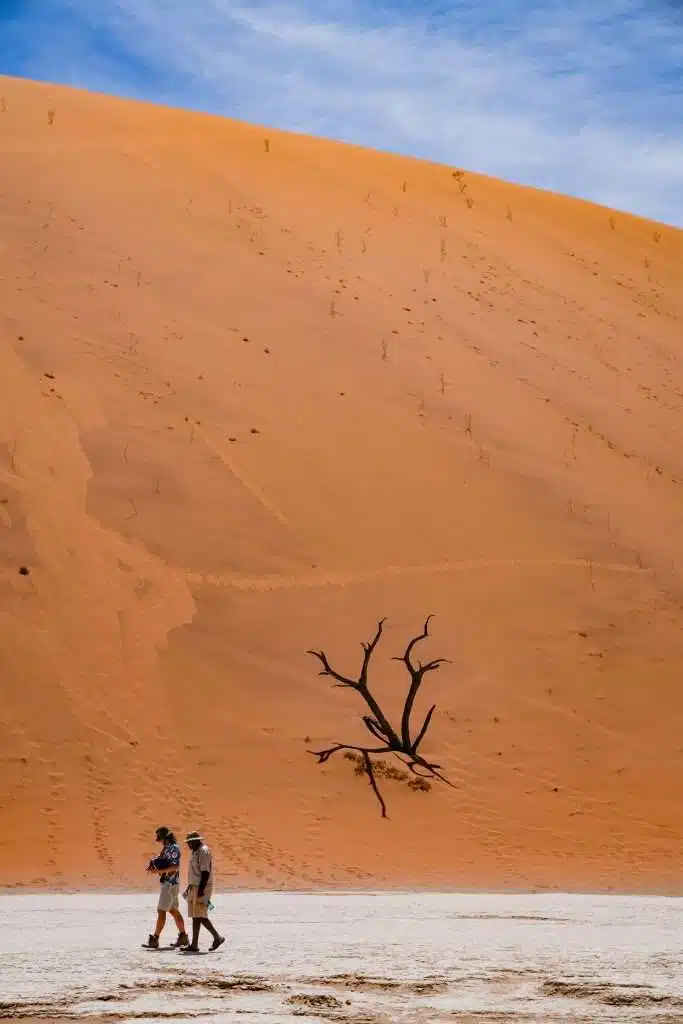
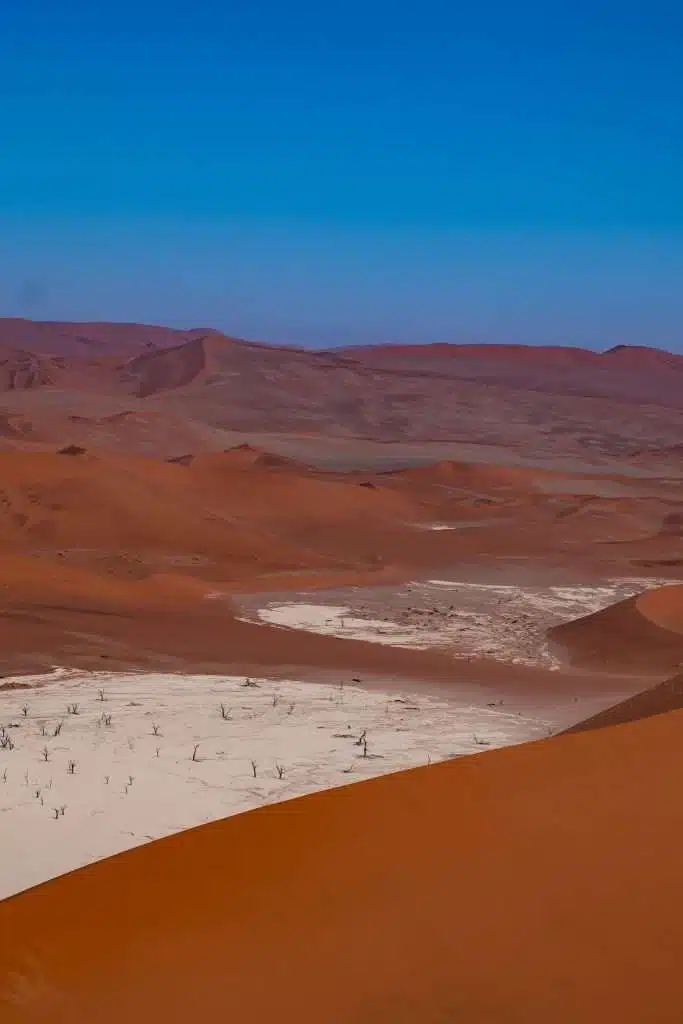
The Namib Desert is also where you’ll find some of the tallest sand dunes in the world, including the famous Big Daddy and Dune 45, which rise above the salt pans like something out of a dream, and which are definitely the best places I visited during my 10-day tour of Namibia.
I was lucky enough to volunteer on a farm located in the heart of the Namib, and it turned out to be one of the most magical travel experiences I’ve ever had. Each day brought something so different, from watching wild zebras and witnessing some epic sunsets, it was a very unique experience.
If you’re interested in volunteering in Namibia (or anywhere else around the world), I’d recommend checking out Worldpackers. It’s a great way to travel with more intention and keep costs down while still having an unforgettable adventure.
A Landscape That Feels Straight Out of a Sci-Fi Film
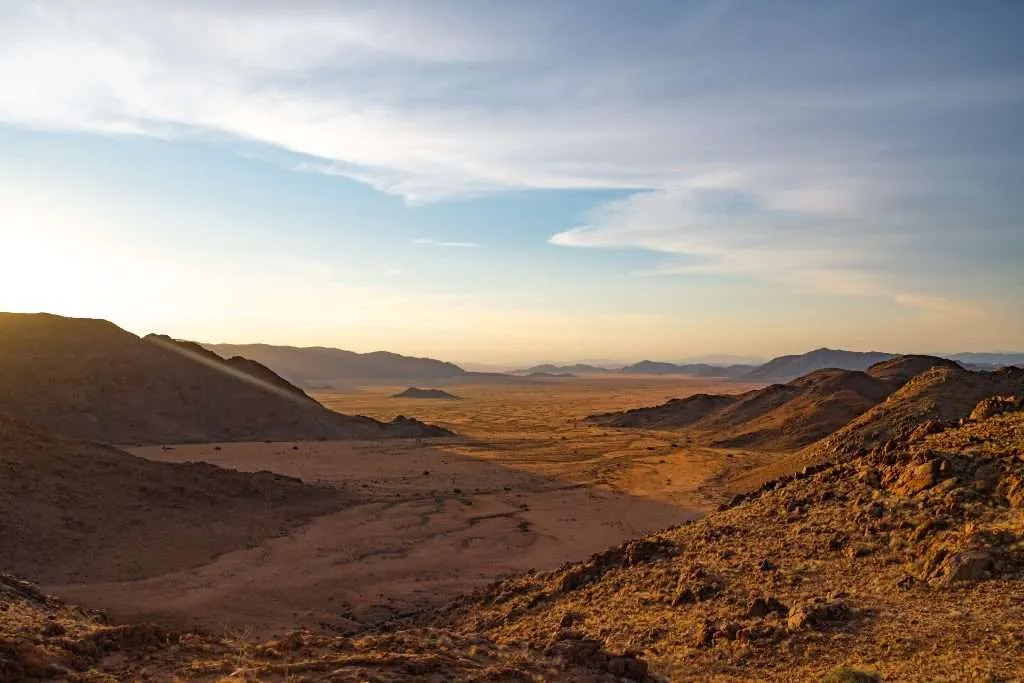
Namibia has some of the strangest and most beautiful landscapes I’ve ever come across. Some places were so unusual they felt made up, quite literally like someone copy-pasted them from a movie set. But they’re very real, and honestly, even better in person.
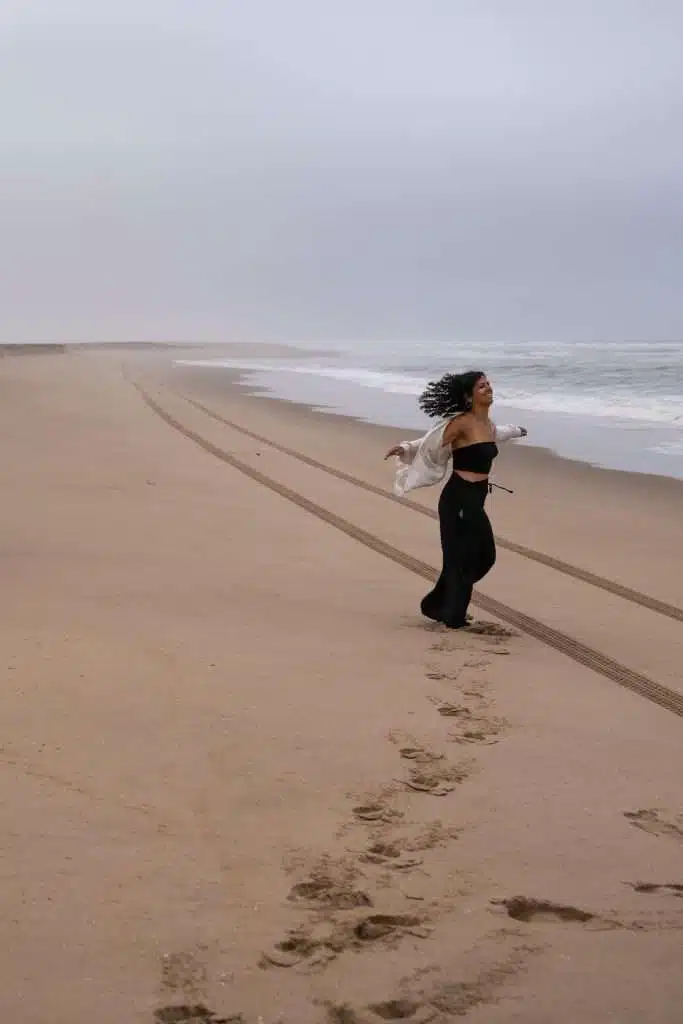
One of those places is the Skeleton Coast, where the desert meets the ocean in the most dramatic way. I didn’t expect to be cold in the desert, but the fog that rolls in from the Atlantic is icy, and the shipwrecks scattered along the shoreline give the whole place this eerie atmosphere. It’s weird, remote, and fascinating.
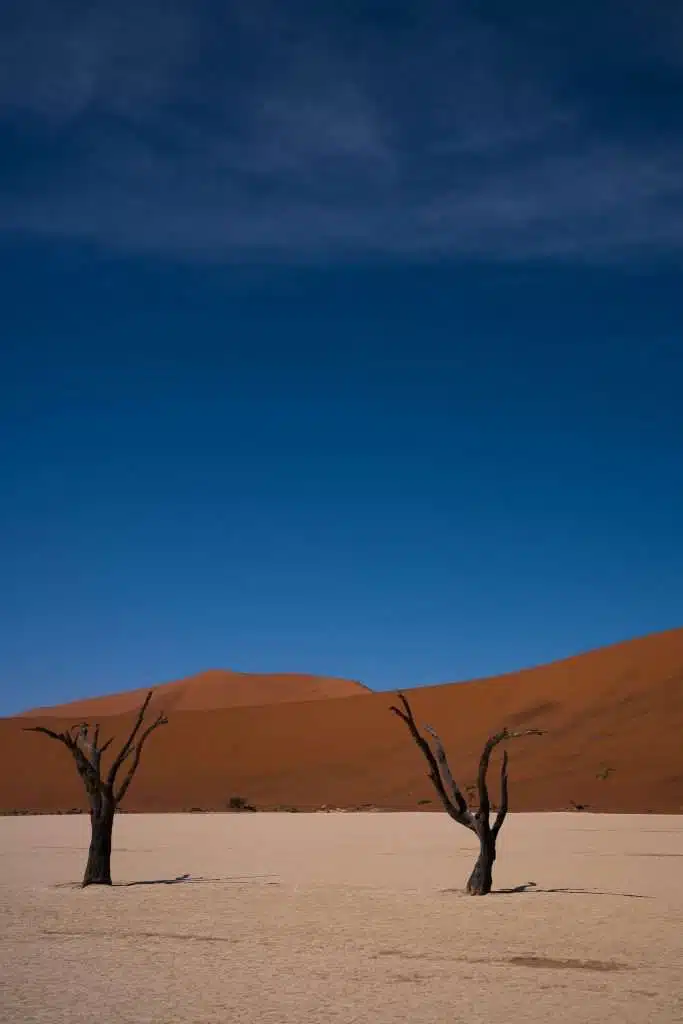
Then there’s Sossusvlei, in Namib-Naukluft National Park. I’d seen photos of Deadvlei before, dead trees standing in a cracked white pan surrounded by red dunes, but nothing really prepares you for how quiet and vast it feels when you’re actually there.
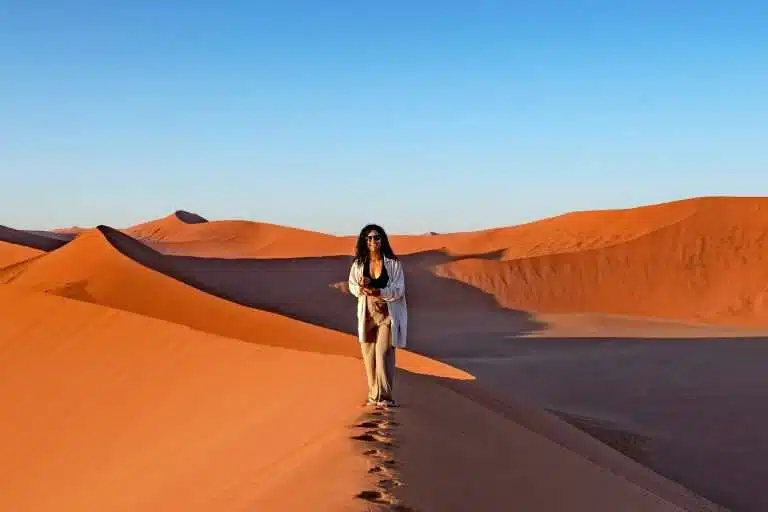
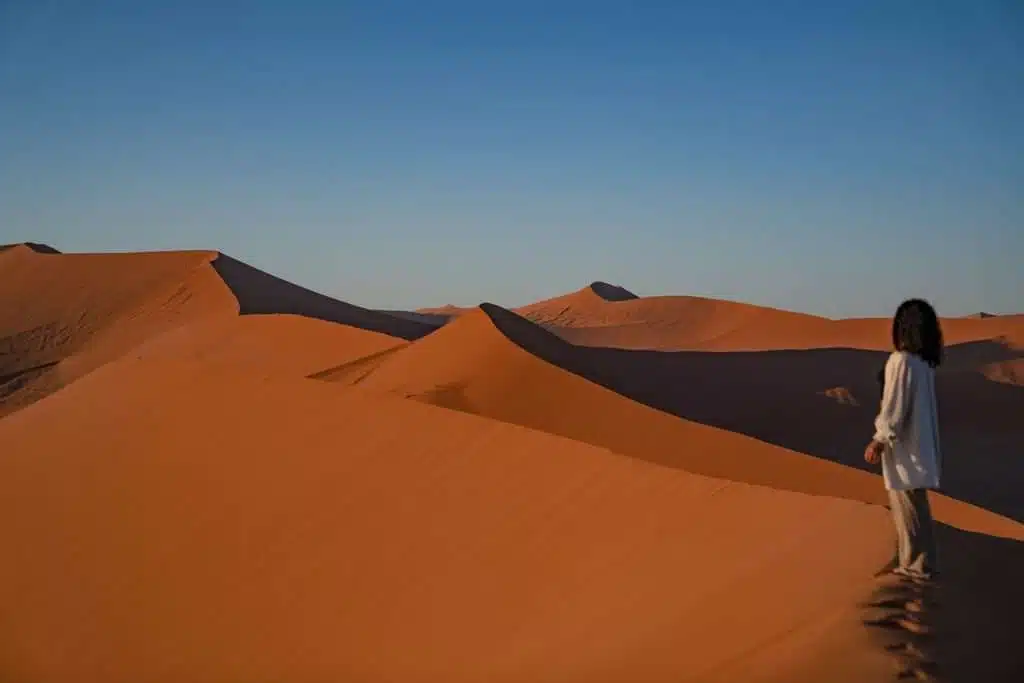
I loved climbing Dune 45 for sunrise. It was hard work, but sitting at the top and just looking out over that endless desert was one of the best moments of my trip.
Wildlife Sightings That Rival Any Safari Destination
Etosha National Park is Namibia’s most popular safari destination, and after visiting, I completely get why. It’s located in the north of the country and centres around a huge salt pan called Etosha, which means “Great White Place” in the Ovambo language.
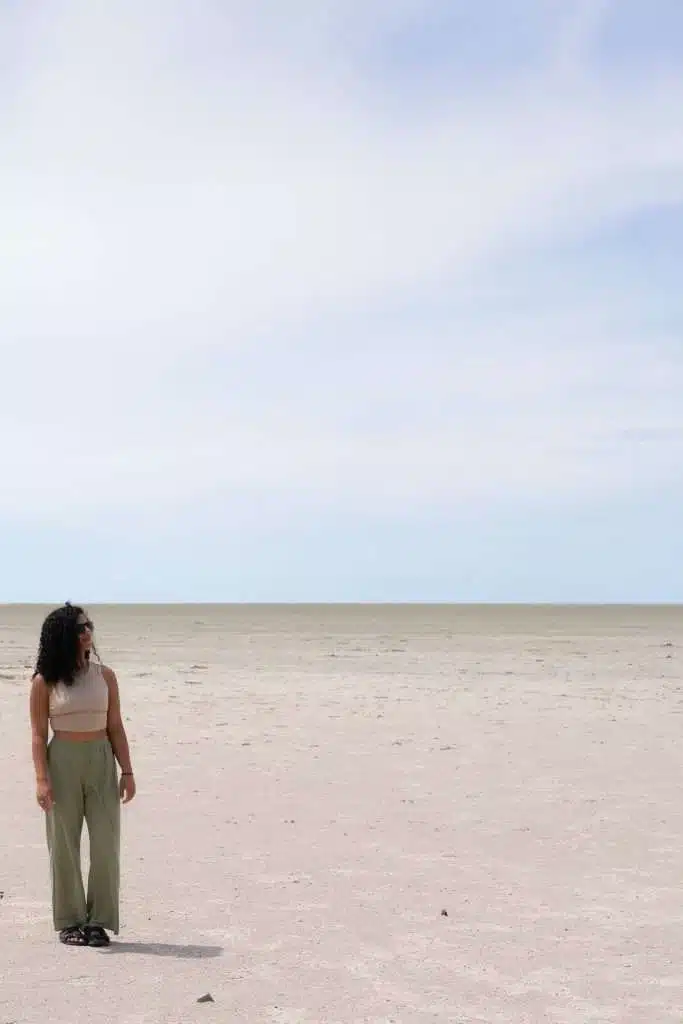
If you’re lucky, you’ll get the chance to walk out onto the pan. I did during my guided tour of Namibia, and it was one of the strangest and quietest places I’ve ever stood, like the silence was loud, if that makes any sense at all!
Etosha is home to four of the Big Five, which are lion, elephant, rhino, and leopard, as well as a whole mix of animals you’re almost guaranteed to spot.
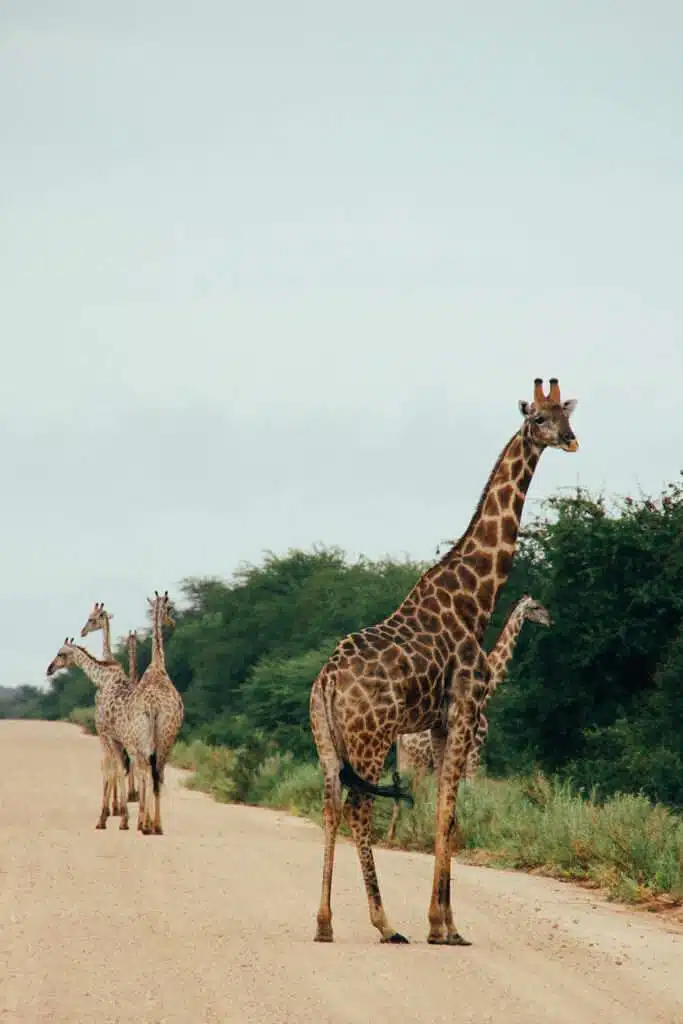
You’ll likely see giraffes, warthogs, zebras, and, if the safari gods are on your side, cheetahs. The dry, cracked terrain makes every sighting even more interesting.
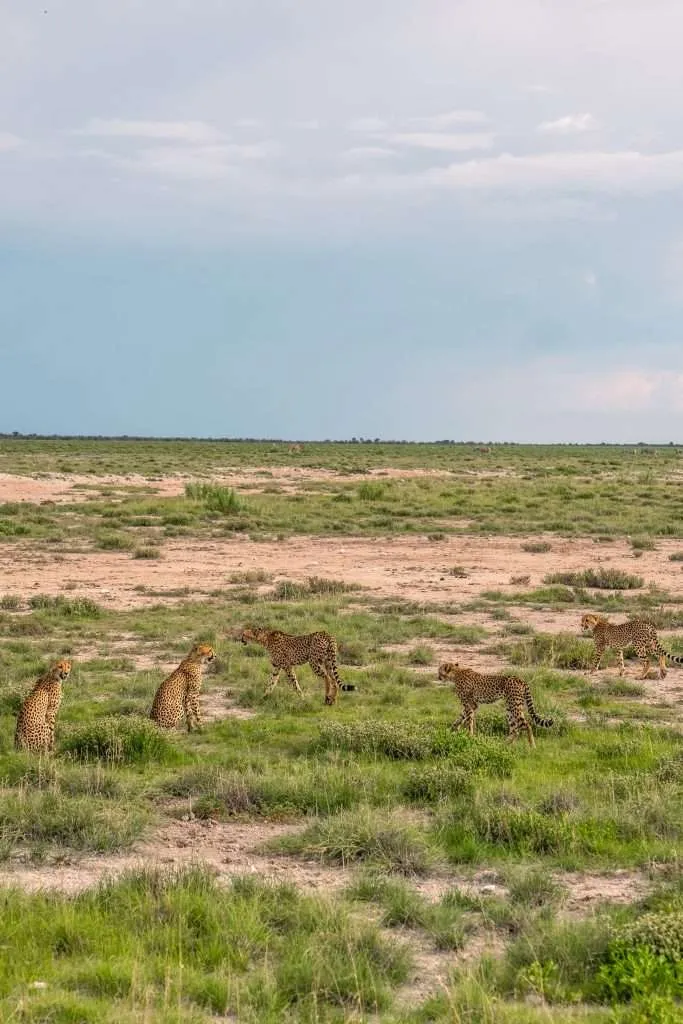
I genuinely loved Etosha. It ended up being one of my favourite stops of the entire trip. I was lucky enough to see five cheetahs just chilling by the road, which our guide said was a pretty rare find (and even he got his phone out to take a photo, which I think says it all).
Definitely one for the memory bank.
👉 Check out the exact guided safari tour I booked here – it covered everything from Etosha National Park safaris to the Namib Desert, and I can highly, highly recommend it.
This Is One of the Emptiest Countries on Earth
Namibia is one of the least densely populated countries in the world. With a population of around two million people and ranking as the 34th largest country globally, it’s safe to say there’s a lot of open space and not a whole lot of people in it.
In practice, that means you can drive for hours without passing another car, person, or even a building. When I was volunteering on a farm in the desert, it was just me, the farmer, his cousins, a few dogs, and not a single shop for at least four hours in any direction, which was just wild to me, as someone who grew up in London.
If you’ve been craving a proper off-grid experience, Namibia delivers. It’s the kind of place where you can actually hear yourself think, or hear absolutely nothing at all, which is equally refreshing.
Of course, that remoteness does have its downsides. If something goes wrong, like a flat tyre, you could be waiting a while for help. Signal is hit and miss once you leave the towns, and it’s not unusual to spend an entire day driving without seeing anyone.
But if you’re okay with being self-sufficient and you’re not too fussed about constant connectivity, the stillness and space are hard to beat.
It’s Home To The Second Largest Canyon In The World
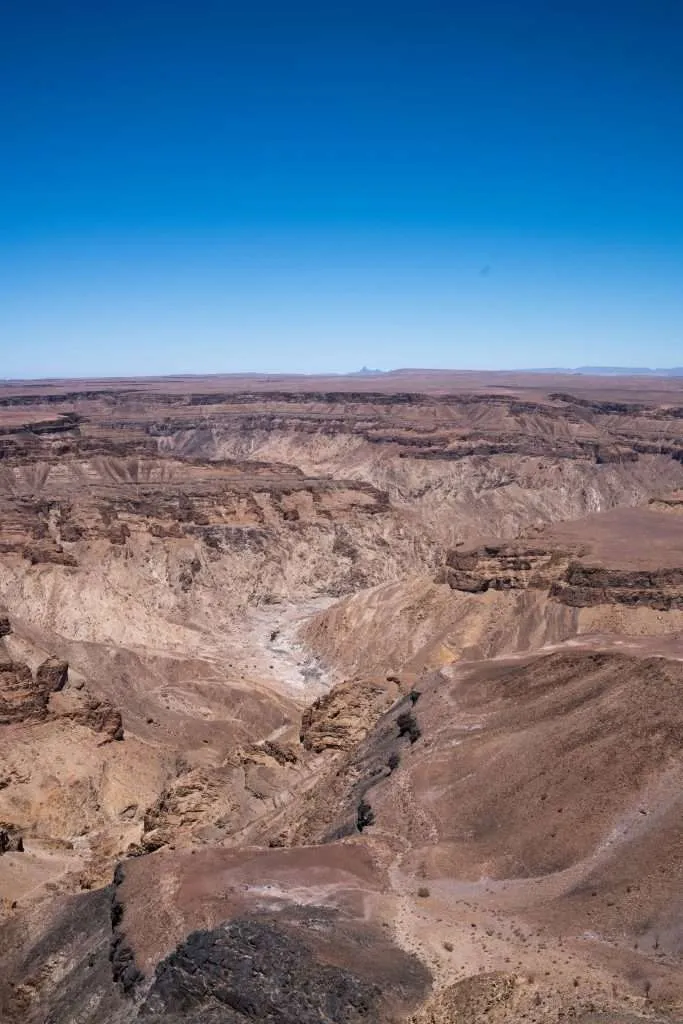
If you’ve never heard of Fish River Canyon, don’t worry, you’re probably not alone. It’s one of Namibia’s most impressive natural wonders, but it somehow still flies under the radar.
It’s actually the second-largest canyon in the world, after the Grand Canyon, and stretches over 160 kilometres long and 27 kilometres wide in places.
I didn’t hike the full thing (though you can, if you visit between May and September), but even just standing at the edge is something else. The view is huge, dramatic, and kind of disorienting in the best way.
One thing I loved was how quiet it was when I visited. There were barely any other travellers around, which made it feel like I had the place to myself. If you’re into photography, hiking, or just seeing landscapes that make you feel small (in a good way), it’s definitely worth the detour south.
One of the Most Peaceful Safari Experiences in Africa
If you’ve done a safari in places like Kenya or South Africa, you might be used to seeing ten vehicles circling a lion or hearing guides chatting over radios the entire time. Namibia is a completely different experience.
What stood out to me during my time in Etosha National Park was just how peaceful it was. There are fewer vehicles, more open space, and no pressure to tick animals off a checklist. The pace is slower, and you’re more likely to have quiet moments where it’s just you and the wildlife.
You can also do a self-driving safari here, which gives you total freedom to explore.
I visited Etosha National Park as part of a guided 10-day tour, and because we were travelling in the off-season, our guide said the park felt even quieter than usual. We had multiple sightings of lions and cheetahs with no one else around. It felt like we had the park to ourselves sometimes, which made the whole experience even more special.
Namibia might not be the most wildlife-dense destination in Africa, but the experience of seeing animals here feels more natural, less rushed and a bit more personal.
Hauntingly Beautiful Ghost Towns With a Fascinating Past
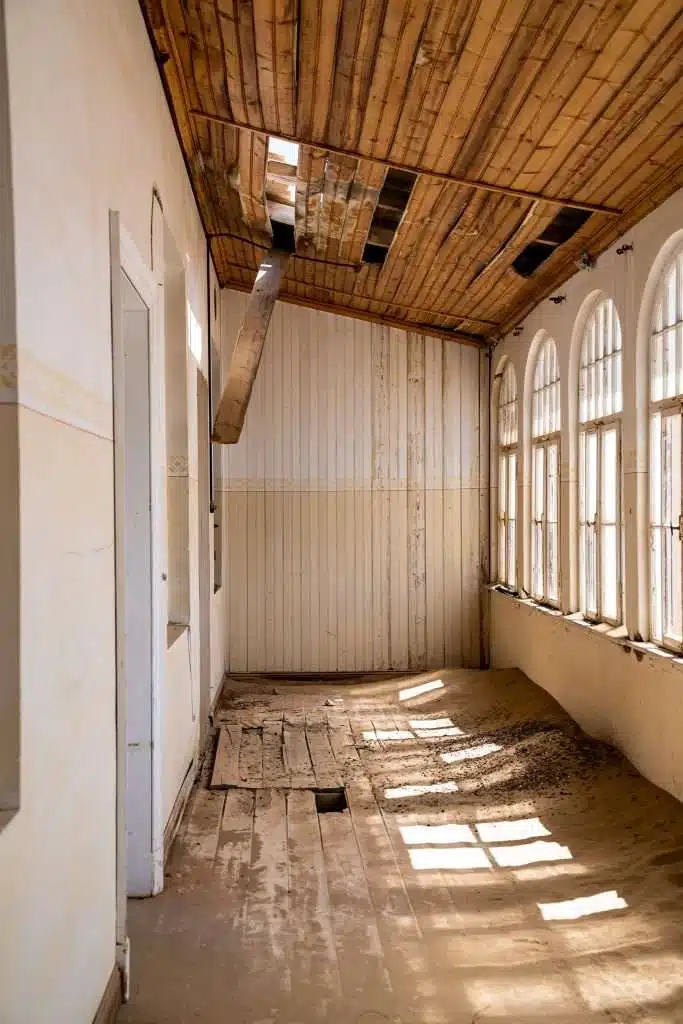
One of the strangest places I visited in Namibia was Kolmanskop, an abandoned mining town in the middle of the desert. Back in the early 1900s, it was full of money and activity, with German-style homes, a bowling alley, and even an ice factory. When the diamonds ran out, the town was left behind.
Now the buildings are half-buried in sand. It spills in through broken windows and doorways and piles up in every room. Some of them are waist-deep. Walking through felt odd, quiet, a bit unsettling, but I also thought it was very, very cool.
I visited on a guided tour, and hearing stories about the people who used to live there added to how strange it all felt. It’s worth noting that these buildings aren’t just empty; they’ve now become home to snakes and other desert wildlife, so you do have to watch your step.
If you’re into old, abandoned places or want something totally different from the usual nature-focused stops, Kolmanskop is definitely worth visiting.

You’ll be able to witness some of the clearest night skies
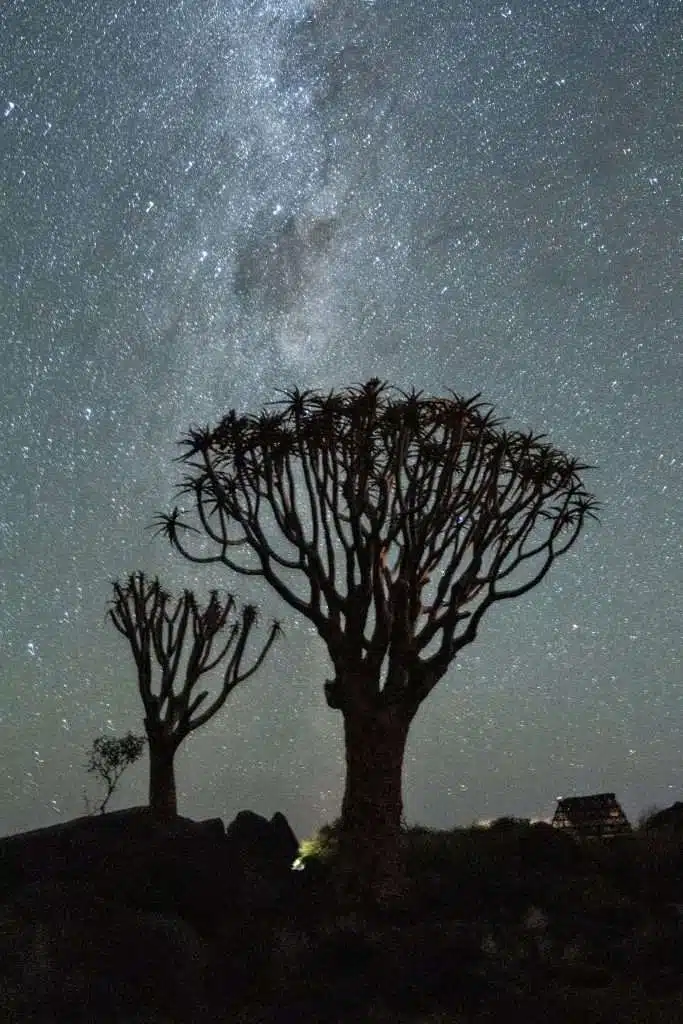
Namibia is easily one of the best places I’ve ever been for stargazing. With barely any light pollution once you leave the cities, the sky just opens up, and it stays that way night after night.
Over five weeks of travelling through the country, I saw the Milky Way more times than I can count. I also lost track of how many shooting stars I spotted, especially in the desert regions. You don’t need to go hunting for a “stargazing spot”; you’ll just walk outside, and there it is.
One of the clearest skies I saw was at Quiver Tree National Park. I didn’t have a telescope or any gear with me, but it didn’t matter because the view was still ridiculous. The silhouette of the trees against the stars looked fake in the best way.
If you’re into astrophotography, you’ll have a field day. If not, you’ll still end up standing outside way longer than you meant to, just staring at the sky and possibly giving yourself a neckache.
It’s probably some of the best night skies I have ever seen and is on par with what I witnessed in the Atacama Desert in Chile (which is considered one of the best places in the world for stargazing).
Unusual Trees and Surreal Rock Formations You’ll Never Forget
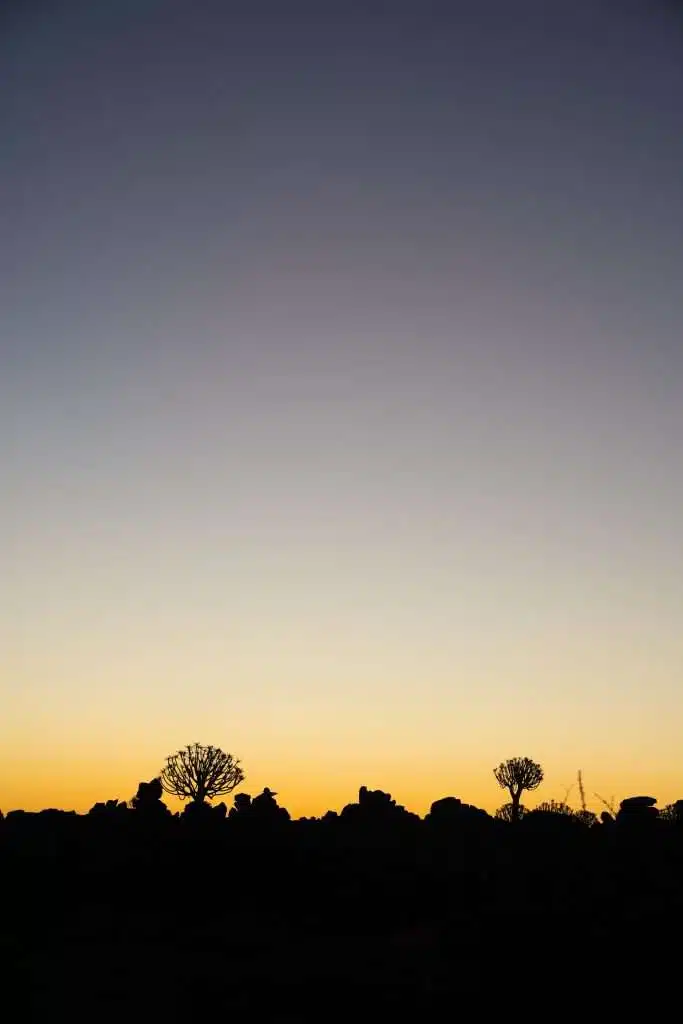
The Quiver Tree is one of those things that looks like it shouldn’t exist outside of a sci-fi film, but it’s very real and very spiky. These trees are native to southern Namibia and are technically a species of aloe, although they grow tall like trees and tend to look like upside-down chandeliers.
I visited Quiver Tree National Park, which has one of the densest concentrations of them, and it’s a great spot to see them up close. Come at sunset or sunrise if you want photos without harsh light and also to see some very cool silhouettes (see picture below).
Right next to it is the Giant’s Playground, a field of massive dolerite boulders that look like they’ve been stacked by someone with a lot of time on their hands. In reality, it’s all been shaped by volcanic activity and erosion.
Neither of these places takes long to visit, but they’re worth a stop if you’re nearby. The area is completely different from the sand dunes and canyons you see elsewhere in Namibia, which helps break things up a bit.
A Meat Lover’s Paradise With Unexpected Delights
If you eat meat, you’re going to get on well in Namibia. The food scene isn’t particularly fancy or diverse, but what it does, it does well, mainly grilled meat, stews, and braais (which are basically BBQs, just more social).
Oryx and springbok are both common on menus, and honestly, they’re great. Lean, flavourful, and usually cooked simply. You’ll also see things like zebras and sometimes even giraffes, but that’s where I personally drew the line.
Vegetarian options exist, but they’re not the default. If you’re plant-based, be prepared to do a bit more self-catering or rely on basics like pap (a maize porridge), bread, and salads. In smaller towns, the options get more limited.
Yes, You Can Surf Here (And It’s Surprisingly Good)
Namibia probably isn’t the first place that comes to mind when you think of surfing, but it actually has some solid spots, especially along the Skeleton Coast and around Swakopmund.
I didn’t go all in on surfing while I was there, but I met a few travellers who did, and said the waves were legit.
Skeleton Bay is the one that gets all the attention in the surf world; it’s known for having one of the longest left-hand breaks on the planet. But it’s also for advanced surfers only and not exactly beginner-friendly.
If you’re new to surfing or just want to try it out while you’re in Namibia, Swakopmund is a good place to start. There are local surf schools, and the vibe is pretty relaxed. You won’t get Bali-style beach cafés or yoga shacks, but it does the job.
It’s not a top surf destination, but if you’re already in the area and fancy getting in the water, it’s a good way to mix things up a bit.
If you’re keen to give surfing a go while you’re in Namibia, check out this surf camp in Swakopmund. It’s beginner-friendly, run by locals, and a good way to break up all the driving and dusty landscapes with a bit of ocean time.
Catch a Wave and Stay A while in Swakopmund
Swakopmund is one of the few places in Namibia that actually feels like a town, with cafés, shops, paved roads, and more than one option for dinner. It’s a bit of a basecamp for travellers, especially those doing road trips or coming off long stints in the desert.
It’s also right on the coast, which makes it one of the only spots in the country where you can swap sand dunes for surfboards. The weather here is usually cooler and cloudier thanks to the Atlantic breeze, which is actually a nice break after days of desert heat.
I stayed here as part of my tour and honestly appreciated the reset. There’s a bit of German colonial architecture, a decent selection of restaurants (including proper coffee, if that’s your thing), and a supermarket where you can restock if you’re self-driving.
It’s not flashy, but it’s easy to spend a couple of days here. You can book a surf lesson, take a walk along the beach, or just catch up on laundry and emails with half-decent Wi-Fi. Sometimes that’s exactly what you need.
But if you want to stay connected from the moment you land, I highly recommend downloading an eSIM in advance. I personally used Airalo, which is one of the only eSIM providers that currently offers an eSIM for Namibia.
CHECK OUT MY RECOMMENDED & AWESOME GUIDED TOUR OF NAMIBIA ⬇️
9-Day Canyons, Dunes and Wildlife Tour
- Price: $2000+
- Rating: 4.8/5
- Duration: 9 Days
- Includes: Meals, Accomodations, Safari & So much more
You Can 4×4 to the Edge of the Earth at Sandwich Harbour
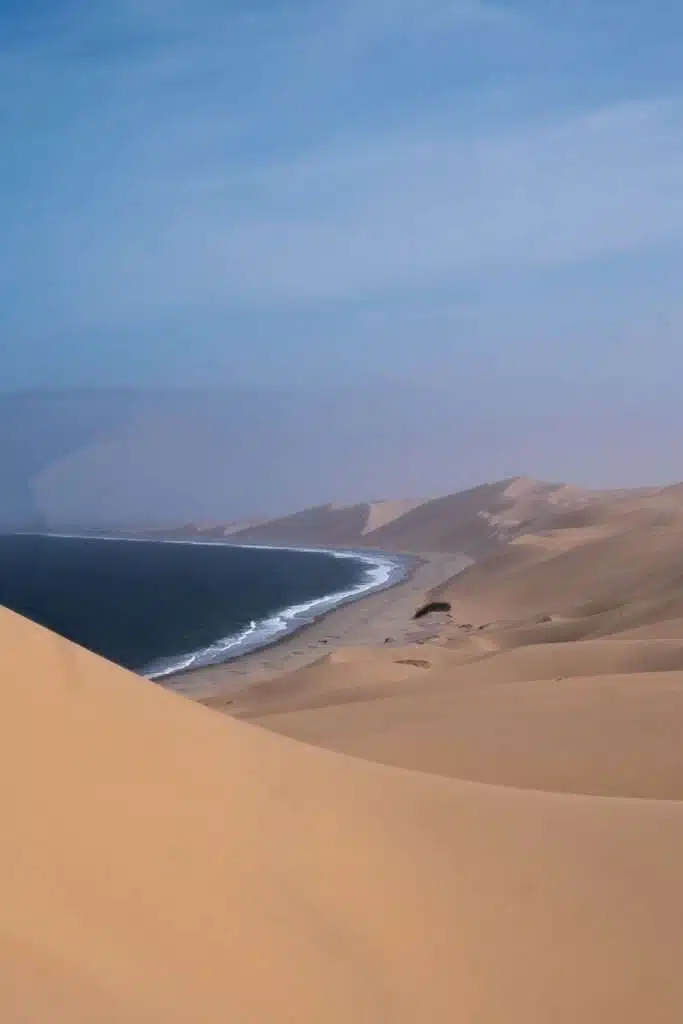
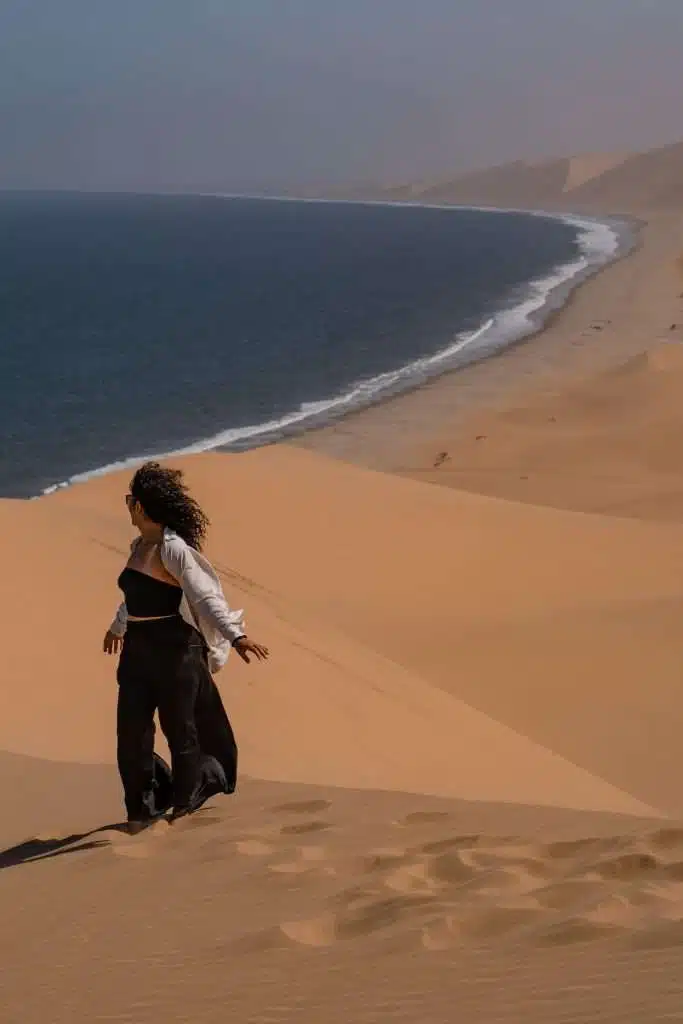
If you’re anywhere near Swakopmund or Walvis Bay, make time for a trip to Sandwich Harbour. It’s one of the only places in the world where towering desert dunes drop straight into the Atlantic Ocean, and it doesn’t feel real until you’re standing in it.
You need a 4×4 to get there, and I wouldn’t recommend trying to drive it yourself. The sand is deep, and it’s easy to get stuck if you don’t know the terrain.
I’d suggest booking this guided 4×4 tour. It’s a half-day trip with a local guide who actually knows how to navigate the dunes and gives a bit of context along the way. Plus, the views from the top are something else.
This was one of the best things I saw in Namibia, and probably one of the best travel experiences I’ve had in my life!

The Open Road Here Is Part of the Adventure
One thing you notice quickly in Namibia is just how far everything is from everything else. Even on a guided tour like the one I did, the drives between stops were long. Hours of open space, gravel roads, and barely another vehicle in sight.
While I didn’t self-drive, a lot of travellers I met were doing just that, and it’s easy to see the appeal. The roads aren’t always perfect. Expect gravel, dust, and a bumpy ride (which the locals like to call “African Massage”). But with a bit of planning, it’s very doable.
Everyone I spoke to said the act of driving across Namibia added to the experience. It wasn’t just transport. It was part of the trip.
If you’re thinking about hiring a car, it’s worth booking early. Discover Cars is a solid option to compare prices and find something that’s actually suited for Namibian roads.
If you’re heading into the more remote regions, a 4×4 is worth considering. It’s not essential everywhere, but it does make things easier.
Driving here isn’t for everyone. But if you’re up for it, it’s definitely worth doing.
Namibia Is A Photographer’s Dream Destination
If you’re into photography (even just snapping pics on your phone), Namibia will keep you reaching for your camera. The landscapes are stunning, and honestly, you’ll want to pack extra batteries. I doubt you’ll be switching your camera off much.
I used a regular mirrorless camera and my phone, and still came home with some of my favourite travel shots. You don’t need fancy gear or pro-level skills because the landscapes do a lot of the work for you.
Etosha National Park is great for wildlife shots, especially near the waterholes where you can park and wait for animals to wander in.
Whether it’s the endless desert roads or snapping the sunrise over Dune 45, you’re into, Namibia gives you plenty to work with. You’ll run out of memory card space before you run out of things to photograph.
It’s A Destination That Feels Safe
Safety is something I get asked about a lot, especially as a woman travelling solo, and honestly, Namibia felt like one of the safest countries I’ve visited. Most of the country is really quiet and people are kind and helpful.
I spent five weeks here travelling alone, part of that time volunteering and the rest on a group tour, and I never felt uncomfortable.
Like anywhere, you still need to use common sense, such as keeping your valuables out of sight, don’t walk alone at night in cities like Windhoek, and double-check your routes before setting off, but nothing ever felt overly risky.
The roads are mostly gravel, and while they can be rough, self-driving is doable if you’re prepared and take it slow. It’s one of those places where planning ahead makes a big difference, but once you’re out there, it feels very manageable.
If you’re thinking about going solo and want more info on safety specifically, I’ve written a whole post on solo female travel in Namibia that covers everything I wish I’d known before I arrived.
A Few Things to Know Before Visiting Namibia
You’ll likely need to rent a car (preferably a 4×4)
Many of Namibia’s most iconic places (like Sossusvlei or Damaraland) are only accessible via gravel or sand roads. A high-clearance 4×4 is the most practical (and safer) choice for a self-driving safari or desert road trip.
Driving distances are long and often remote
Towns and petrol stations can be hundreds of kilometres apart. Always fill up when you can, carry extra water, and download offline maps before heading out.
Dirt roads can be rough, corrugated, and sometimes dangerous
Even “main” roads like the C-roads can be heavily corrugated. Drive slowly, especially after rain, and don’t rely solely on GPS.
Accommodation often needs to be booked well in advance
Many campsites and lodges, especially inside national parks, are small and fill up quickly. Spontaneous travel is tricky here unless you’re very well equipped.
Wild camping isn’t generally allowed
Stick to designated campsites, many of which are beautifully located and well equipped.
You’ll need to be self-sufficient in remote areas
This includes food, fuel, water, and first aid. Many camps have limited (or no) electricity and little to no mobile service.
There’s little to no phone signal in rural areas
Consider getting a local SIM with data and downloading offline maps or using a GPS device.
You drive on the left-hand side of the road
Namibia follows the same rules as the UK and South Africa. Most rental cars are manual unless you specifically request automatic.
Speeding is a major cause of accidents in Namibia
Many travellers underestimate the danger of gravel roads at high speed. Take it slow and steady.
The best time to visit depends on your priorities
For wildlife, June to October (dry season) is ideal. For landscape photography and milder temps, April to May or August to September is great.
Cash is still king in some places
While cards are widely accepted in towns and at lodges, smaller shops, rural petrol stations, and markets often only take cash. ATMs are mostly available in larger towns.
English is widely spoken, but don’t expect much signage in cities
Namibia has 11 national languages, but English is the official one. Still, German and Afrikaans are often used, especially in towns like Swakopmund and Lüderitz.
It’s one of the safest countries in Africa, but take standard precautions
Petty theft can happen, especially in Windhoek. Avoid walking alone at night in cities, and keep valuables out of sight.
Conclusion – Is Namibia Worth Visiting?
Yes. If you’re after remote landscapes, incredible wildlife, and a travel experience that actually feels different, Namibia is absolutely worth it.
It’s not the kind of place you breeze through. It takes time, planning, and a bit of patience. But the payoff is huge, massive dunes, empty roads, big skies, and animals that just wander past like it’s no big deal. Whether you’re into photography, nature, or just want to get out of your usual routine, Namibia holds up.
If you’re still working out the logistics, you might find these posts helpful:
And if you’re not sure about self-driving or just want to take the guesswork out of it, I recommend booking a guided tour through Namibia here. It’s what I did, and it was the trip of a lifetime.
Whatever way you do it, Namibia is the kind of trip you’ll remember.